



Key Insights into ETF Flow Data
- •Crypto ETF outflows totaling billions were primarily driven by the unwinding of hedge fund basis trades, rather than institutional exits from digital assets.
- •Bloomberg ETF analyst James Seyffart indicated that these outflows represented small percentages of the total inflows accumulated over the preceding 18 months.
- •On-chain data revealed simultaneous whale accumulation and exchange withdrawals, coinciding with the headline ETF redemptions.
The Narrative of ETF Outflows in November
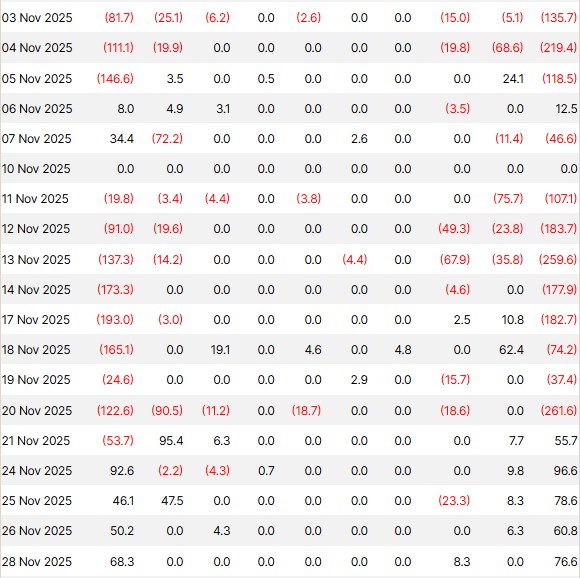
Crypto ETF flows dominated headlines throughout November 2025, as billions of dollars exited spot Bitcoin and Ethereum funds. The prevailing narrative suggested an institutional retreat from digital assets. However, a deeper analysis revealed that these outflows masked complex arbitrage strategies, custody optimization, and portfolio rebalancing, rather than genuine selling pressure on crypto prices.
Basis Trades Distort Crypto ETF Flow Data
Ethereum ETFs recorded approximately $2.5 billion in outflows through November. Bloomberg ETF analyst James Seyffart explained that basis trades accounted for a substantial portion of these redemptions. Hedge funds were simultaneously selling futures contracts while buying spot positions through ETFs, creating delta-neutral positions that earned yields ranging from 5% to 20% annualized. As futures spreads compressed below 5%, these positions began to unwind, generating outflows that were unrelated to directional crypto views.
Arthur Hayes argued in November that large players were executing basis trades without taking genuine spot exposure. He warned that crypto ETF flows proved to be often misleading, driven by arbitrage rather than genuine demand. The unwinding of these trades is tied directly to futures spread compression rather than a bearish sentiment on crypto prices.
Custody Transfers Complicate Flow Interpretation
HELIX Apex instructor Alessio Loehning dissected a day showing $473 million in Bitcoin ETF outflows and $81 million in Ethereum redemptions. The same period featured large exchange outflows and whale transfers into custody solutions. Price movements remained modest, lacking capitulation volumes. Loehning posited an "ETF-to-direct-custody thesis," suggesting that institutions were optimizing their holdings rather than exiting positions entirely.
A November newsletter titled "This Isn’t a Bear Market. It’s a Wealth Transfer" argued that whales and permanent holder addresses absorbed more Bitcoin than crypto ETF participants dumped during the same window. The analysis framed outflows as rotation and tax-driven rebalancing rather than structural exits from digital assets.

Context is Crucial for Short-Term Crypto ETF Trends
RedStone co-founder Marcin Kazmierczak acknowledged that crypto ETF flows reflected institutional sentiment but cautioned that short-term trends "can be misleading" without a 6-12 month perspective. Net flows remained positive over longer timeframes. Major holders, including Abu Dhabi’s sovereign fund and Wisconsin’s pension fund, maintained substantial positions despite headline redemptions.
Bloomberg senior ETF analyst Eric Balchunas downplayed record single-day outflows from BlackRock’s IBIT, attributing them to corrections following massive prior inflows and gains. Money rotated between products rather than exiting the category. A November explainer stated that crypto ETF flows "create the illusion of institutional buying as arbitrage drives both inflows and outflows."
Hedge fund basis trades and authorized participant activity made flow data appear directional even when the net price impact remained neutral. The piece detailed how these mechanisms divorced reported flows from actual conviction on crypto prices. Additionally, JPMorgan analysts warned it would be "incorrect" to interpret crypto ETF outflows as wholesale bearish signals across risk assets. The firm tied redemptions to dollar-liquidity shocks and leveraged position liquidations rather than a fundamental reassessment of digital asset valuations.
Seyffart Predicts Explosive Growth for the Crypto ETF Market
Looking forward to 2026, Seyffart predicted that over 100 digital asset ETFs would launch within six months during an interview with ETF.com. He tracked 150 different product filings awaiting approval, covering 35 distinct assets and basket products. Seyffart compared this buildout to the technology sector growth experienced in the 1990s.
Picking individual protocols risked concentration, whereas index products provided beta exposure to the entire asset class. Market-cap-weighted products would likely dominate as advisors sought diversified crypto exposure without the complexity of direct custody. The analyst noted that Ethereum ETFs have absorbed $15 billion in capital despite initial skepticism, with most of the inflows occurring over the past six months. Regulated wrappers attracted investors who were unwilling to establish exchange accounts.
Even the ninth-largest digital assets could support viable products generating hundreds of millions in assets under management. Beyond spot exposure, Seyffart highlighted manufactured yield products that were gaining traction. Covered call strategies on volatile assets generated yields exceeding 80% in some structures. Buffer products and defined outcome ETFs on Bitcoin and Ethereum expanded rapidly as legacy asset managers launched actively managed products.
Goldman Sachs acquired a buffer product provider to aggressively enter the defined outcome space. The firm would jump from 17th to the 15th largest issuer following the acquisition. Active crypto ETF strategies represented the fastest-growing segments as institutions demanded sophisticated exposure beyond simple spot holdings.