


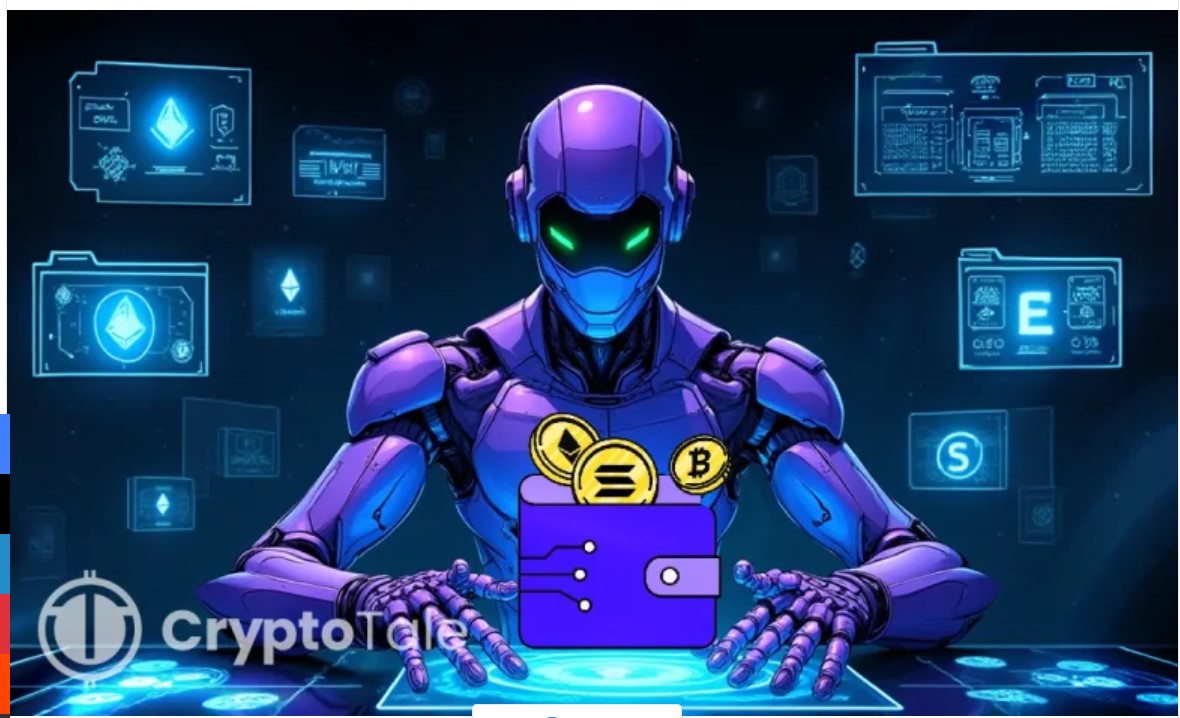
Coinbase Introduces New Tool for AI-Powered Crypto Payments
Coinbase's new Payments MCP tool marks a significant advancement, allowing AI agents to securely access and manage crypto wallets for on-chain payments. This innovation is poised to transform how individuals and businesses interact with digital assets, enabling AI agents to execute transactions, tip creators, pay for services, and access paywalled data. The system is built upon the x402 protocol, an open standard designed for instant stablecoin payments, heralding a new era of "agentic commerce" where artificial intelligence directly participates in the global economy.
The tool is compatible with leading large language models, including Claude, Gemini, and Codex. Once integrated, AI agents gain the capability to interact with crypto wallets, facilitating a range of financial activities directly on the blockchain. Coinbase's announcement highlights this as a pivotal step towards a future where AI plays a more active role in financial transactions.
Coinbase Emphasizes Safety Features in New AI Wallet Tool
Coinbase has integrated robust safety measures into its Payments MCP to mitigate potential risks associated with AI-driven crypto transactions. Sean Ren, co-founder of Sahara AI, explained that the Model Context Protocols (MCP) function as a crucial intermediary between AI models and user wallets. These protocols are designed to restrict AI actions to specific, pre-approved operations, such as balance inquiries or transaction preparation.
Crucially, all AI-initiated actions require explicit user confirmation before any funds can be moved. This user verification step acts as a safeguard against unauthorized transactions, even if the AI is manipulated. However, Ren stressed the continued importance of user vigilance, stating that "safer doesn't mean foolproof." He advised users to treat AI tools as assistants and to meticulously review every transaction before approval, emphasizing that human oversight remains essential.
Brian Huang, CEO of Glider, echoed this sentiment, noting that while basic functionalities like sending and swapping tokens are now feasible, more complex applications such as portfolio management and rebalancing will require further development. He anticipates that future AI agents will offer more personalized financial advice and sophisticated trading strategies, and can serve as valuable guides for new users navigating the complexities of decentralized finance.
Security Experts Raise Concerns Over New AI Wallet Risks
Despite the technological advancements, security experts urge caution. Aaron Ratcliff, attributions lead at Merkle Science, highlighted that granting AI access to crypto wallets introduces new trust considerations into a system designed to be trustless. He stated that the security of such systems hinges on their correct implementation and, more importantly, on users' understanding of responsible AI prompting.
Ratcliff warned of potential AI errors, such as "hallucinating" blockchain data or mishandling credentials, which could lead to immediate financial losses. The risk of prompt injection, where malicious actors manipulate AI commands to execute unauthorized actions, is another significant concern. He noted that attackers could employ man-in-the-middle techniques to intercept or redirect trades, and malicious agents might inadvertently interact with scam tokens, rug pulls, or vulnerable smart contracts.
To ensure safety, Ratcliff suggested that secure systems should incorporate real-time capabilities for detecting front-running, managing slippage, and auditing contracts. Furthermore, robust controls are needed to prevent unauthorized communication between wallets and AI, block injection attacks, and ensure compliance. Without these measures, AI systems could inadvertently send funds to sanctioned wallets or unregulated exchanges.
For the present, experts maintain that human oversight is the most effective protection. While AI may eventually manage crypto wallets with complete security, continuous human monitoring remains paramount.