



The Central Bank of Argentina (BCRA) is contemplating regulatory reforms that could allow traditional banks to offer cryptocurrency services, indicating a potential shift in the country's financial regulation landscape.
This potential reform comes as Argentina grapples with economic challenges, which have fueled domestic demand for cryptocurrencies. The involvement of banks in offering crypto services could significantly reshape the financial ecosystem and impact existing cryptocurrency businesses.
Argentina's Financial Sector Poised for Digital Transformation
The BCRA is exploring the introduction of cryptocurrency-related services within traditional banking institutions as a means to manage the burgeoning informal crypto trade in Argentina. Current regulations, which prohibit banks from dealing with cryptocurrencies without specific BCRA authorization, were initially established to curb unregulated financial activities.
If these proposed reforms are formalized, banks would be permitted to offer crypto services under a new regulated framework. This development would align with President Milei's broader economic policies that are generally supportive of cryptocurrency adoption. The integration of crypto services into the formal banking system aims to bring the substantial volume of crypto trading currently occurring in the shadow market into regulated channels.
"While we monitor the domestic use of cryptocurrencies, there is currently no approved framework that allows banks to engage in crypto asset operations."
Evolving Policies Reflect Global Crypto Adoption Trends
In 2022, the BCRA had previously banned banks from engaging in crypto activities, citing concerns about volatility and fraud risks. The current reconsideration of this policy suggests an evolution in the central bank's views on financial innovation and the role of digital assets.
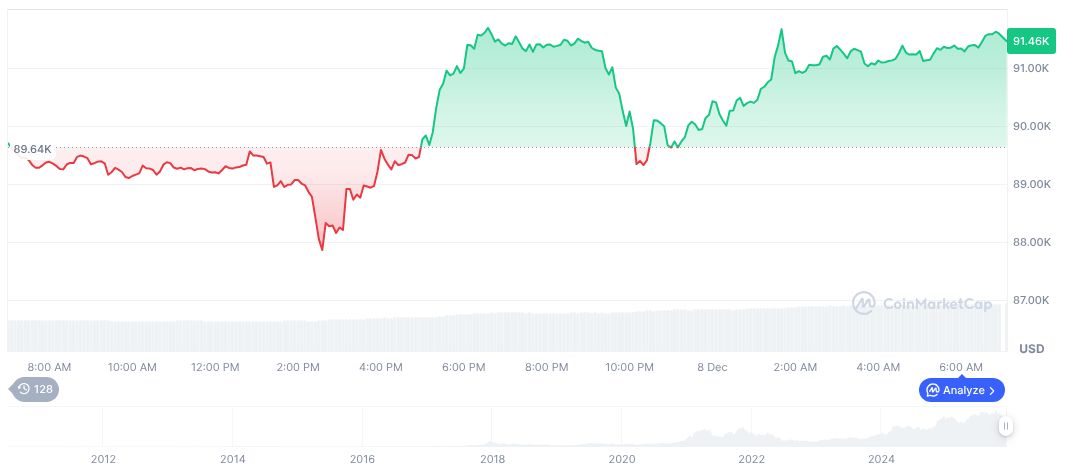
According to CoinMarketCap data, Bitcoin (BTC) is currently priced at $91,460.64 with a market capitalization of $1.83 trillion. Despite recent price fluctuations, including a 1.93% change in the last 24 hours and a decline of 19.09% over the past 90 days, Bitcoin continues to be a dominant digital asset, holding 58.64% of the overall market share.
Analysts suggest that the potential integration of banks into the crypto market could foster greater financial stability and liquidity within Argentina's crypto economy. Historical trends indicate that regulated involvement from traditional banking institutions typically leads to increased investor confidence and subsequent market growth.