



Key Points
- •Australia has introduced its first comprehensive regulatory bill for digital asset platforms.
- •The bill is expected to unlock $24 billion in annual productivity gains.
- •Small operators may be exempt from full licensing under specific conditions.
Australia introduced its first comprehensive regulation for digital asset platforms on November 27, 2025, aiming to enhance asset protection and impose substantial fines for non-compliance.
This regulatory framework anticipates $24 billion in annual productivity gains, impacting major cryptocurrencies and tokenized real-world assets while maintaining market flexibility.
New Bill Expected to Drive $24 Billion in Productivity
Licensed operators under the new bill must obtain an Australian Financial Services License and adhere to ASIC's standards. Exemptions apply to smaller companies, maintaining market access while safeguarding client interests.
Market reactions have been mixed, with some stakeholders welcoming the regulatory clarity while others express concerns about the extent of governmental control. ASIC has emphasized the necessity of compliance to protect consumers, reinforcing its role in overseeing these changes.
Australia Positions Itself for Global Financial Leadership
Did you know? Australia's regulatory history dates back to prior efforts like ASIC's CP 381 in December 2024, evolving transparent digital asset oversight, marking a pivotal development in crypto regulation.
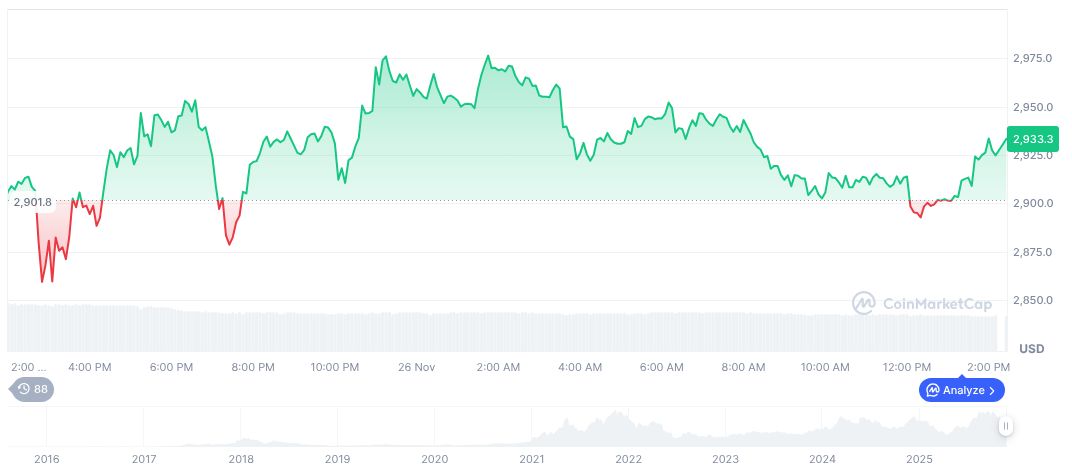
The latest data from CoinMarketCap indicates Ethereum (ETH) is priced at $3,037.87, with a market cap of $366.66 billion. The cryptocurrency's 24-hour trading volume sits at $22.13 billion, with a recent 3.17% price increase.
Experts from the Coincu research team anticipate that this regulatory move could enhance Australia's position in global financial innovation while ensuring consumer protection through fundamental compliance practices. According to ASIC, "regulatory frameworks are crucial in maintaining market stability and consumer confidence."