


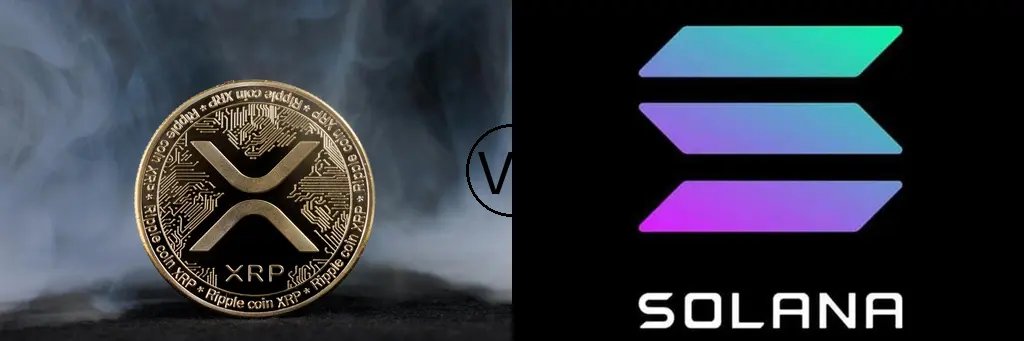
Solana has ignited controversy within the cryptocurrency community with a recent statement interpreted by many as a direct challenge to XRP's long-standing position as a global "bridge currency." In an official post on X, Solana declared, "There is no bridge currency. There are stablecoins on Solana."
This assertion immediately drew significant attention, as XRP has consistently been promoted as the digital asset designed to facilitate cross-border transactions by connecting various fiat currencies. Solana's message directly questions this premise, proposing that stablecoins are the actual bridge assets within the current blockchain ecosystem.
Solana Challenges XRP's Core Mission
For years, XRP has been positioned as the digital asset specifically engineered to connect different fiat currencies and streamline international payments. Solana's recent statement, however, directly confronts this narrative by positing that stablecoins, rather than XRP, are the primary bridge assets in today's blockchain landscape.
Stablecoins, such as USDT and USDC, are pegged to the U.S. dollar. This peg provides the stability and predictability that financial institutions and money transfer services often seek when settling international transactions.
This declaration from Solana followed closely on the heels of reports indicating that Western Union, a global leader in money transfer services, has chosen to build its infrastructure on the Solana blockchain. This strategic move by Western Union bolsters Solana's argument that stablecoins can effectively manage global transfers without the need for an intermediary token like XRP.
The partnership between Western Union and Solana also highlights the growing trend of major financial entities adopting blockchain solutions that offer enhanced speed, reduced costs, and greater scalability.
Solana Promotes Stablecoin and CBDC Vision
By asserting that "there is no bridge currency," Solana is signaling a clear preference for a financial model that prioritizes stablecoins and Central Bank Digital Currencies (CBDCs). These digital forms of currency facilitate real-time transactions, enhance transparency, and allow for governmental oversight, representing a departure from decentralized models that rely on independent cryptocurrencies.
Solana's blockchain is recognized for its high transaction throughput and low fees, providing a robust technical framework for institutions that require reliable digital payment infrastructure. The platform's alignment with Western Union and its public dismissal of the need for a bridge currency underscore Solana's ambition to reshape the future of cross-border payments.
This statement has generated extensive discussion throughout the crypto community, with many viewing it as one of the most direct public challenges to XRP's established role in the global financial system.