



Key Concerns Regarding Stablecoin Impact on Banking
Bank of America CEO Brian Moynihan has issued a warning regarding the potential impact of interest-bearing stablecoins on the U.S. banking system. He estimates that these digital assets could divert as much as $6 trillion in deposits away from traditional banks. This projection is based on research from the U.S. Treasury Department, which indicates that stablecoins function similarly to money market mutual funds by holding reserves in cash or central bank assets, rather than actively participating in lending facilities.
The potential shift of deposits to stablecoins poses a significant threat to the stability of bank funding. A reduction in deposits could lead to a decreased supply of credit, disproportionately affecting small and medium-sized enterprises (SMEs) that rely heavily on bank loans for their operations. Consequently, this diminished credit availability may drive up borrowing costs for businesses that are more dependent on traditional banking infrastructure compared to those with direct access to capital markets.
Understanding Stablecoins and Their Banking Implications
The U.S. Treasury Department's research suggests that stablecoins are emerging as a significant force capable of reshaping the landscape of traditional banking. While major cryptocurrencies like Bitcoin are not explicitly mentioned as being directly impacted by this potential deposit shift, stablecoins are identified as having the capacity to influence trillions of dollars in deposits.
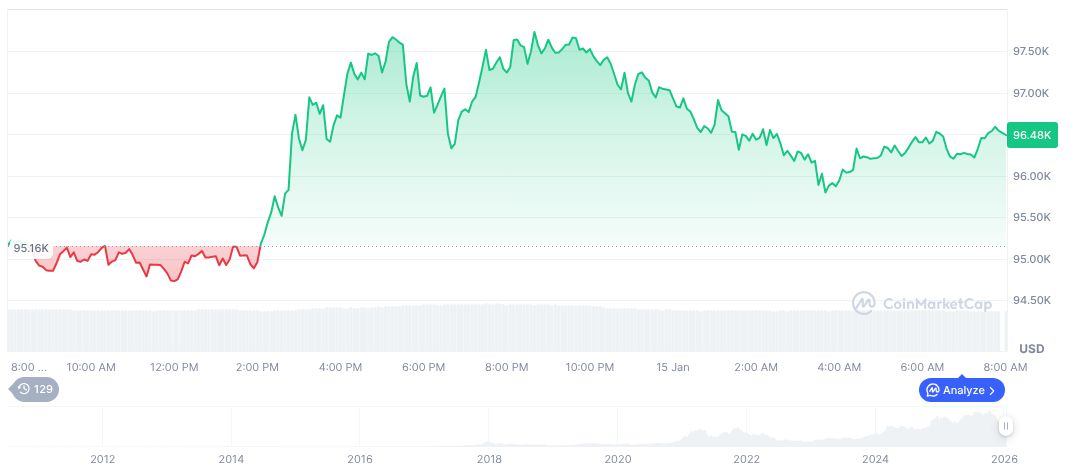
Current market data indicates that Bitcoin's price is $95,297.77, with a market capitalization of $1.90 trillion. Over the past seven days, Bitcoin has seen a 4.59% increase, although it experienced a 0.60% decline in the last 24 hours. Bitcoin maintains a dominant market share of 59.05%, underscoring its continued leadership in the cryptocurrency space. The trading volume has decreased by 18.35% in the past 24 hours, suggesting a temporary slowdown in buying and selling activities.
Insights from the Coincu research team suggest that the future regulatory landscape for stablecoins will play a crucial role in shaping banking and financial policies. The potential diversion of deposits could necessitate the development of new financial models and regulations, compelling banks to adapt their strategies to remain competitive against these evolving financial products.