



New Stablecoin Rules and Reserve Requirements
The Bank of England has proposed new stablecoin regulations, which include requirements for asset backing and holding limits. These measures are designed to strengthen financial stability within the UK's cryptocurrency sector. If these proposals are implemented, they are expected to significantly impact how stablecoin operations function and influence market dynamics, requiring issuers to adapt to stringent rules regarding asset allocation and holding limits.
The Bank of England's proposal, dated November 10, 2025, aims to regulate stablecoins by mandating that they hold up to 60% of their reserves in short-term UK government bonds and a minimum of 40% in deposits at the central bank. Furthermore, individual holdings of stablecoins would be capped at £20,000, while businesses would be permitted to hold up to £10 million. These regulations are primarily focused on maintaining financial stability and are anticipated to alter market dynamics by changing the composition of reserve assets. Stablecoins that are regulated by the Financial Conduct Authority will experience a substantial shift in their investment strategies and capital allocations.
"Today's proposals mark a pivotal step towards implementing the U.K.'s stablecoin regime next year. We've listened carefully to feedback and amended our proposals for achieving this, including on how stablecoin issuers interact with the Bank of England." - Sarah Breeden, Deputy Governor for Financial Stability, Bank of England
UK's Stablecoin Holding Limit Compared to US and EU
The Bank of England's proposed stablecoin holding limit of £20,000 for individuals is more stringent than the current regulations imposed by both the United States and the European Union on similar digital assets.
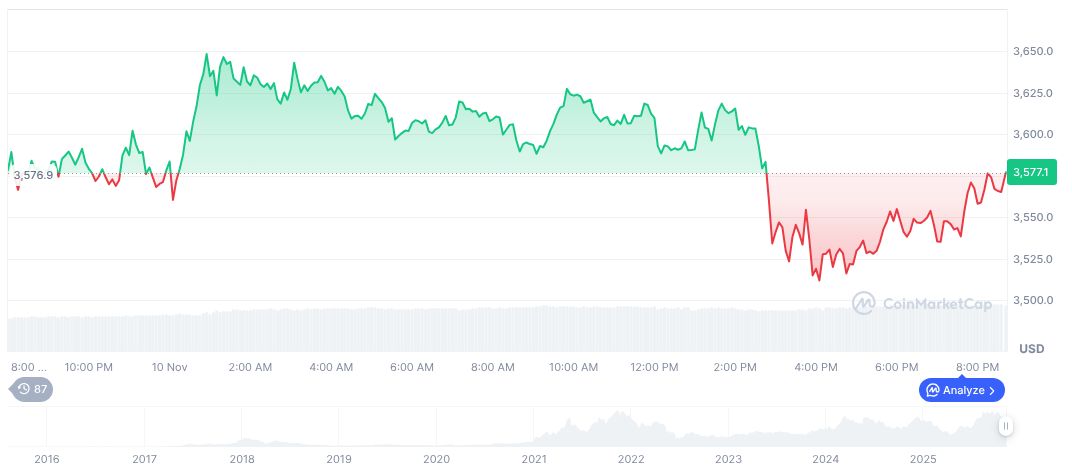
As of 21:06 UTC on November 10, 2025, Ethereum (ETH) was valued at $3,562.24, with a market capitalization of $429.95 billion. Ethereum holds a 12.05% market dominance. Over the preceding 24 hours, its trading volume was $36.18 billion, indicating a price shift of -0.62%. This data was sourced from CoinMarketCap.
Research conducted by the Coincu team suggests that the UK's regulatory approach could significantly reshape the competitive landscape for stablecoin issuers. While such regulatory clarity may contribute to market stabilization, it could also potentially limit the rapid innovation and expansion that have traditionally characterized the digital currency space.