


Most projects talk about what they’re going to do. We’re here to show you what we’re already doing.
While other tokens hunt for product-market fit, we’re scaling revenue. While they tweak tokenomics on paper, we’re processing job applications from major crypto companies. While they promise future utility, we’ve got 5 million users and 2 million completed professional profiles.
We’re moving differently because we’re building infrastructure, not hype.
Upgrading the Infrastructure
We’re making a significant move on the market-making side.
We’re upgrading to a new institutional-grade market maker infrastructure. This will provide better liquidity and tighter spreads, establishing the kind of foundation that serious projects build when they’re preparing for the next phase of growth.
This isn’t about quick fixes. It’s about setting up the right infrastructure for scale. Projects like Movement Network and Hyperliquid invested heavily in their market-making setup after early setbacks, creating better liquidity depth and confidence that allowed them to grow sustainably.
That’s the playbook we’re following: infrastructure followed by growth.
The Buyback Commitment: Revenue Meets Value
Here’s what gets us excited.
We’re committed to rolling out a revenue-driven buyback program. And when we say revenue-driven, we mean it. This isn’t a one-off treasury dump; it’s systematic buying pressure funded by actual business revenue.
Revenue-based tokenomics are becoming the standard. Buyback programs signal sustainability, not gimmicks.
Projects showing real business models, real revenue, and real users get attention.
Consider these examples:
- •Aave: $1M/week in buybacks from protocol revenue
- •Chainlink: $10.5M native reserve from service fees
- •Hyperliquid: $645M buyback commitment
These aren’t moonshots; they’re businesses with tokens.
That’s the category we’re in.
We’re not competing with meme coins or AI agent tokens. We’re positioning alongside serious protocols that generate and share value.
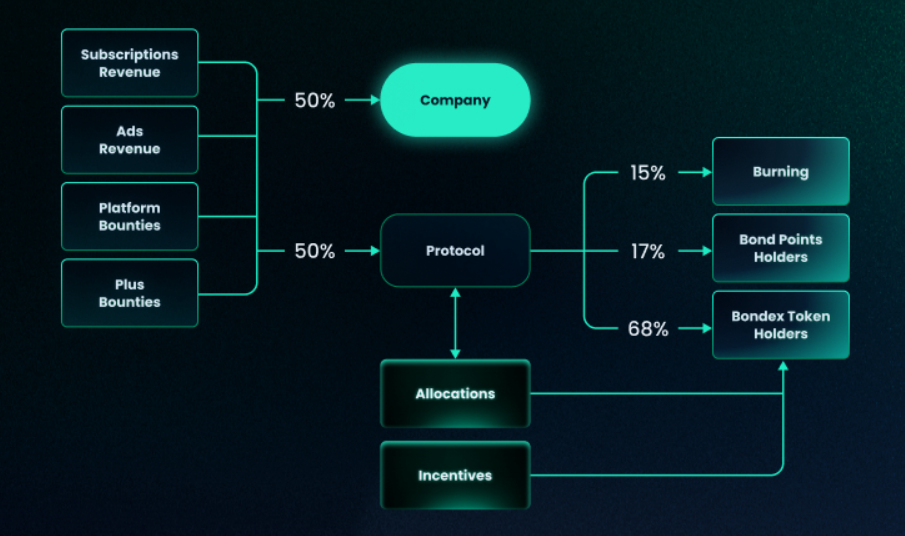
More Revenue, More User Rewards
Currently, companies pay Bondex for job postings on Web3 Career, Bondex Jobs, recruitment services, and premium features. To date, over 1,000 different web3 companies have paid to post jobs on our platforms.
New revenue streams are coming, including token gating, data APIs, and ad revenue. Here’s the difference: when you opt in to our ad network and share your data, you get rewarded through participation in the Bondex economy. LinkedIn generates billions from ads and data, but users see none of it. We’re building a model where your participation has value.
That revenue doesn’t just sit there; it flows into creating long-term token demand through buybacks.
The formula is straightforward: More companies using Bondex leads to more revenue streams being activated, generating more revenue. This increased revenue then creates more buying pressure, ultimately flowing more value back into the ecosystem.
To see how this could play out, you can explore our Token Economy Simulator. This tool allows you to play with different growth scenarios and adjust revenue projections across multiple streams to see how it all translates to buyback potential.
The LinkedIn Gap Nobody’s Talking About
LinkedIn generates $6.4 billion annually just from premium subscriptions, with a market cap exceeding $200 billion.
We’re building the same foundation—job postings, professional profiles, and recruitment tools—with premium tiers coming soon. But our vision goes further, incorporating token gating, data APIs, ad revenue participation, portable reputation, and user ownership.
The key difference is that LinkedIn keeps all that value, enriching its shareholders while users receive nothing. Meta, for instance, made $68.44 per user in Q4 2023, with none of it going to users. We also monetize data, but only with opt-in consent, and users are rewarded through participation in the Bondex economy.
We’re not just rebuilding LinkedIn for web3; we’re reimagining what a professional network can be when users actually own the value they create.
The Flywheel: Already Spinning
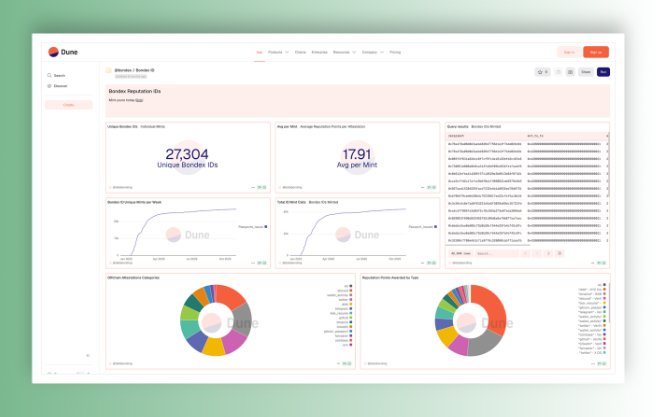
Let’s talk about what we’ve already built:
- •5 million downloads: More than most web3 projects will ever achieve.
- •2 million completed profiles: Real professionals with work history, education, and resumes uploaded.
- •700,000 verified profiles: With on-chain proof.
- •Nearly 30,000 minted Bondex IDs: Verifiable on-chain. You can see the data on our Dune dashboard.
- •1000+ companies: Using our ecosystem.
The network effect is real. More users create a better talent pool. Better talent pools attract more companies. More companies generate more revenue. More revenue strengthens the token.
We’re not at the beginning; we’re at the inflection point.
What’s Next
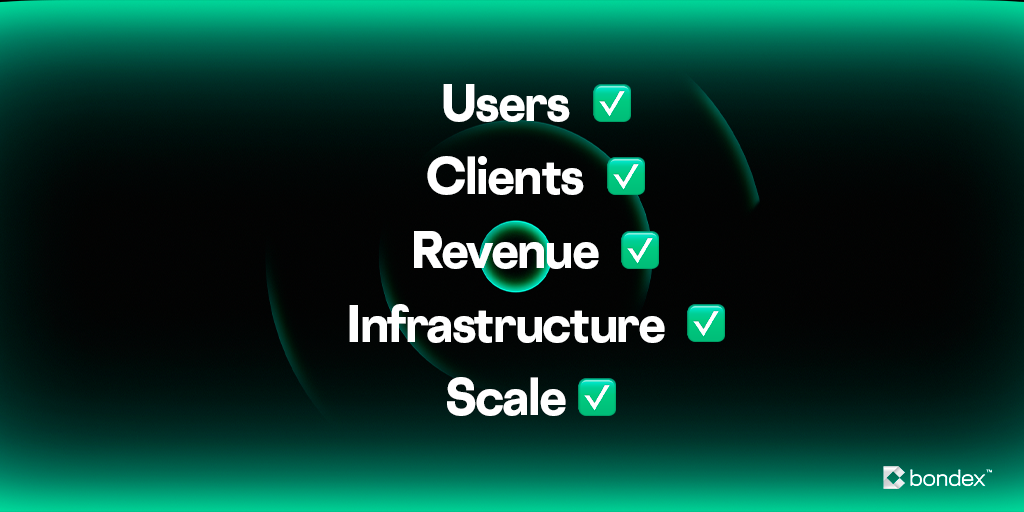
Users are here, clients are paying, revenue is flowing, and infrastructure is upgraded.
Next up for Bondex is a major talent pool release, a new revenue stream announcement, expanded token utility, and a set of releases and partnerships set to make reputation your most valuable asset.
Every feature, every partnership, and every job posting feeds the flywheel, following this cycle: More utility leads to more users, which drives more revenue, resulting in more buybacks.
LinkedIn has 900 million users and a $200 billion market cap, indicating a massive total addressable market. We’re building the web3 alternative where users actually own the value they create.
The foundation is built. Now, we scale.
Let’s build this together.
Ignacio Palomera
Co-Founder & CEO, Bondex