


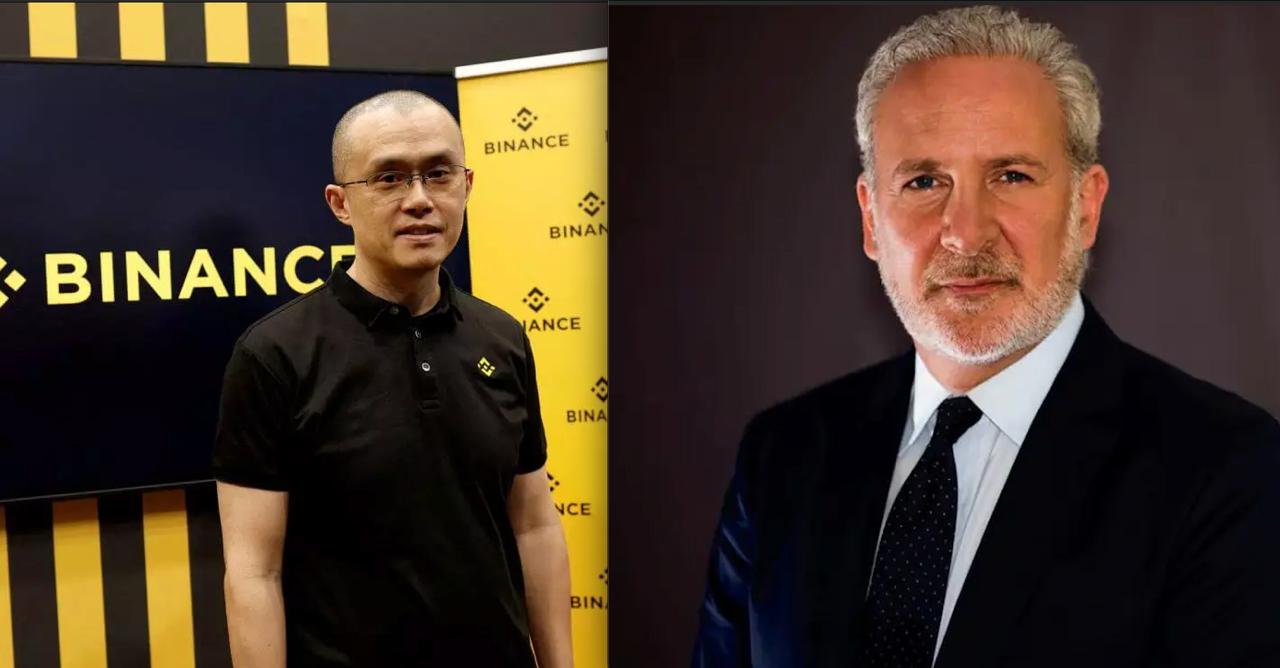
A high-profile debate between Binance co-founder Changpeng Zhao (CZ) and gold advocate Peter Schiff reignited one of the digital asset industry’s oldest arguments: is Bitcoin a superior form of money, or does blockchain-powered tokenized gold offer a better path forward? The discussion unfolded on December 4, 2025, at Binance Blockchain Week in Dubai, bringing two opposing philosophies into sharp focus.
CZ Calls Bitcoin a “Better Version of Gold”
CZ framed Bitcoin as the natural evolution of gold, digital, borderless, and verifiable without relying on intermediaries. He argued that tokenized gold suffers from a fundamental weakness: trust. Since each token depends on a custodian actually holding gold reserves, CZ called it a “trust-me-bro token”, insisting that Bitcoin requires no such assurances.
Its value, he said, rests on transparent code, decentralized consensus, and a global network running independently of any institution.
Schiff Defends Tokenized Gold’s Tangible Value
Schiff, a long-time critic of Bitcoin, countered by emphasizing the stability and historical credibility of physical gold. He argued that tokenized gold effectively merges the real-world value of the metal with blockchain efficiency, offering investors the best of both worlds. In his view, Bitcoin remains a speculative instrument with no intrinsic value, while gold’s tangible nature underpins centuries of trust.
The debate turned memorable when CZ showcased a small gold bar and asked Schiff to verify its authenticity on the spot. Schiff acknowledged he could not – pointing out that proper testing is required and even noting the bar’s color looked different from his jewelry. CZ used the moment to illustrate Bitcoin’s frictionless, code-based authentication.
A Clash Over What “Money” Should Be
Their disagreement extended to the role of money in the modern economy. Schiff argued Bitcoin still struggles to function as a unit of account or widespread medium of exchange, noting that most people cannot price goods or transact daily using BTC.
CZ responded that Bitcoin’s strengths lie in its global accessibility, censorship resistance, and steadily expanding user base. He drew parallels to digital assets like Google or Twitter, noting their value comes not from physical form but from network utility.
Competing Long-Term Predictions
The event ended without any shift in the debaters’ long-held convictions. CZ reiterated his belief that Bitcoin will surpass gold’s market capitalization, positioning BTC as the dominant store-of-value asset of the digital age. Schiff held firm to his stance that Bitcoin’s 2025 gains could evaporate entirely, just as bubbles in the past have unwound.
While the two remain on opposite sides of the ideological line, the debate amplified a central question shaping markets today: as digital assets mature, will investors favor cryptographic scarcity or tokenized tangibility? The industry remains divided, yet increasingly engaged, as both models continue to attract global attention.