



Key Developments in Crypto Market Regulation
White House AI & Crypto Czar David Sacks has been actively engaging with members of the U.S. Senate to foster bipartisan support for cryptocurrency legislation. These discussions are aimed at establishing a clearer regulatory framework for the digital asset market.
The passage of such legislation could significantly impact the U.S. crypto market by providing much-needed regulatory clarity and reinforcing the framework established by the American Stablecoin Innovation GENIUS Act.
Sacks Drives Bipartisan Efforts for Crypto Market Legislation
In his capacity as White House AI and Crypto Czar, David Sacks has been spearheading discussions with key Democratic senators, advocating for a unified, bipartisan approach to cryptocurrency legislation. Sacks has highlighted the potential for broad congressional backing to strengthen the cryptocurrency market's structure, building upon the success of the American Stablecoin Innovation GENIUS Act, which was signed into law by President Trump earlier this year.
These high-level interactions signal a positive movement towards enhanced regulatory clarity within the digital asset space. The proposed legislation, founded on collaborative bipartisan efforts, intends to improve the operational framework for cryptocurrencies, which could subsequently attract greater institutional investment. The GENIUS Act itself already offers legal clarity for stablecoins, which is crucial for maintaining the dominance of the U.S. dollar in digital asset liquidity.
The market has responded favorably to these developments, with industry stakeholders expressing optimism about the collaborative approach. David Sacks stated, "I believe we are fully capable of passing cryptocurrency market structure legislation with bipartisan support." This sentiment has been echoed by various industry leaders who view these advancements as beneficial for the sector's growth and stability.
Analysis of U.S. Cryptocurrency Laws and Market Response
The GENIUS Act represents a significant legislative initiative focused on stablecoins, drawing parallels to earlier critical moments in cryptocurrency regulation, such as the 2021 Infrastructure Bill, which initially generated substantial market discussion and prompted significant action.
According to data from CoinMarketCap, Bitcoin (BTC) reached a price of $110,591.91, with a total market capitalization of $2.21 trillion and a dominance of 59.33%. Despite a 2.40% increase over the past 24 hours, the trading volume saw a decrease of 29.09% within the same period. Analysis of 30-, 60-, and 90-day periods indicates fluctuating trends for BTC, with overall minor declines observed.
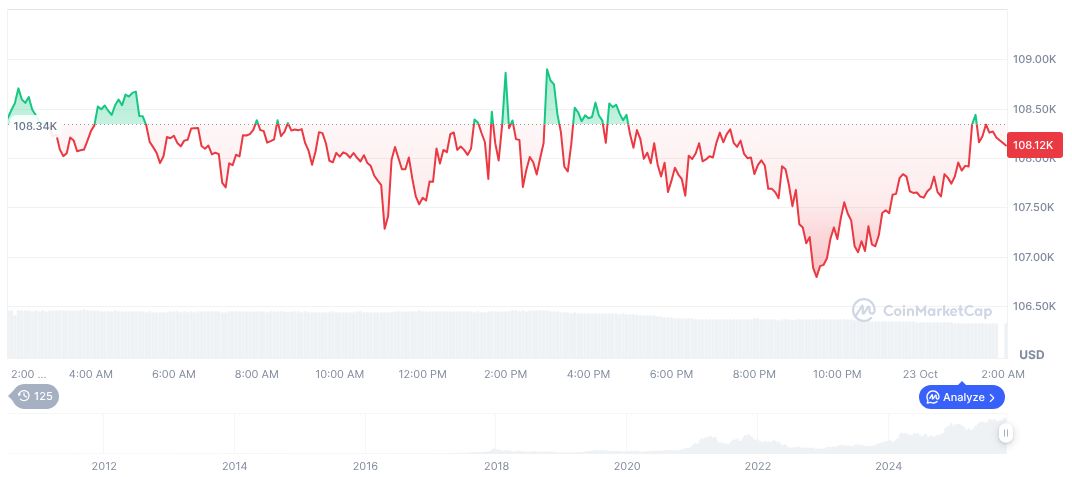
Research from Coincu's team emphasizes that recent regulatory efforts in the United States are designed to streamline cryptocurrency frameworks and foster continued growth. Historical patterns suggest that such bipartisan legislative actions tend to generate positive market sentiment and contribute to long-term stability, which is essential for the sustained adoption of digitized assets.
Tweet content regarding America's dominance in AI.
David Sacks commented on the broader technological landscape, stating, "It is just very important that America continue to be the dominant power in AI," underscoring the critical intersection of cryptocurrency and artificial intelligence in maintaining U.S. global leadership.