



Bloomberg's Senior ETF Analyst Eric Balchunas has dismissed comparisons between Bitcoin and the 17th-century Dutch speculative bubble known as 'Tulip Mania.' His analysis emphasizes Bitcoin's demonstrated resilience and significant long-term returns, suggesting it is a maturing asset class that could attract greater institutional interest and influence market perceptions, thereby distinguishing it from historical speculative bubbles.
Bitcoin: A Durable Asset Class
Bitcoin's durability has been showcased through multiple boom-bust cycles, consistently maintaining a long-term annualized return of approximately 50%. This track record strengthens the narrative of Bitcoin as a robust and investable asset class with significant staying power in the market.
The market reaction to Balchunas' comments has amplified sentiments regarding Bitcoin's perceived resilience, drawing parallels to non-productive assets like gold. The cryptocurrency community, in particular, views Bitcoin's 17-year history as substantial evidence of its enduring market presence.
"Tulip mania only lasted about three years and was completely wiped out after the collapse, while Bitcoin has experienced 6–7 rounds of sharp declines, survived for 17 years, and its long-term annualized rate of return is still around 50%." — Eric Balchunas, Senior ETF Analyst, Bloomberg.
Historical Resilience: Tulip Mania vs. Bitcoin
In stark contrast to Bitcoin's 17-year track record of resilience, Tulip Mania collapsed within a mere three years and did not recover, underscoring Bitcoin's long-term stability as a financial asset.
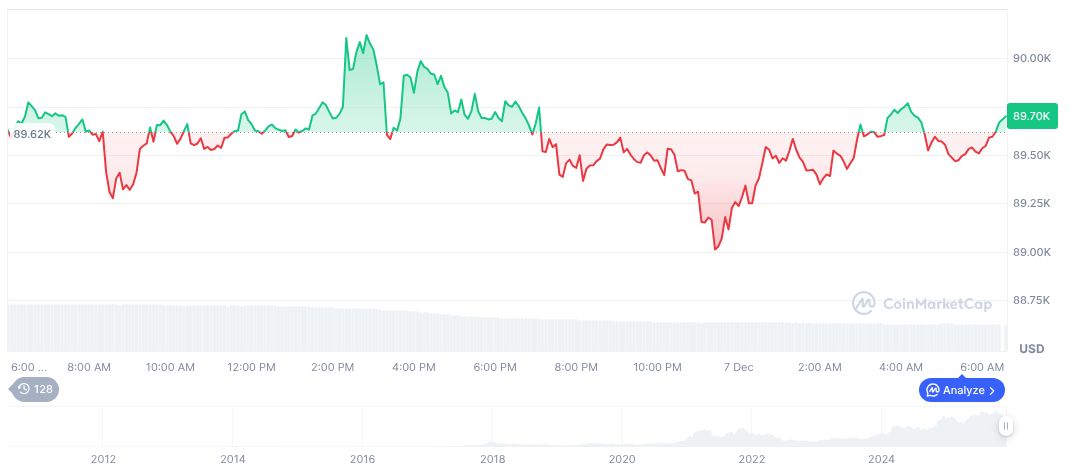
Bitcoin (BTC) is currently valued at $89,836.11, with a market capitalization of $1.79 trillion, representing 58.96% dominance in the cryptocurrency market. Despite a 90-day decline of 20.03%, Bitcoin has demonstrated resilience with a 0.12% increase in the last 24 hours.
Research suggests that Bitcoin's proven resilience may lead to its increased consideration within regulated financial products. Historical data supports its positioning alongside enduring, non-productive store-of-value assets such as gold, aligning with analyses of Bitcoin's Sharpe ratio.