


Bitcoin reclaimed the $94,000 level on Tuesday, staging a late-session rebound shortly after the Federal Reserve cut its benchmark rate by 25 basis points.
The move pushed the federal funds target range to 3.50%–3.75%, marking a shift toward easing as policymakers acknowledged slowing job growth and rising downside risks to employment. The combination of a softer policy stance and improving liquidity conditions provided a short-term tailwind for risk assets, with Bitcoin reacting quickly to the change in tone.
Fed’s Rate Cut Lifts Market Sentiment
The Fed emphasized that economic activity is expanding at a moderate pace, but labor indicators have weakened through the year and inflation remains elevated. With uncertainty still high, officials opted for a measured rate reduction to balance the risk of economic cooling against persistent price pressures.
For markets, the decision signaled a clearer bias toward support rather than restraint. Liquidity operations—including new Treasury bill purchases, reinforced that shift, creating a backdrop that typically helps Bitcoin stabilize during periods of macro strain.
What the Chart Shows
The chart shows Bitcoin regaining momentum after a period of intraday weakness. Prices dipped into the low $92,000 range through the morning session before staging a sharp rally toward the end of the day, climbing back above $94,000. The late spike aligns with the timing of the Fed announcement, suggesting improved sentiment immediately following the policy shift.
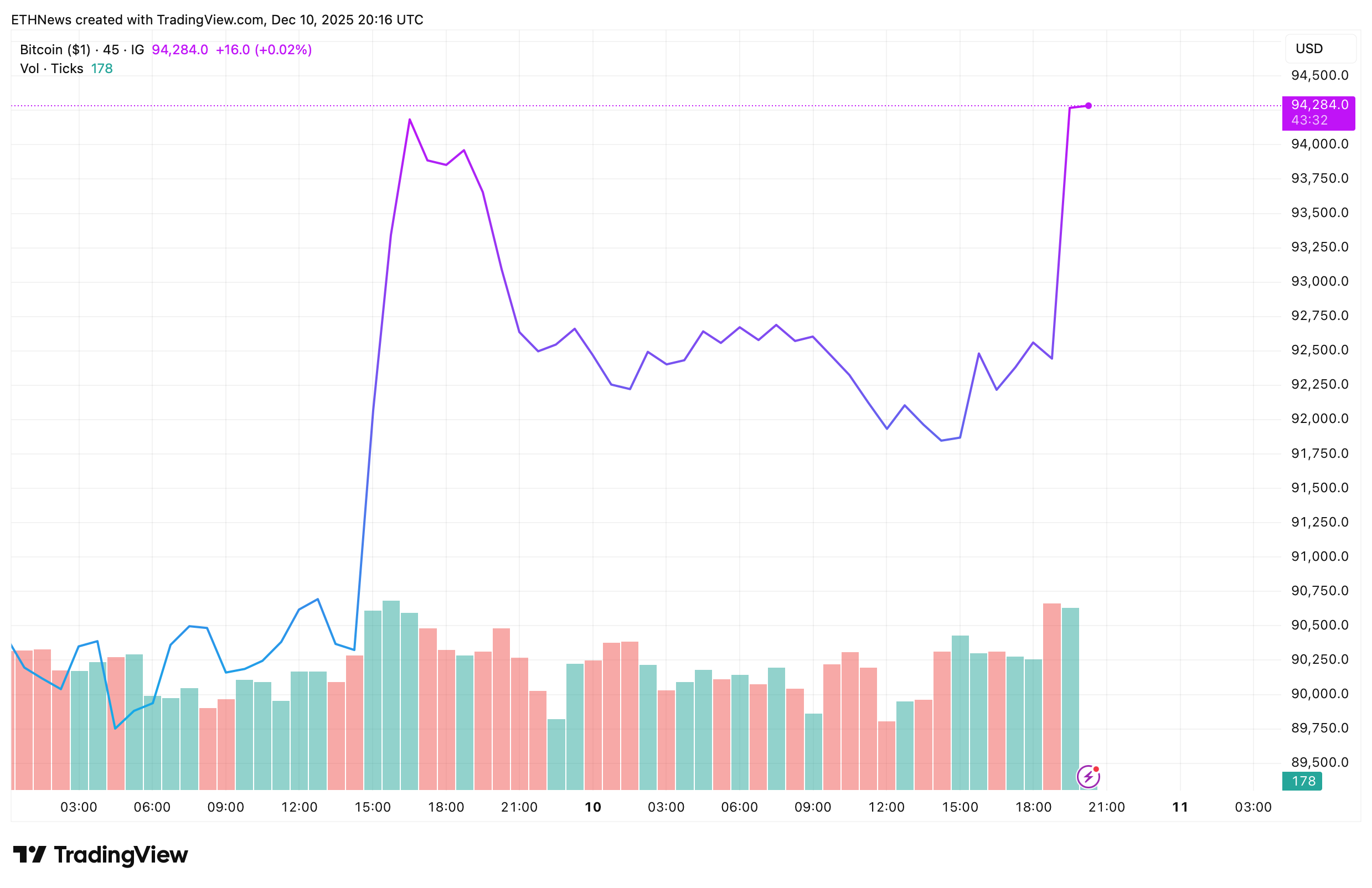
Volume remained steady throughout the session, with a slight pickup during the reversal phase. This reflects buyers stepping back in as macro conditions turned more supportive. Despite earlier volatility, the chart highlights a constructive reaction: Bitcoin reclaimed a key psychological level and avoided deeper downside continuation.
A Market Reset Into Year-End
With policy easing now underway and the Fed signaling it will adjust further if risks intensify, traders enter the coming weeks with a clearer macro backdrop. Bitcoin’s response to the rate cut shows that liquidity-sensitive assets remain reactive to shifts in monetary direction, especially when outlook uncertainty is elevated.