



Michael Burry, the investor renowned for accurately predicting the 2008 financial crisis, has once again voiced his strong disapproval of Bitcoin, asserting that the cryptocurrency holds "no intrinsic value."
Burry contends that Bitcoin's ascent to six-figure price levels is a clear indicator of a speculative bubble, devoid of any quantifiable fundamental support. During an appearance on Michael Lewis's podcast, the investor highlighted that the broad acceptance of Bitcoin's inflated valuations reflects market behavior characteristic of speculative frenzies.
Burry achieved widespread recognition for his prescient identification of critical vulnerabilities within the housing market that ultimately preceded the 2008 financial collapse. This insightful prediction was famously documented in Michael Lewis's book, "The Big Short," and subsequently adapted into a critically acclaimed film directed by Adam McKay.
Bitcoin has recently traded above the $100,000 mark. While it has experienced a significant increase from its prior price levels and is up 6% for the current day, it has seen an 18% decline over the past three months.
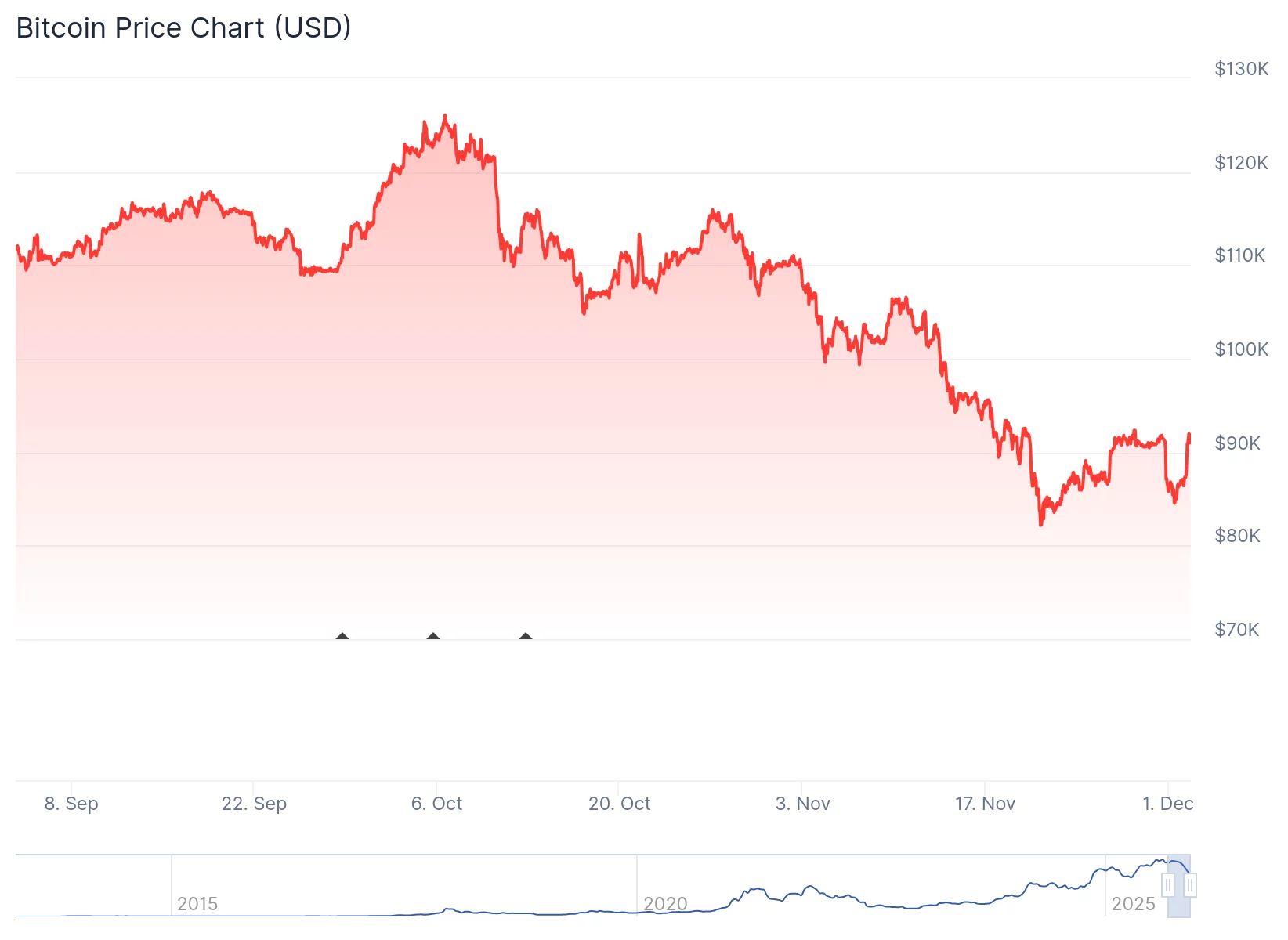
Despite these criticisms and market fluctuations, the cryptocurrency has successfully attracted both institutional and retail investment, even as the debate surrounding its intrinsic value persists.
Burry has consistently maintained a critical perspective on Bitcoin over an extended period. He has frequently questioned its valuation methodologies and drawn parallels between its price movements and historical speculative manias.
These pronouncements from Burry emerge at a time when cryptocurrency markets are enduring substantial volatility. Bitcoin's price is subject to fluctuations influenced by evolving regulatory landscapes and shifting investor sentiment.
Broader Market Concerns
Burry's apprehension extends beyond Bitcoin. He expressed to Lewis on the "Against the Rules" podcast that he believes the stock market is currently in a precarious position and could face several challenging years.
Burry explained to Lewis that the concentration of capital and the inflated valuations of assets have distorted price discovery mechanisms. This, he argued, has created conditions ripe for an exceptionally widespread market crash.
He further posited that the passive nature of the market structure would exacerbate the impact of any downturn, leading to a synchronized decline across most assets. This scenario, he suggested, would make it exceedingly difficult to maintain a profitable long position in any asset.