


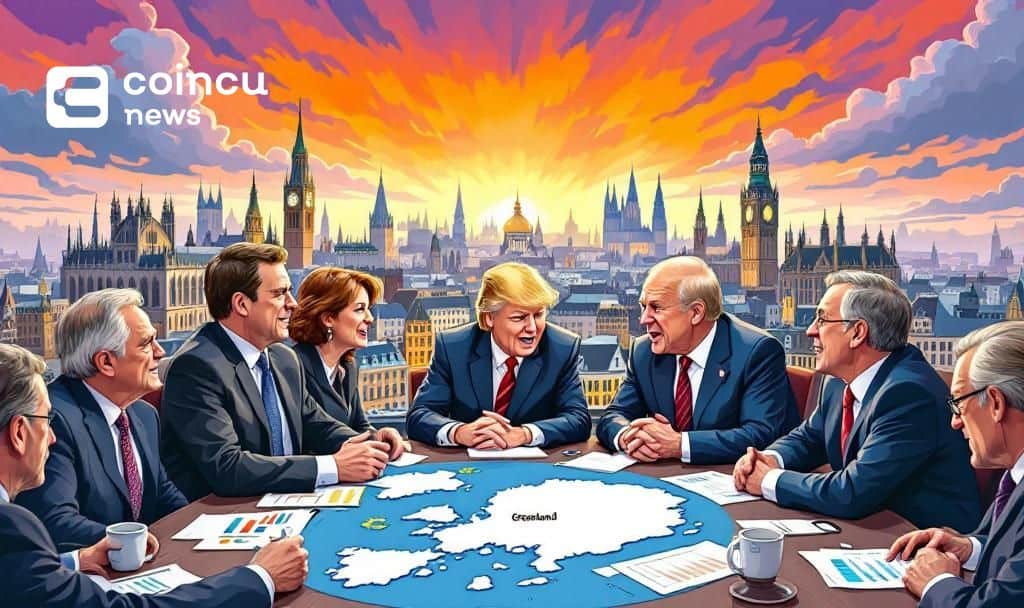
EU Prepares for Emergency Summit
On January 22nd, the European Union will convene an emergency summit in Brussels to address U.S. President Trump's tariff threats against countries opposing the Greenland acquisition. The summit signifies escalating tensions that could impact EU-US trade relations, with the EU poised to deploy countermeasures if U.S. tariffs proceed.
Engagement Over Escalation
The EU's response focuses on engagement with the US rather than escalating tensions. Officials emphasized ongoing communication at all levels with the US to address the situation. The commitment to dialogue is a testament to the strength of diplomatic ties. Intensive consultations among EU member states are underway to devise potential countermeasures against the proposed tariffs.
Amidst this evolving situation, market responses and official reactions remain measured. The EU is committed to protecting its interests and has the necessary tools ready, should the US implement these tariffs, reinforcing the EU's position in this complex geopolitical issue.
Historical Context and Economic Ramifications
While the US and EU have faced tariff disputes before, such a summit focusing on a potential acquisition and subsequent tariffs is a relatively unusual diplomatic response, underscoring the unique geopolitical dynamics at play. Looking back, the EU and US have engaged in similar negotiations to resolve trade disputes. These situations often result in tentative agreements or retaliatory measures. Financial impacts depend on the outcomes of these talks, as market confidence can be affected by the uncertainty surrounding potential tariffs.
Experts suggest that the EU's readiness to respond with its own tools could lead to economic ramifications for both regions. Historical trends indicate that such trade tensions, if unresolved, could lead to changes in currency rates, import-export balances, and overall investor confidence.