


Trump's Tariff Dividend Plan
Former U.S. President Donald Trump has announced a plan to distribute a "tariffs dividend" to American citizens, a move he claims will leverage economic benefits and boost markets. The announcement, made on Truth Social, detailed a plan to allocate between $1,000 and $2,000 to each adult American. This policy is set to utilize approximately $195 billion in tariff revenues from the fiscal year.
This initiative is expected to inject a significant new wave of liquidity into the economy, drawing parallels to the impact of earlier stimulus efforts. The anticipated liquidity boost has already shown considerable influence on cryptocurrency markets.
Market Impact and Bitcoin's Surge
Following Trump's announcement, Bitcoin's price surged dramatically, breaking above the $90,000 mark. This surge indicates an increased market risk appetite, driven by the anticipation of enhanced liquidity. On-chain data and prevailing market sentiment suggest a positive outlook for risk assets.
Anthony Pompliano commented on the potential impact, stating, "The $2,000 dividend will release strong liquidity," underscoring the speculative interest in major cryptocurrencies. This reaction highlights the sensitivity of digital asset markets to macroeconomic policy announcements.
Bitcoin's Price Performance and Historical Context
Bitcoin (BTC) is currently priced at $90,737.96, showing a 7-day gain of 8.05% and a market capitalization of $1.81 trillion. While the past 60 days have seen a 19.94% decrease, the recent surge indicates a renewed upward momentum.
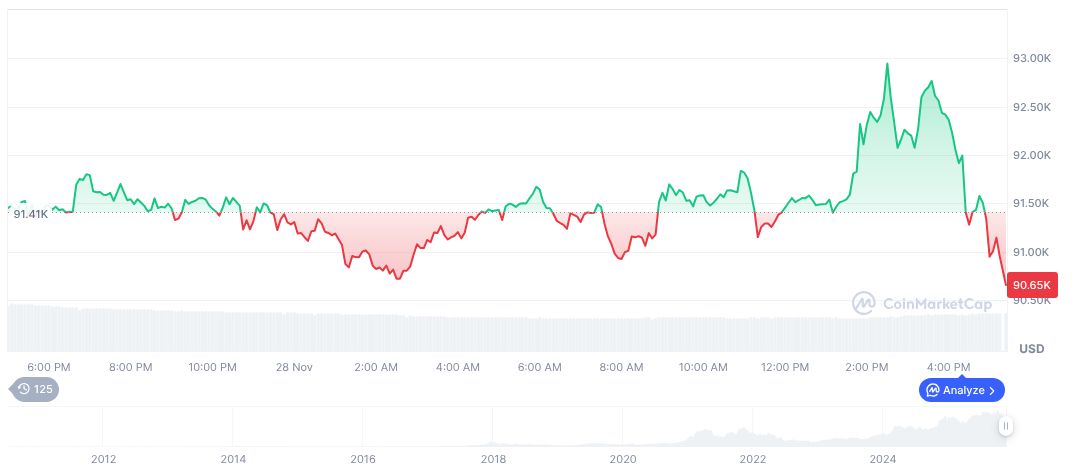
Historically, tariff-driven liquidity distributions have demonstrated a capacity to bolster crypto prices. This pattern is reminiscent of the market responses observed during the initial COVID-19 stimulus check distributions, suggesting a potential precedent for the current surge.
Coincu's research team anticipates that the tariff dividend could further stimulate market activity, potentially driving increased capital inflow into cryptocurrencies. Historical trends suggest that such economic policies may enhance speculative buying in digital assets.