



BitMine's Strategic Ethereum Purchase
BitMine's substantial Ethereum acquisition has captured attention after the firm purchased $480 million worth of the cryptocurrency as market volatility continued. The move underscores BitMine's long-term confidence in Ethereum's trajectory, with Chairman Tom Lee suggesting it may undergo a super cycle similar to Bitcoin.
Immediate implications of this acquisition signal a bullish outlook, particularly among institutional investors, as Ethereum's potential for nonlinear growth mirrors Bitcoin's past trends. BitMine's strategic holding aligns with Lee's belief that holding through market dips can lead to significant returns.
Market reactions have been focused on Lee's statements about Ethereum, with many observing parallels to Bitcoin's historical growth patterns. As Lee maintains, "Investors must hold on during critical moments," emphasizing the need for patience and conviction.
Ethereum's Growing Role in Institutional Portfolios
In 2017, Bitcoin's price was around $1,000 when BitMine first recommended it. Despite numerous significant drawdowns, it has increased 100-fold by 2025.
Bitcoin currently trades at $94,812.54, with a market cap exceeding $1.89 trillion and dominance of 59.12%. In the past 90 days, prices have fallen by 18.49%. Data points to great volatility reflecting the asset's speculative nature and investor sentiment.
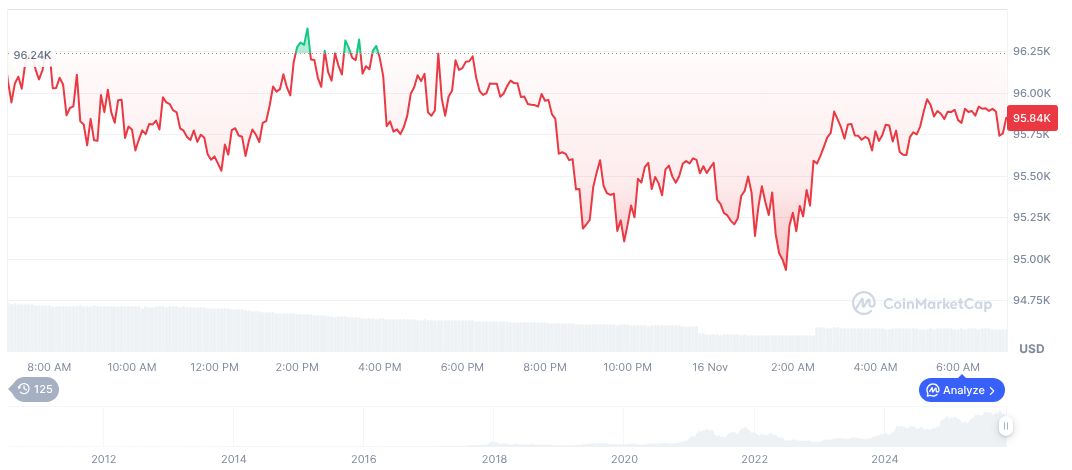
Insights suggest that BitMine's latest Ethereum acquisition strategy could mirror past successful Bitcoin treasury models, emphasizing the growing role of digital assets in institutional portfolios. Such developments indicate Ethereum’s strengthening presence as a corporate reserve asset, potentially influencing its future market value.
Market Commentary and Investor Considerations
BitMine Chairman Tom Lee reaffirms Bitcoin's volatility and highlights Ethereum's emerging super cycle, noting significant investment while cautioning potential investors about market fluctuations.
These insights reflect increased corporate adoption of cryptocurrencies and underscore potential volatility in pursuit of long-term gains, influencing investor strategies and institutional treasury models.