


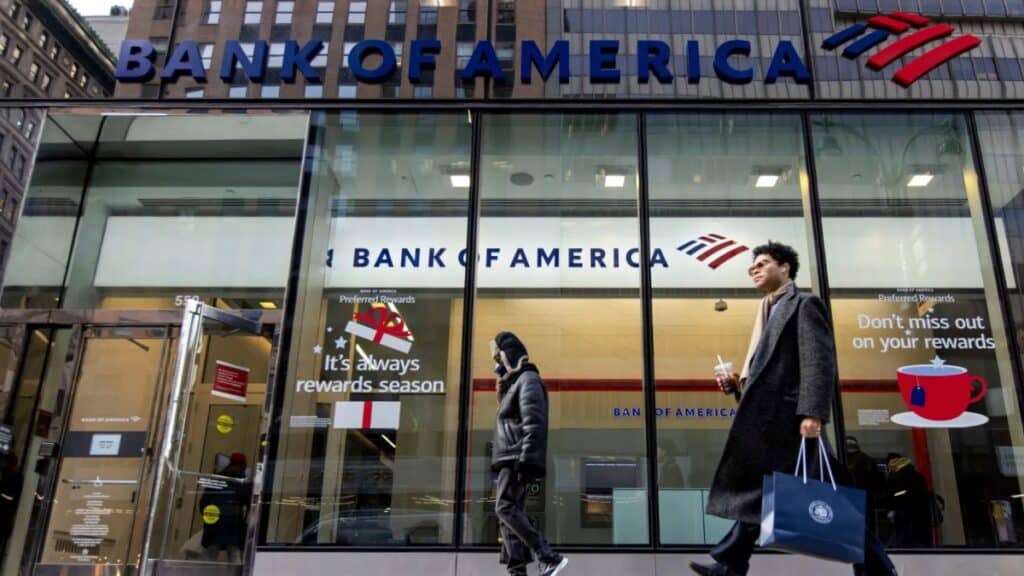
Bank of America is urging its wealth management clients to consider a modest allocation to digital assets, marking one of the most significant crypto endorsements yet from a major U.S. financial institution.
Beginning in January, advisers across Merrill, Bank of America Private Bank, and Merrill Edge will be able to recommend crypto exposure directly, reversing years of restricted access.
Recommended Allocation and Strategy
In new guidance released by the bank, investment strategists say a 1%–4% allocation to regulated digital asset products may be appropriate, depending on a client’s risk tolerance and interest in “thematic innovation.”
Chris Hyzy, chief investment officer at Bank of America Private Bank, said any exposure should be “regulated, thoughtful, and based on a clear understanding of both opportunities and risks.”
Spot Bitcoin ETFs Covered
Starting January 5, the bank’s chief investment office will cover four spot bitcoin ETFs: the Bitwise Bitcoin ETF (BITB), Fidelity’s Wise Origin Bitcoin Fund (FBTC), Grayscale’s Bitcoin Mini Trust (BTC), and BlackRock’s iShares Bitcoin Trust (IBIT). Previously, wealthy clients could only access crypto funds upon request, leaving advisers unable to proactively recommend them.
Industry Trend
Bank of America joins a growing number of Wall Street firms encouraging limited crypto exposure. Morgan Stanley recently suggested a 2%–4% allocation, BlackRock recommended 1%–2%, and Fidelity advocated 2%–5%, as much as 7.5% for investors under 30.
Nancy Fahmy, head of investment solutions at Bank of America, said the shift reflects “growing client demand for access to digital assets.”
Market Context
The policy change arrives during a volatile stretch for crypto markets. After peaking above $126,000 in early October, bitcoin has fallen roughly one-third to around $85,000 and remains down about 10% year-to-date.
Still, major financial institutions are moving quickly into crypto trading and custody services, helped by new regulatory clarity under the Trump administration and the removal of several Biden-era supervisory barriers. Many banks continue to wait for comprehensive congressional legislation, but for now, crypto is rapidly becoming part of mainstream portfolio construction.