


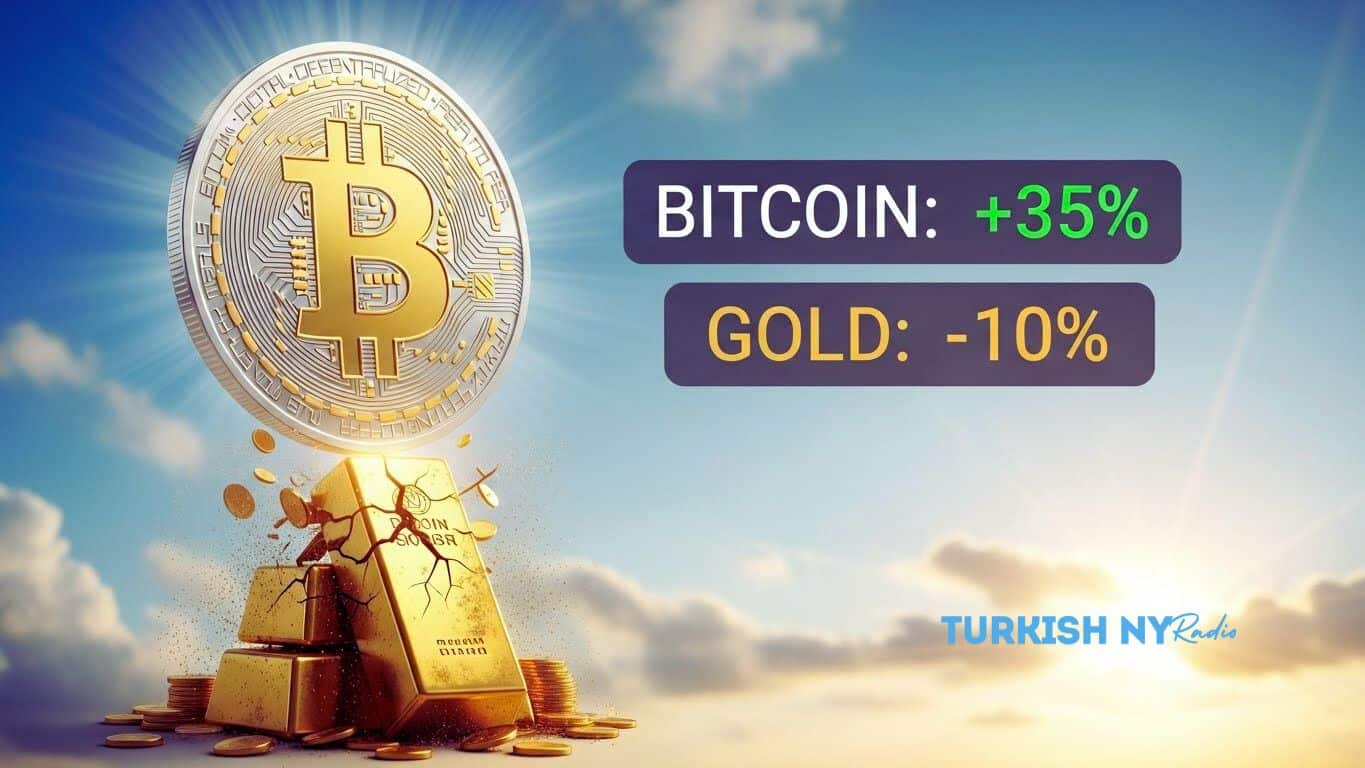
In the early days of December 2025, Bitcoin was trading at approximately $92,400 USD, while gold cost a little more than $4,238 per ounce. This comparison breathes new life into the ongoing debate between digital and analog stores of value, injecting fresh context into the recent high-profile discussion between the Binance founder and a gold-backed economist. The Bitcoin price and gold price serve as firm waypoints in a historical battle for value, utility, and faith.
Why Bitcoin Price Matters and Why it Still Holds the Edge
In the debate, Bitcoin proponents argued that Bitcoin is more predictable than gold due to its transparent ledger and public issuance schedule, contrasting this with the opaque global reserves of gold. This argument mirrors gold's steady upward trend, being up 50x from its introduction in 33 BC. The current Bitcoin price offers stark opposition to this steady upward trend, a testament to BTC's own remarkable returns across years and even decades.
Grayscale stated that Bitcoin's volatility, often criticized as its biggest risk factor, has produced greater long-term gains compared with bullion. This is seen by converts as a sign of confidence rather than weakness.

The difference in price between Bitcoin and gold emphasizes increasing assurance in digital money as a mechanism for hedging and value combination. Furthermore, the capacity to immediately prove transactions, send value across borders, and integrate into a modern financial system underscores Bitcoin's real-world usefulness. For some, the price of Bitcoin is secondary to its representation of an entirely different way to store value.
The Stability of the Price of Gold and Its Traditional Source of Value
While gold's percentage gains are not as high as Bitcoin's, its price acts as a reference point for those seeking stability. Gold perfectly juxtaposes with the perceived ephemerality of digital money and possesses a long, storied history as a store of value, which is important to conservative holders.
Though the spot gold price was around $4,238 an ounce, gold still holds allure for those weary of the volatility in digital assets. The metal's importance in industry and its role as a refuge during financial uncertainty bolster its appeal beyond mere speculation. Gold's tangible properties and longstanding stability offer psychological comfort that digital assets, regardless of Bitcoin price, do not always provide.
What the Price Difference Means for the Debate of BTC vs Gold
The delta between the price of Bitcoin and gold highlights an amazing juxtaposition of two different value propositions: digital scarcity on a network versus physical scarcity rooted in history. The rise in Bitcoin represents increased adoption, liquidity, and belief in decentralized systems, likely implying that the market is becoming increasingly confident in crypto as a store of value.
The stable price of gold supports demand for physical assets during times of macro volatility, such as inflation or geopolitical tension. This gap implies a changing sentiment, with institutional investors, global funds, and younger generations showing interest in Bitcoin, while retail traders continue to bet on gold for its perceived stability.
Tracking Bitcoin Price, Gold Price, and Market Signals
Both the price of Bitcoin and gold should be closely followed for market insights.
For BTC: A spike can be attributed to news, regulations, macroeconomic changes, or technical innovations that indicate potential price increases.
For Gold: Inflation patterns, central bank policy, and global uncertainty are likely to further support the "gold price," thereby strengthening gold's classical usage.
This relative comparison between Bitcoin price and gold price may influence investor strategies, whether they choose to dabble in the high-risk/return world of crypto or prefer the sturdiness that comes with gold.

Final Thought
The focus on Bitcoin price and gold price resurfaces a more fundamental question: What is value in the context of a rapidly changing world of finance? The current numbers suggest that Bitcoin is a compelling, high-growth alternative, but gold maintains its place of trust and tradition.
As markets mature, the BTC vs. gold discussion is not abstract; it mirrors decisions made by actual investors who need to weigh digital innovation against physical legacy.
A performance comparison of Bitcoin versus gold, including 1-year, 3-year, and 5-year returns, could further illuminate this discussion.
Summary
The debate between Bitcoin and gold as alternative investment options has been revived, with sentiment increasingly favoring digital value. Bitcoin, priced around $92,500, offers provable scarcity, fast payments, and a significant return curve, while gold, around $4,238, provides traditional belief with physical backing. This contrast highlights changing investor tastes amid growing institutional adoption of digital assets and the enduring appeal of safe-haven assets.
Glossary of Key Terms
Store of Value: An asset able to hold value over time. Both Bitcoin and gold serve as hedges, but through different trust and scarcity mechanisms.
Blockchain: A digital ledger that exists on the internet and tracks Bitcoin transactions publicly and permanently, allowing any two parties to transact without a trusted third party like a bank.
Scarcity: A basic economic principle stating that low supply results in high demand. Unlike gold, whose total amount is uncertain, there will only ever be 21 million bitcoins issued.
Volatility: Price fluctuations within an asset. Bitcoin is more volatile than gold, offering greater upside potential but also greater downside risk.
Liquidity: The speed at which an asset can be purchased or sold without causing significant price movements. Bitcoin has high liquidity on global exchanges, while gold trades across physical and financial markets.
Digital Asset: Any asset or value transferred and recorded in an electronic medium, such as blockchain or cryptographic systems. Bitcoin is the original digital asset, enabling global value exchange.
FAQs About Bitcoin Price
What accounts for the spread between the price of Bitcoin and gold?
For Bitcoin, market demand, global liquidity, digital adoption, and asset scarcity impact its price. For gold, industrial utility, inflation hedging, and physical reserves influence its price.
Why is Bitcoin better than gold now?
Bitcoin is quick and easy to send across borders for transactions or digital storage, verified transparently, and can be sent in large amounts with low fees. Gold, on the other hand, is primarily stored or traded for token uses and has limited industrial application.
Is Bitcoin more risky for long-term holders than gold is?
Price volatility remains a concern with Bitcoin, while gold remains more stable. However, the adoption rate on the Bitcoin network, its scarcity, and its performance are factors drawing investors seeking higher reward potential.
Is Bitcoin going to usurp gold as the No. 1 store of value asset?
Bitcoin's mounting price, increasing global usage, and clear supply support its preference as a digital asset. Nevertheless, traditional investors continue to favor physical, low-risk wealth protection.