


Bybit Secures Full UAE VAPO License and Outlines Institutional Ecosystem Roadmap
Bybit has announced its strategic roadmap, marked by the acquisition of a full UAE Virtual Asset Platform Operator (VAPO) license. This development signifies the exchange's commitment to a regulated, institution-focused digital asset ecosystem. The company revealed an expanded institutional Credit Suite and an ultra-low-latency execution architecture specifically designed for professional market participants.
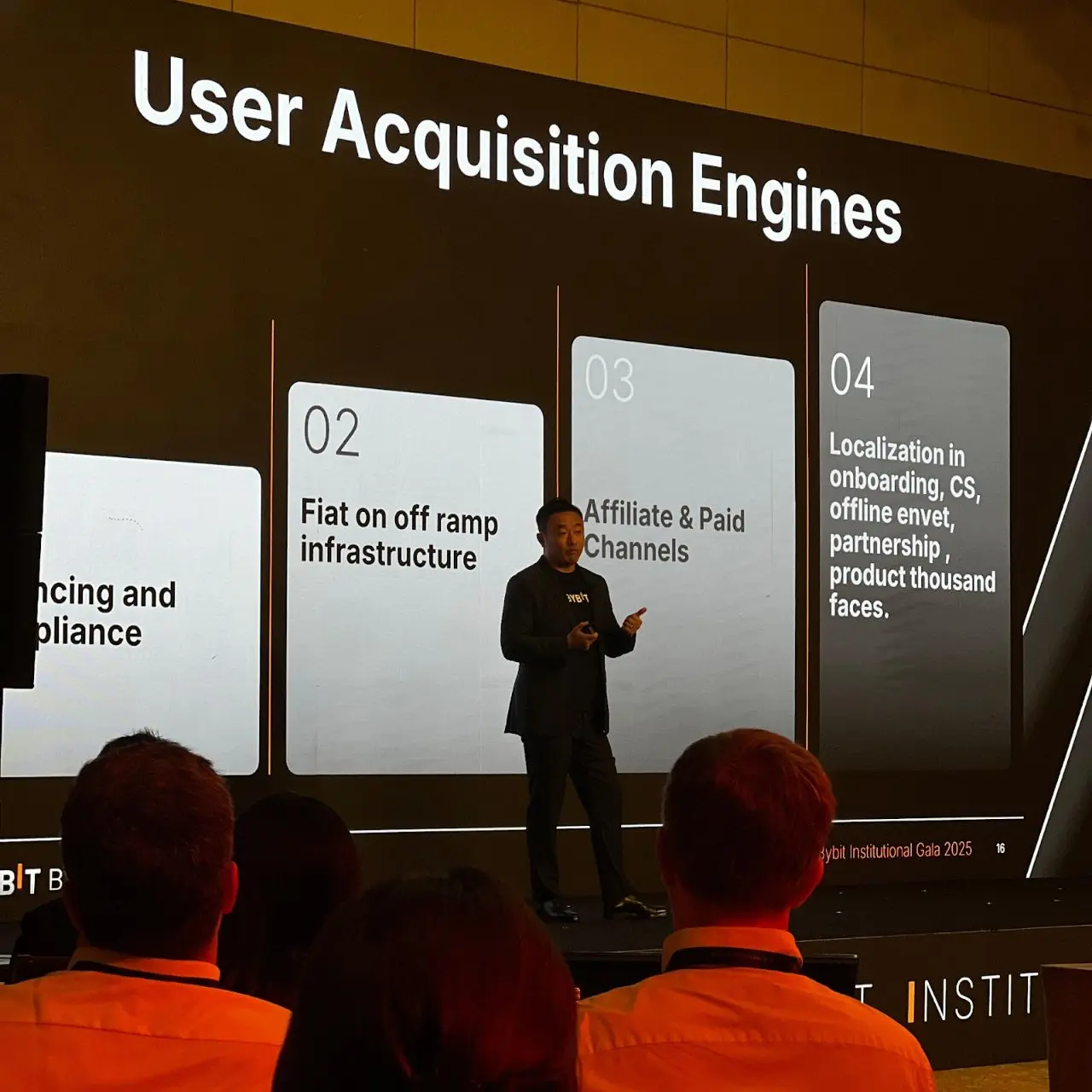
At the Bybit Institutional Gala event held in Dubai, leadership emphasized a unified future for traditional finance (TradFi) and cryptocurrency, supported by custody-integrated credit, enhanced governance, and rapidly scaling liquidity.
Regulatory Advancements and Institutional Demand
Ben Zhou, Bybit Co-founder and CEO, delivered a keynote speech at the event, confirming Bybit's receipt of full authorization under the UAE's VAPO framework. According to Zhou, this approval positions Bybit with one of the industry's most comprehensive supervisory structures, enabling the firm to offer a complete suite of institutional products from its UAE hub. He stated that these regulatory advancements allow the Dubai-based exchange to effectively meet the increasing demand from institutions that prioritize oversight and operational stability.
Increased Institutional Activity in Q4
During the Bybit Institutional Gala in Dubai, Ben Zhou reported a significant rise in institutional activity on the exchange. He highlighted that asset inflows increased from approximately $1.3 billion in Q3 to $2.88 billion in Q4. Furthermore, assets under management grew from $40 million in Q3 to $200 million in Q4. This trend indicates a growing preference among institutions for platforms that can demonstrate scale, robust governance, and transparent operations.

Zhou also explained how Bybit's retail infrastructure supports institutional adoption through offerings such as card, payment, and fiat integrations across 13 regions. This retail infrastructure contributes to a deep liquidity pool for professional traders. Bybit has expanded its partnerships with financial institutions in Europe and the Middle East, reinforcing its position as an execution venue for institutional clients.
The Virtual Asset Platform Operator (VAPO) license was described by Zhou as the cornerstone of the exchange's compliance-focused strategy moving into 2026. He reiterated that the VAPO regulatory framework provides institutional clients with a clear environment for participation, while also supporting Bybit's custody development, liquidity enhancement, and infrastructure service improvements.
Major Upgrades to Bybit's INS Credit Suite and MMGW
Yoyee Wang, Head of Business to Business at Bybit, elaborated on Ben Zhou's remarks by detailing two significant institutional upgrades to the exchange's ecosystem: an expanded INS Credit Suite and a redesigned Market Maker Gateway (MMGW) execution layer.
The upgraded Credit Suite now offers up to 5X leverage, TradFi-aligned loan-to-value parameters, and support for up to 1,000 sub-accounts. Demand for the INS Credit Suite program continues to grow, with the exchange recording $1.1 billion in INS loans in the fourth quarter, representing a 26% quarter-over-quarter increase.
A key component of the recent upgrade is the integration of custody-based real-world asset tokens into Bybit’s off-exchange credit ecosystem. This integration allows institutions to hold assets in custody, earn returns through tokenized money-market RWAs, and unlock credit. Wang described this as a comprehensive workflow combining custody, yield, and credit deployment.
Bybit's execution infrastructure, the MMGW environment, has been redesigned to reduce round-trip latency for institutional clients from 30 milliseconds to just 5 milliseconds. A further reduction to 2.5 milliseconds is planned for release in 2026. These upgrades are designed to improve consistency, stability, and predictability for market-making institutions. According to Wang, the credit and execution upgrades are integral to the exchange's strategy of providing integrated institutional services that encompass custody, credit access, execution performance, and governance standards.