


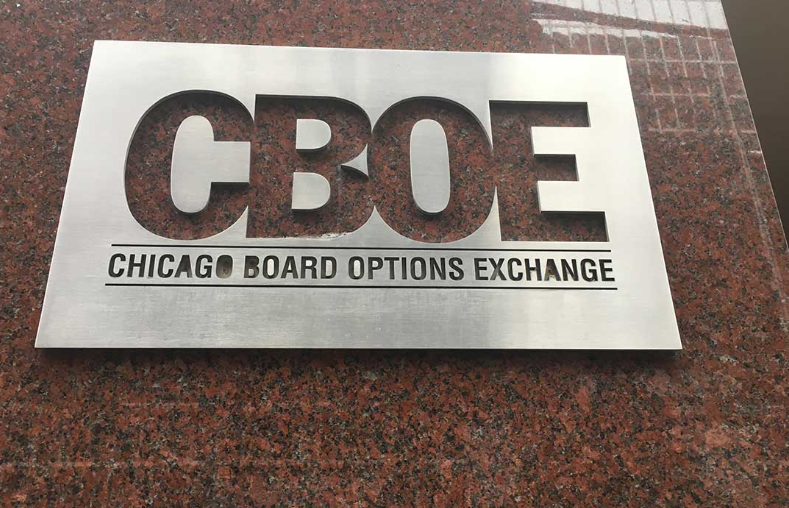
Cboe's New Crypto Derivatives
Cboe Global Markets is set to introduce bitcoin and ether “continuous futures” on December 15, marking the debut of the first U.S.-regulated crypto derivatives that operate similarly to perpetual futures. This initiative is currently awaiting final regulatory approval. Cboe has stated that these products are designed to provide institutions with a long-term, rollover-free method for trading cryptocurrency exposure. The contracts will be listed on the Cboe Futures Exchange under the ticker symbols PBT for Bitcoin Continuous Futures and PET for Ether Continuous Futures. Each of these products will have a 10-year expiration upon listing and will incorporate daily funding adjustments to maintain price alignment with spot markets. Settlement will be conducted in cash, rather than through physical delivery.
Traditional futures contracts typically expire on a monthly or quarterly basis, necessitating that traders "roll" their positions forward to maintain exposure. In contrast, perpetual futures, which are highly prevalent on offshore crypto exchanges, do not have an expiration date. Instead, they utilize daily funding mechanics to anchor their prices to the underlying asset. Cboe's continuous futures aim to replicate this structure but within the framework of U.S. regulatory oversight.
Rob Hocking, Cboe's global head of derivatives, explained that the new structure is intended to offer a compliant alternative to existing offshore perpetual products. He highlighted that the long-dated design and the funding adjustments are geared towards facilitating streamlined portfolio management while offering traders controlled leveraged exposure to digital assets.
Investor Takeaway
The introduction of U.S.-regulated perpetual-style futures could establish them as a fundamental liquidity tool for institutional investors who typically avoid offshore platforms. This development has the potential to influence the origin of significant funding flows within the crypto derivatives market.
Significance for Traders
Perpetual futures currently dominate the crypto derivatives markets. In September, trading volumes on decentralized exchanges reached a record high, exceeding one trillion dollars, while futures volumes on centralized exchanges approached seven trillion dollars, with perpetuals being the primary driver. Despite their widespread popularity, perpetuals have not been available in U.S. regulated markets due to structural and risk-related concerns. This situation compels U.S.-based institutions to either abstain from perpetuals or seek exposure through offshore channels, where counterparty and compliance risks are elevated.
Cboe's objective is to bridge this gap. The new continuous futures offer several key advantages for institutional and sophisticated traders:
- •Long-term exposure without roll costs. Positions can be held for extended periods, potentially years, without the need to execute roll trades, thereby eliminating slippage and operational complexities.
- •Daily funding adjustments. Similar to perpetual futures, funding charges or credits are applied to keep the futures prices aligned with the spot rates of bitcoin and ether.
- •U.S. regulatory clarity. Clearing through Cboe Clear U.S. provides counterparty protections and margin oversight in accordance with CFTC rules.
- •Cross-margining potential. Traders may have the ability to offset margin requirements with their existing Cboe crypto futures positions, including the financially settled bitcoin (FBT) and ether (FET) contracts.
These contracts are scheduled to trade nearly continuously, from Sunday to Friday, between 6 p.m. and 5 p.m. Eastern Time, establishing a 23-hour trading schedule that mirrors the operational hours of global crypto markets.
Competition with Offshore Perpetuals
Cboe's strategic timing for this launch is notable. Perpetual futures represent one of the most profitable products in crypto trading, generating substantial fees across platforms like Binance, OKX, Bybit, and various decentralized exchanges. However, their offshore status has been a significant deterrent for many institutional players.
Cboe's continuous futures are likely to appeal to a range of market participants, including:
- •Hedge funds that require audited and compliant financial instruments.
- •Asset managers whose mandates restrict them from using offshore derivatives.
- •Proprietary trading firms seeking regulated environments for funding-rate trading.
- •Sophisticated retail traders looking for high-liquidity leverage without engaging with overseas entities.
Anne-Claire Maurice, managing director of derived data at Kaiko, commented that the introduction of perpetual-style futures into regulated markets addresses a genuine demand for long-term, efficient crypto exposure. She emphasized that institutions have been actively searching for methods to avoid operational rollovers while maintaining regulatory oversight.
The products will reference Cboe Kaiko Real-Time Rates, which aggregate extensive liquidity data to establish fair pricing benchmarks for bitcoin and ether. The daily funding amount will be adjusted for open positions based on their divergence from the spot benchmark. In a related development, the Singapore Exchange has also announced plans to offer bitcoin and ether perpetual futures, scheduled to commence on November 24, indicating a global trend towards regulated perpetual products.
Future of U.S. Regulated Crypto Derivatives
Should Cboe's continuous futures achieve widespread adoption, they could significantly alter how major market participants hedge their exposure and manage directional risk. Several potential market impacts are anticipated:
- •Shift of perpetual demand into regulated markets. Hedge funds and asset managers may increasingly favor compliant funding-rate products, leading to a migration of trading activity from offshore to regulated venues.
- •More stable funding-rate dynamics. The presence of U.S. oversight could help mitigate manipulation and the extreme funding swings that are often observed on offshore platforms.
- •Pressure on competitors. CME Group, which currently holds a dominant position in institutional BTC and ETH futures, may be prompted to introduce its own perpetual-style instruments in response to Cboe's offering.
Cboe's entry into this market occurs at a time when institutional interest in crypto derivatives remains robust, notwithstanding recent market volatility. With bitcoin trading below $93,000 and ether near $3,000, instruments offering long-dated exposure could experience immediate demand from funds seeking to position themselves around key macro and regulatory developments.