



Key Insights on Rising Crypto Fraud
A recent report from Chainalysis forecasts that losses from cryptocurrency scams and fraud could reach an alarming $17 billion by the year 2025. This projection is largely driven by a significant increase in impersonation scams and those leveraging artificial intelligence, marking a substantial escalation in the sophistication of crypto-related criminal activities.
The projected surge in scam losses highlights the growing challenges faced by individuals and institutions in the cryptocurrency space. It underscores the increasing complexity of fraudulent schemes and the continuous need for robust security measures and regulatory frameworks to protect market participants worldwide. These trends are expected to significantly impact trust within the digital asset market.
The Escalating Threat of Sophisticated Scams
Chainalysis's latest analysis indicates that the cryptocurrency landscape could see up to $17 billion in losses due to scams and fraud by 2025. A primary driver of this projected increase is the sharp rise in impersonation scams, which have reportedly surged by 1400% year-on-year. Furthermore, AI-enabled scams are proving to be exceptionally profitable, generating 4.5 times more revenue than traditional scam methods, according to Chainalysis.
These developments signify a clear shift towards more advanced and lucrative scamming techniques. The escalating prevalence of impersonation and AI-enhanced scams necessitates the urgent development and implementation of more sophisticated security measures. Without proactive intervention, these evolving threats could further undermine the integrity and stability of the cryptocurrency market.
While there have been no immediate public statements from key industry leaders or regulatory bodies regarding these specific findings, the report's implications are a cause for significant concern among all stakeholders. Detective Sergeant Isabella Grotto of the Metropolitan Police has previously commented on the profound impact of such investigations, stating, "This was a long, complex, and unprecedented investigation into the laundering of criminal proceeds through cryptocurrency... with support from Chainalysis, we were able to trace the movement of the cryptocurrency... and ultimately recover more than 61,000 bitcoin."
AI-Powered Scams Amplify Cryptocurrency Fraud
Artificial intelligence is proving to be a powerful tool for fraudsters, with AI-enhanced crypto scams demonstrating a profitability 4.5 times greater than traditional scam methodologies. This alarming trend in digital fraud indicates a concerning evolution that effectively surpasses the vulnerabilities left by older, less sophisticated methods.
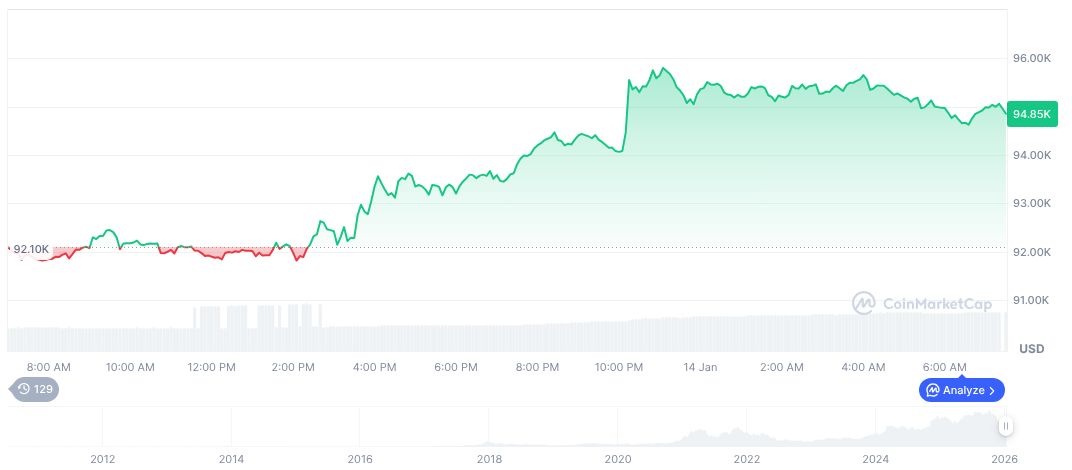
Bitcoin (BTC) continues to play a central role in both scams and law enforcement seizures. Its market dominance currently stands at 58.95%, with its price at $96,924.34, reflecting a 5.04% increase over the past 24 hours. The overall market capitalization for Bitcoin is $1.94 trillion.
The Coincu research team suggests that an increase in regulatory oversight and advancements in AI for defensive purposes could potentially mitigate these growing losses. However, the current disparity in technological capabilities between malicious actors and protective measures leaves ample room for exploitation, emphasizing the critical need for proactive strategies to counter these threats.
Detective Sergeant Isabella Grotto further stresses the importance of heightened vigilance against both impersonation tactics and scams that utilize artificial intelligence.