


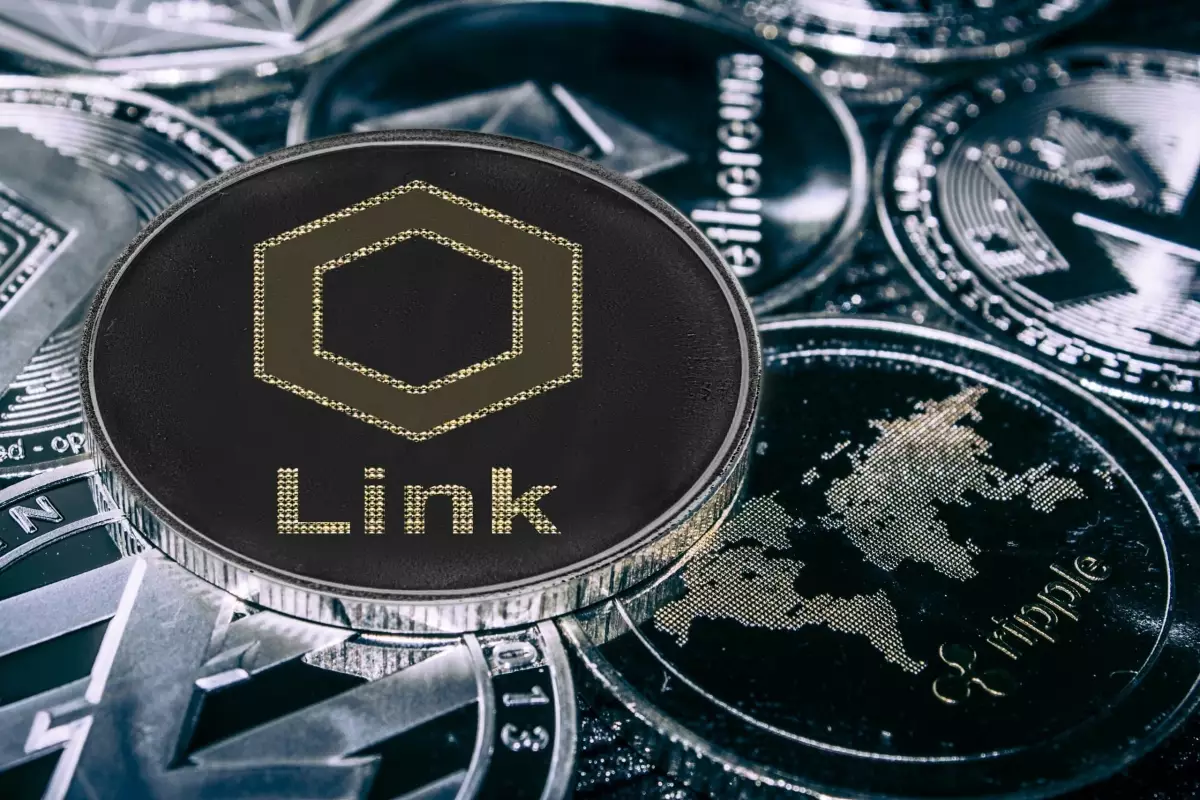
Grayscale's New Perspective on Chainlink
Grayscale now argues that the description of Chainlink as merely a price feed provider is far too limited. In its latest research paper, the asset manager states that Chainlink should be viewed as the digital bridge that could make global finance run on tokenized infrastructure.
The report, titled "The LINK Between Worlds," suggests that every serious attempt to move traditional assets—bonds, funds, commodities, settlement records—onto blockchain rails will require a platform that can connect these systems to existing financial architecture. In Grayscale’s view, Chainlink has quietly built exactly that.
Beyond Price Feeds: Chainlink's Core Infrastructure
Rather than focusing on price feeds, the research highlights areas of Chainlink that rarely appear in retail discussion: secure automation, institutional-grade compliance tooling, and cross-chain messaging. The centerpiece of this is CCIP (Cross-Chain Interoperability Protocol), a communication protocol that allows transactions, data, and instructions to move between blockchains and off-chain systems without relying on centralized intermediaries.
Institutional Adoption and Pilot Programs
This argument isn’t theoretical. The paper points to experiments already underway at some of the world’s most powerful financial entities. J.P. Morgan, S&P Global, DTCC, ANZ, and FTSE Russell are named among the institutions that have tested tokenization pilots powered by Chainlink services. According to Grayscale, these trials represent the early stages of a shift that could redraw the operational map of the financial sector.
The Potential of Tokenization and Chainlink's Role
Even with rapid growth, tokenized assets barely register when compared with the size of global markets. That mismatch—a tiny current footprint versus massive addressable volume—is the basis of Grayscale’s long-term optimism. The report argues that if tokenization is destined to scale, middleware connecting legacy infrastructure with public blockchains becomes unavoidable.
From an investment standpoint, the firm frames LINK as exposure to the tokenized economy rather than to a single blockchain. Because Chainlink is integrated across dozens of ecosystems, the report describes LINK as a cross-industry, multi-chain asset whose value capture is tied to oracle operations, cross-network messaging, and staking incentives.
Grayscale's Proposed GLNK Spot ETF and Staking
Then comes a significant development: the research was released only days after Grayscale filed to transform its Chainlink Trust into a spot ETF called GLNK that includes staking. If the filing is approved, institutional investors would gain direct, regulated access to LINK—plus staking rewards—through a traditional exchange-traded vehicle. Grayscale implies that this could drastically widen participation in the Chainlink ecosystem.
Conclusion: Chainlink at the Forefront of Tokenization
Taken together, the message from Grayscale is clear: tokenization is in its early stages, institutions are already experimenting with its potential, and Grayscale believes Chainlink sits at the nexus of everything that comes next in this evolving financial landscape.