



China Poly Group Distances Itself from Stablecoin Claims
China Poly Group has issued a statement on October 25th denying any involvement with a rumored "Poly Stablecoin in Hong Kong." The company clarified that its registered entities have no affiliation with any Hong Kong-based companies associated with this stablecoin initiative. This statement aims to address misinformation and urges the public to exercise caution and conduct due diligence. Chinese regulators are intensifying their scrutiny of private-sector stablecoin activities, which aligns with the nation's broader monetary policies.
The absence of recognized involvement from Poly Group highlights ongoing trends of heightened regulatory oversight surrounding private-sector stablecoin efforts in China. Local authorities are working to maintain financial integrity and control over currency creation, while also prioritizing the protection of the e-CNY, China's digital yuan.
In response to the circulating rumors, the Hong Kong Monetary Authority (HKMA) has reiterated its stance, stating that it has not approved any stablecoin issuers. Market expectations for private-sector stablecoin issuances in Hong Kong are being tempered by these regulatory interventions.
Regulatory Concerns Mount Over Unauthorized Stablecoin Issuers
In October 2025, similar regulatory actions led to the suspension of stablecoin projects by Ant Group and JD.com, underscoring China's stringent control over private digital currency ventures.
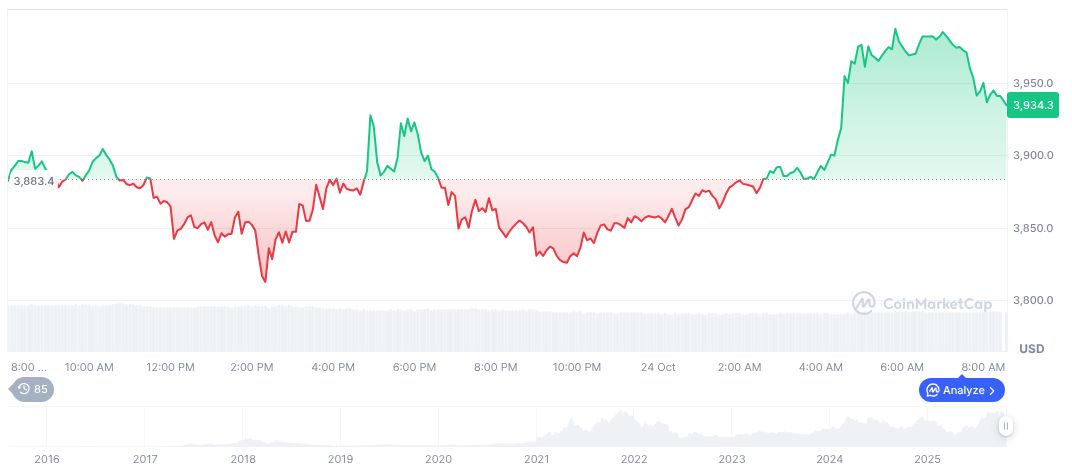
In the cryptocurrency markets, Ethereum (ETH) showed some movement as of October 25. With a current price of $3,933.24, according to CoinMarketCap, ETH experienced a 24-hour trading volume decrease of 8.11%, despite a 1.81% price rise over the same period. The market capitalization stands at 474,735,692,002.72 million, with market dominance at 12.68%.
Insights from the Coincu research team indicate potential regulatory reforms threatening private stablecoin plans in regions like Hong Kong. Technology-led initiatives, combined with regulatory challenges, are shaping a landscape where state-backed currencies like the e-CNY are prioritized over decentralized counterparts.