



China's leading financial self-regulatory bodies have issued a risk warning, reaffirming the ban on virtual currency activities. This announcement targets both domestic participants and overseas platforms serving Chinese users, significantly affecting asset token activities and enforcement against illegal financial operations.
Regulatory Stance and Legal Implications
China's financial associations have issued a collective warning against illegal virtual currency and asset token activities, reinforcing prior regulatory stances. The announcement targets both domestic participants and overseas platforms serving Chinese users. The China Banking Association emphasized that staff or institutions in China assisting overseas crypto platforms may bear legal liability.
Virtual currencies are declared as having no legal tender status in China, and stringent measures are suggested to mitigate significant money-laundering and fraud risks. Regulatory bodies emphasize the illegal nature of RWA tokenization within China.
"Virtual currencies and stablecoins have no legal tender status in China, and all related trading and intermediary services are deemed illegal financial activities."
Market reactions to the statement have been muted, with officials reiterating a zero-tolerance approach to non-compliant activities. The announcement reaffirms a consistent legal interpretation, although major shifts in policy enforcement are not expected.
Bitcoin Market Context Amidst China's Ban
China's regulation of virtual currencies follows similar bans in 2017 and 2021, maintaining stringent control over digital financial activities.
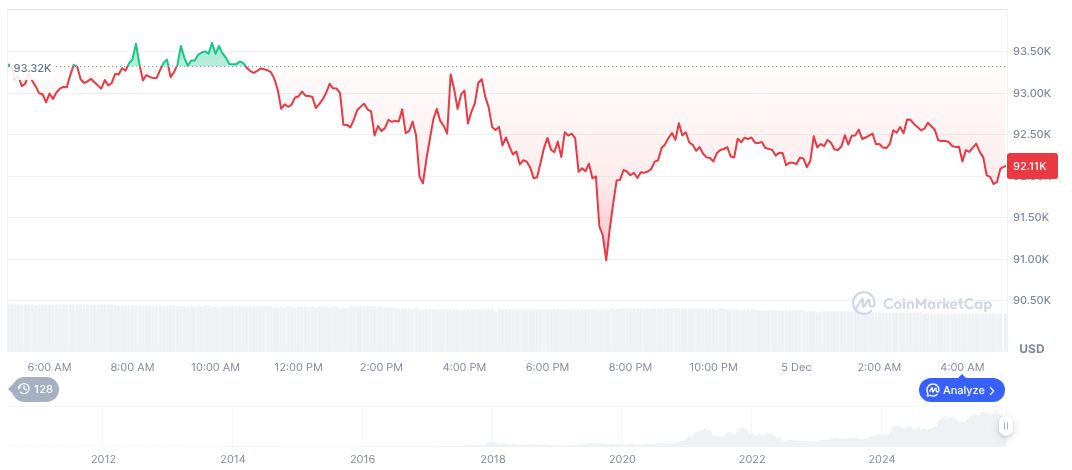
Bitcoin currently trades at $91,442.68 with a market cap of $1.82 trillion. Its market dominance is 58.72%, and recent price movements indicate a 1.71% drop over 24 hours and a 0.18% rise over the past week.
The Coincu research team identifies enhanced financial stability and reduced speculative risks as potential regulatory outcomes. While Chinese policies often shape global sentiment, their onshore effects are mitigated by offshore market alternatives.