



Key Takeaways
- •The People's Bank of China (PBOC) has reiterated that virtual currencies are illegal in China.
- •Stablecoins are specifically identified as risky virtual currencies subject to this policy.
- •This regulatory stance aims to support and promote the adoption of China's digital yuan.
PBOC Intensifies Crackdown on Virtual Currencies
On November 28th, the People's Bank of China convened a meeting to firmly reassert its position against virtual currencies, underscoring their illegality within the country and highlighting the inherent financial risks they pose. This intensified regulatory action is expected to channel financial activities towards the digital yuan, potentially leading to significant shifts in China's monetary system and having ripple effects on global cryptocurrency markets.
Virtual currencies have been officially declared as illegal financial activities in China, lacking the legal standing of official fiat currency. The meeting was presided over by PBOC Governor Pan Gongsheng, who is known for his stringent approach to cryptocurrencies. The emphasis was placed on rigorous enforcement of laws against such activities. According to Jinshi, a commentator for PANews, "The PBOC’s ongoing measures are indicative of a tough regulatory stance to reduce domestic speculation on cryptocurrencies."
The crackdown explicitly includes stablecoins, which are categorized as risky virtual currencies. These digital assets are considered problematic due to their potential for misuse, including activities like money laundering, and their failure to meet established anti-money laundering standards. This policy reinforces China's commitment to its state-backed alternative, the digital yuan, which is progressively gaining traction.
Industry analysts have observed a potential reallocation of capital flows towards assets that comply with regulatory frameworks. This stringent policy is driving increased adoption of the digital yuan, which is already being utilized across 26 regions with transactions totaling 14.20 trillion yuan. Governor Pan Gongsheng's firm stance is anticipated to influence cryptocurrency exchanges and individual users both within China and internationally.
China's Strategic Policy Shift: Targeting Stablecoins and Promoting Digital Yuan
China's decisive actions in 2024 have demonstrably reduced the domestic use of Bitcoin, encouraging users to transition towards the digital yuan. This strategic approach serves to bolster the use of its official digital currency while simultaneously mitigating the risks associated with decentralized digital assets.
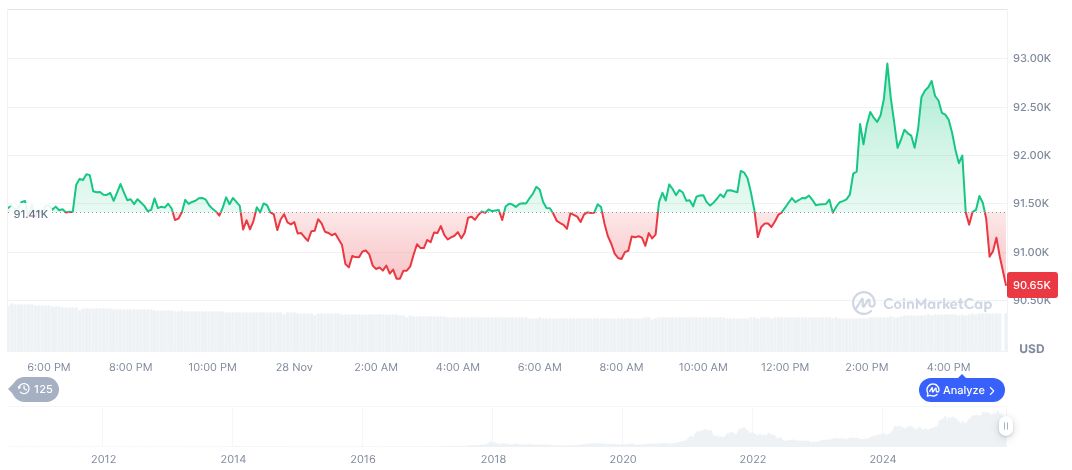
Bitcoin (BTC) was last quoted at $90,591.15, reflecting a 7.16% increase over the past week. However, it experienced a slight dip of -0.87% in the preceding 24 hours. Its market capitalization stands at $1.81 trillion, with notable trading volatility observed in recent months.
The Coincu research team forecasts that the digital yuan will exert a greater influence both domestically and potentially on a global scale. This strategic direction is expected to necessitate financial and technological adaptations, aligning with China's broader digital currency strategy. This reflects China's overarching objective to establish a highly regulated and controlled monetary system.