


Coinbase has abandoned plans to acquire stablecoin infrastructure firm BVNK in a deal valued at an estimated $2 billion. The talks between the two companies, which had progressed to the due diligence stage, have now concluded.
The US-based cryptocurrency exchange confirmed the decision in a statement to Fortune, indicating that both parties "mutually agreed to not move forward." No further details regarding the reasons for the termination of the deal were provided.
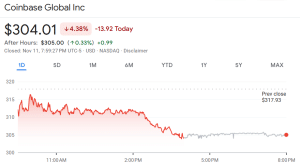
Following the news, Coinbase shares (COIN) experienced a decline, falling more than 4% in yesterday's trading session. This marks a nearly 15% loss for the stock over the past month.
Coinbase's Interest in BVNK Amid Stablecoin Market Growth
Coinbase's discussions with BVNK occurred during a significant upswing in the stablecoin market. This growth was notably spurred by the enactment of the GENIUS Act in July, signed into law by US President Donald Trump. The legislation provided much-needed regulatory clarity for the stablecoin market, encouraging institutions to adopt stablecoins as a means to modernize traditional payment systems.
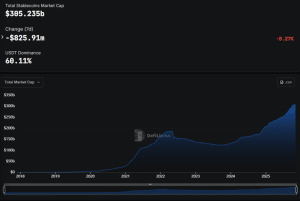
The total market capitalization of the stablecoin sector has now surpassed $305 billion, according to data from DefiLlama. Major financial players, including Stripe, Western Union, Bank of America, and Citibank, are among those actively seeking to leverage the growing potential of this sector.
Stablecoins are already a crucial revenue stream for Coinbase. In its third-quarter earnings report, the exchange disclosed that stablecoin services generated $355 million in revenue, representing approximately 19% of its total revenue of $1.8 billion for the period.
Our Q3 2025 financial results are now live. pic.twitter.com/FyukJgfDsj
— Coinbase 🛡️ (@coinbase) October 30, 2025
Coinbase's Active Acquisition Strategy
Coinbase has pursued an aggressive acquisition strategy throughout the current year. Had the BVNK deal been finalized, it would have ranked as its second-largest acquisition, following the $2.9 billion purchase of crypto derivatives exchange Deribit in August.
Key acquisitions made by Coinbase this year include:
- •BUX (Cyprus unit) – January
This acquisition provided Coinbase with a Cyprus Investment Firm license, enabling the company to offer contracts for differences (CFDs) and broaden its regulatory reach across the European Economic Area.
- •Spindl – January
A San Francisco-based on-chain advertising and attribution platform, founded by a former lead at Facebook's advertising division. The acquisition aims to enhance Coinbase's data and marketing capabilities.
- •Deribit – May
The $2.9 billion acquisition of the leading crypto derivatives exchange significantly expanded Coinbase's presence in institutional and derivatives trading.
- •Liquifi – July
A startup focused on token distribution and management, this acquisition bolstered Coinbase's infrastructure for tokenization and asset issuance.
- •Echo – October
Acquired for approximately $375 million in cash and equity, Echo is a community and on-chain capital raising platform that has facilitated over $200 million in funding across roughly 300 deals.
Crypto-Friendly Regulatory Environment Fuels Industry Acquisitions
The increasingly favorable regulatory environment for cryptocurrencies in the US, under the Trump administration, has also prompted other crypto firms to pursue strategic acquisitions.
Ripple, the company behind XRP, has also been active in the M&A space, announcing several acquisitions this year.
Ripple's acquisitions include prime-brokerage Hidden Road for approximately $1.25 billion, stablecoin payments platform Rail for $200 million, corporate treasury management firm GTreasury for $1 billion, and custody infrastructure firm Palisade for $1 billion.
MoonPay, a company specializing in crypto payment infrastructure, also acquired Helio for around $175 million.