


Banks Explore Crypto Integration Amidst Market Fluctuations
Coinbase commenced live pilot programs with several of the largest U.S. banks this week, focusing on testing stablecoins, custody services, and cryptocurrency trading. These trials began as the market has experienced a sustained downturn since October.
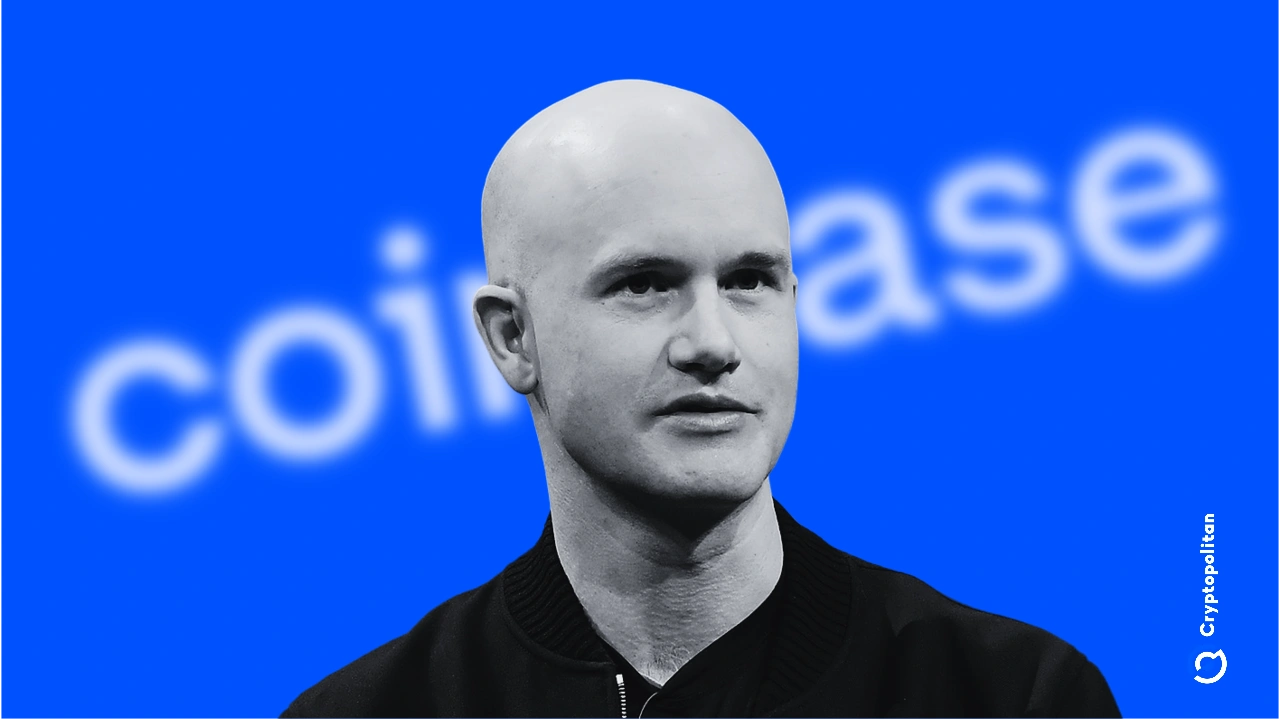
According to Coinbase CEO Brian Armstrong, the participating banks view cryptocurrency as a viable business line rather than a peripheral project. This development is occurring within regulated U.S. financial institutions, coinciding with a favorable regulatory environment under President Donald Trump's second term.
Armstrong discussed these initiatives at the New York Times DealBook Summit alongside Larry Fink, CEO of BlackRock Inc. The conversation centered on the evolving landscape of cryptocurrency and the tokenization of stocks and other real-world assets.
Larry Fink recalled his earlier skepticism towards Bitcoin in 2017, contrasting it with BlackRock's current position as the operator of the world's largest Bitcoin exchange-traded fund. He expressed significant optimism about Bitcoin's future use cases. Prominent financial leaders such as Jamie Dimon, Brian Moynihan, and Jane Fraser have also demonstrated renewed interest, and Morgan Stanley has integrated crypto trading into its E*Trade platform.
Regulatory Environment Facilitates Bank Engagement with Crypto
The renewed engagement between Wall Street and the cryptocurrency sector has intensified following President Donald Trump's return to the White House for a second term. Concurrently, Congress has advanced the first federal framework for stablecoins, which are dollar-pegged tokens designed for rapid payments.
Despite these policy advancements, the market has continued to experience a selloff. This decline followed an earlier tariff announcement and was exacerbated by the unwinding of leveraged trades and a general erosion of confidence. Tokens associated with Trump and his associates were among the most significantly impacted.
Brian Armstrong stated that the current price action does not alter his long-term market strategy. He articulated to the DealBook audience his belief that the value of equities, bonds, and real estate will eventually be represented as tokens on open networks.
Larry Fink corroborated this perspective by citing current data on digital wallets. He noted that approximately $4.1 trillion is held in digital wallets globally, predominantly in stablecoins. Fink suggested that these funds could circulate more freely if other asset classes were tokenized.
Fink further characterized Bitcoin as an "asset of fear," explaining that individuals hold it due to concerns about both physical and financial security, as well as the weakening of fiat currencies due to deficits. This analysis resonated strongly within the summit audience.
Stablecoins Linked to Debt and Global Financial Flows
The newly enacted stablecoin legislation has reignited discussions on Wall Street regarding the potential for these dollar-based tokens to stimulate demand for short-term Treasury bills and bolster the U.S. dollar. U.S. Treasury Secretary Scott Bessent projected last month that the market for dollar-backed stablecoins could expand from its current $300 billion to $3 trillion by 2030.
The statute mandates that stablecoin issuers fully back their tokens with Treasury bills and cash-equivalent reserves. Bessent indicated that increased demand would enable the Treasury to issue more bills, reduce reliance on long-term bonds, and alleviate pressure on mortgage rates and other critical borrowing costs.
Strategists from JPMorgan, Deutsche Bank, and Goldman Sachs caution that it is premature to view stablecoins as a definitive solution for U.S. funding requirements, regardless of the Trump administration's optimism. Stephen Miran, a Federal Reserve governor and White House chief economist, suggested that demand within the United States might remain constrained. He posited that the broader adoption of stablecoins is more likely to occur overseas, where buyers might accept zero yield for dollar access. In a recent address, he drew parallels between stablecoins, Federal Reserve bond purchases, and the global savings glut that previously contributed to lower interest rates.
Standard Chartered has issued a warning that up to $1 trillion could be withdrawn from banks in developing nations by 2028 if funds migrate into stablecoins. This potential risk has prompted the European Central Bank and the People's Bank of China to pursue the development of their own digital currencies.