


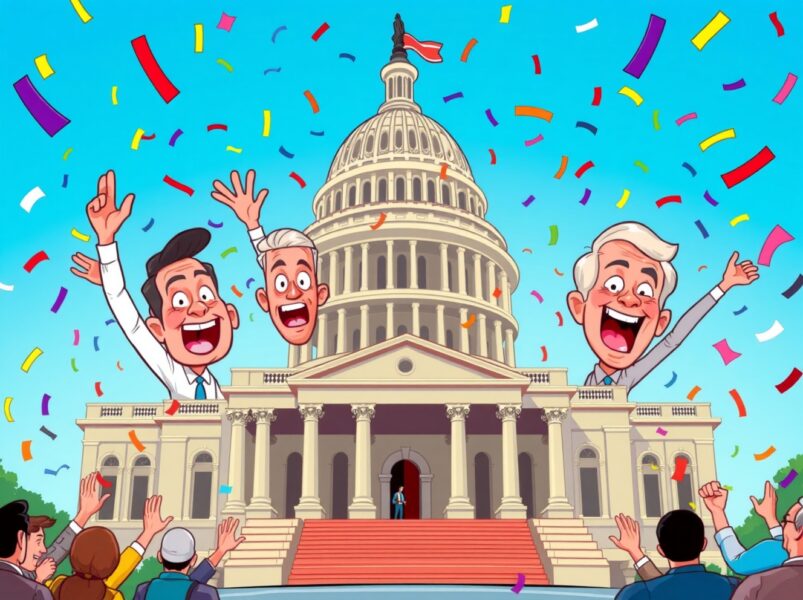
Resolution of Government Shutdown Crisis
In a crucial political breakthrough, the US Senate has approved a temporary budget bill that resolves the looming government shutdown crisis. This decisive action brings relief to millions of Americans and federal workers who faced uncertainty about government operations and services.
Contents of the Temporary Budget Bill
The newly passed temporary budget bill provides essential government funding through January, ensuring continuous operation of federal agencies and services. This stopgap measure passed with a solid 60-40 vote margin, demonstrating bipartisan support for keeping the government functioning.
Following the bill’s approval, President Donald Trump expressed optimism about the shutdown ending soon. The temporary budget bill represents a practical solution that allows more time for comprehensive budget negotiations while preventing immediate disruption to government services.
Necessity of the Temporary Budget Bill
Government shutdowns create widespread consequences that affect federal employee pay and benefits, essential public services, national park operations, and economic stability and market confidence.
The temporary budget bill serves as a bridge solution, providing lawmakers additional time to reach consensus on longer-term funding arrangements. This approach prevents the damaging effects of a full government shutdown while maintaining critical operations.
The Political Process Moving Forward
With the temporary budget bill now passed, attention shifts to the House of Representatives and presidential approval. The legislative process requires both chambers to agree on identical versions before the bill reaches the President’s desk for signature.
This temporary budget bill success follows reports of senators reaching partial agreements earlier in the week. The 60-40 vote margin indicates significant cross-party cooperation, suggesting growing consensus around the urgency of avoiding a government shutdown.
Immediate Impacts of the Decision
The passage of this temporary budget bill brings several immediate benefits:
- •Federal workers can continue their duties without interruption.
- •Government services remain accessible to citizens.
- •Economic uncertainty decreases.
- •International confidence in US stability strengthens.
Moreover, the temporary budget bill creates a stable environment for businesses and individuals who rely on consistent government operations. This stability is crucial for maintaining economic momentum and public confidence.
Future Outlook After the Temporary Budget Bill
While this temporary budget bill resolves the immediate crisis, it sets the stage for more comprehensive budget negotiations in the coming months. Lawmakers now have until January to develop a longer-term funding solution that addresses broader fiscal priorities.
The successful passage of this temporary budget bill demonstrates that bipartisan cooperation remains possible in challenging political environments. It serves as a model for future negotiations and highlights the importance of pragmatic solutions over ideological standoffs.
Frequently Asked Questions
What is a temporary budget bill?
A temporary budget bill, often called a continuing resolution, provides short-term funding to keep government operations running when full-year budgets aren’t approved by the deadline.
How long does this temporary budget bill last?
This specific temporary budget bill funds the government through January, giving lawmakers several months to negotiate a more comprehensive budget agreement.
What happens if a temporary budget bill isn’t passed?
Without a temporary budget bill or full budget approval, the government would partially shut down, furloughing non-essential workers and suspending many services.
Can the temporary budget bill be extended?
Yes, temporary budget bills can be extended if lawmakers need additional time to reach agreement on longer-term funding solutions.
What services continue during temporary budget periods?
Essential services like national security, air traffic control, and law enforcement continue, while non-essential services may operate with reduced staffing.
How does this affect federal employees?
Federal employees continue working and receiving pay during temporary budget bill periods, avoiding the uncertainty of potential furloughs.