


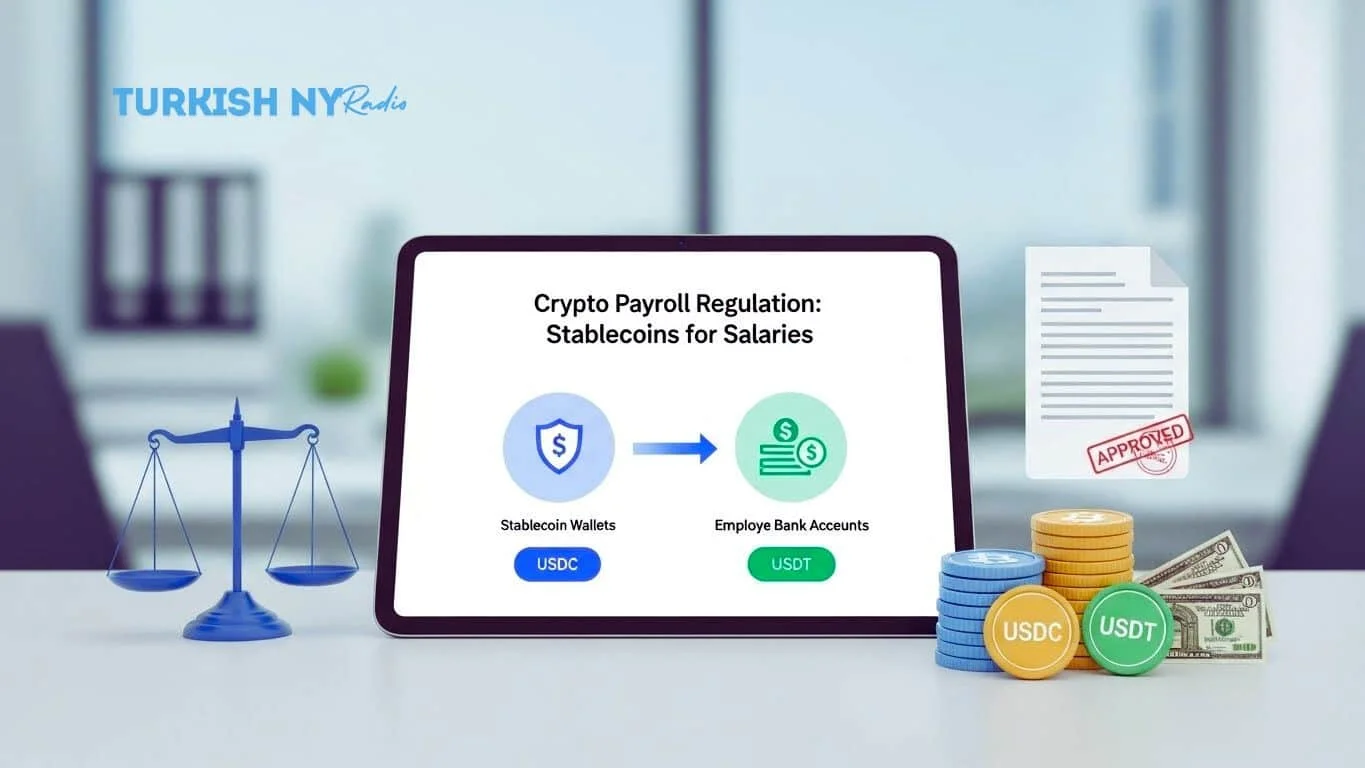
What Crypto Payroll Regulation Means in Practice
Crypto payroll refers to paying wages using blockchain-based currencies, either fully or in part. Some employers offer hybrid arrangements where salaries are calculated in fiat currency and converted into crypto at payment. Others allow employees to opt into receiving a portion of their wages in digital assets.
Despite the technology involved, payroll obligations remain unchanged. Employers must still calculate wages accurately, withhold taxes, comply with minimum wage laws, document employment contracts, and maintain records for audits. The only difference is the payment rail. That distinction matters because regulators do not view payroll the same way they view crypto trading.

Why Payroll Faces Higher Regulatory Pressure Than Trading
Crypto trading is voluntary. Payroll is mandatory and legally defined. Governments regulate wages to protect workers, ensure tax collection, and enforce labor standards. Any payment method that complicates those goals introduces risk for employers.
For years, uncertainty around how digital assets were classified—whether as securities, commodities, or payment instruments—made payroll providers cautious. Without clarity, companies risked misreporting income, underpaying taxes, or violating labor laws. That regulatory uncertainty is now narrowing, particularly for stablecoins.
Laws Are Drawing a Clear Line Between Payments and Speculation
In the United States, recent legislation has created a clearer framework for digital assets used as payment tools. The GENIUS Act established reserve, disclosure, and licensing requirements for stablecoin issuers, placing them closer to regulated financial instruments than speculative assets.
In July 2025, Congress advanced further with the passage of the Digital Asset Market Clarity Act. The law clarified which digital assets fall under securities oversight and which fall under commodities regulation. While not payroll-specific, it reduced ambiguity for businesses integrating crypto into financial operations.
Europe moved even faster. The Markets in Crypto-Assets regulation introduced uniform rules for stablecoin issuers and crypto service providers across the EU, including capital requirements and redemption rights.
These frameworks do not promote crypto payroll, but they make it legally workable, especially when stablecoins are involved.
Why Stablecoins Fit Payroll Systems Better Than Bitcoin
The difference comes down to stability and accounting. Stablecoins are designed to track fiat currencies such as the U.S. dollar or euro. Their issuers are required, in many jurisdictions, to maintain reserves and provide redemption rights. This makes them predictable from a payroll perspective.
Employment contracts specify salaries in fiat terms. Stablecoins closely match those values, allowing payroll systems to record wages without constant revaluation. Tax withholding, reporting, and auditing become manageable extensions of existing processes.
Bitcoin does not offer that predictability. Its price can change materially within hours. That volatility complicates budgeting, reconciliation, and employee records. Paying salaries in Bitcoin requires employers to determine the exact market value at the moment of payment. Even small timing differences can affect reported income. For companies with large workforces, this adds administrative complexity and legal exposure.
Tax Treatment Adds Another Layer of Complexity
In most countries, cryptocurrencies are treated as property or financial assets for tax purposes. Income must be reported based on fair market value when received.
Stablecoins simplify this process. Because their value aligns closely with fiat salaries, tax calculations remain consistent with traditional payroll, at least at the valuation stage. Bitcoin introduces additional obligations. Employees may incur capital gains or losses if they convert or spend Bitcoin after receiving it. Employers must also ensure accurate valuation at payment time, increasing compliance costs.
This does not make Bitcoin payroll illegal; it makes it harder to manage.
Regulators Treat Stablecoins and Bitcoin Differently
Recent regulatory frameworks increasingly treat stablecoins as payment instruments rather than investment vehicles. Oversight focuses on reserve backing, redemption rights, operational transparency, and consumer protection.
Bitcoin regulation, by contrast, focuses on market integrity, custody standards, and investor protection. It is well-regulated for trading but not structured for routine wage payments.
This difference affects payroll providers. Building compliance systems around stablecoins is simpler than designing workflows for volatile assets with complex tax implications.
Institutional Infrastructure Is Following the Rules
Banks, payroll processors, custodians, and compliance firms participate only where regulations are clear. Stablecoins are explicitly addressed in current laws, which has accelerated infrastructure development.
As a result, banks now offer fiat-to-stablecoin conversion, payroll software providers support crypto settlement options, and custodians provide regulated storage solutions. Bitcoin payroll services exist, but they remain niche. Most rely on specialized providers rather than mainstream payroll systems, limiting scalability for large employers.
Crypto Payroll Is Still Just a Payment Method
From a regulatory perspective, crypto does not replace payroll calculations; it replaces how funds move. Most compliant setups calculate salaries in fiat, then convert a portion into digital assets after standard payroll runs. Stablecoins integrate smoothly into this model. Bitcoin requires additional valuation, disclosure, and accounting steps.

The Direction Is Becoming Clear
The future of crypto payroll is not being decided by market enthusiasm or ideological debates. It is being shaped by labor law, tax enforcement, and regulatory design. Stablecoins fit the system; Bitcoin challenges it.
That does not mean Bitcoin salaries will disappear. It means they are likely to remain limited to specific roles, jurisdictions, or employee opt-in arrangements. In payroll, compliance wins. Regulation, not preference, is quietly choosing the default.
Glossary of Key Terms
Crypto Payroll
Crypto payroll simply means paying employees using digital currencies instead of only traditional money. The process still follows normal payroll rules, just with a different way of sending payment.
Stablecoin
A stablecoin is a digital currency designed to keep a steady value, much like regular cash. It helps avoid sudden price changes that can affect salaries.
Bitcoin
Bitcoin is a digital currency whose value can rise or fall quickly. It’s often used for trading or long-term holding, but it can be harder to use for regular wages.
Payroll Regulation
Payroll regulation refers to the laws that control how salaries are paid, taxed, and recorded. These rules exist to protect employees and ensure employers pay correctly.
Tax Withholding
Tax withholding is the part of a salary taken out before payment to cover income taxes. Employers handle this so employees don’t have to pay it all later.
Fiat Currency
Fiat currency is everyday government-issued money, like dollars or euros. Salaries are usually set in fiat, even when crypto is used for payment.
Payment Settlement
Payment settlement is when the money actually reaches the employee. Crypto payments can sometimes settle faster than traditional bank transfers.
Compliance
Compliance means following the rules. In payroll, it includes paying wages properly, reporting taxes accurately, and keeping clear records.
FAQs About Crypto Payroll Regulation
What is crypto payroll?
Crypto payroll means paying employees with digital currencies, either fully or partly, while still following normal rules for salaries, taxes, contracts, and payroll records.
How are salaries calculated and paid in crypto?
Most employers set salaries in local currency first, then convert part of the payment into crypto on payday to keep wages stable and compliant.
Why do companies prefer stablecoins over Bitcoin for salaries?
Stablecoins hold a steady value, making payments easier to manage, report for taxes, and align with contracts compared to Bitcoin’s frequent price changes.
Is crypto payroll safe and legal for employees?
Yes, when handled properly. Companies use regulated providers to ensure secure payments, legal compliance, and support while rules around crypto payroll continue to evolve.