


Centralized Exchanges (CEXs): The Conventional Way of Crypto Trading
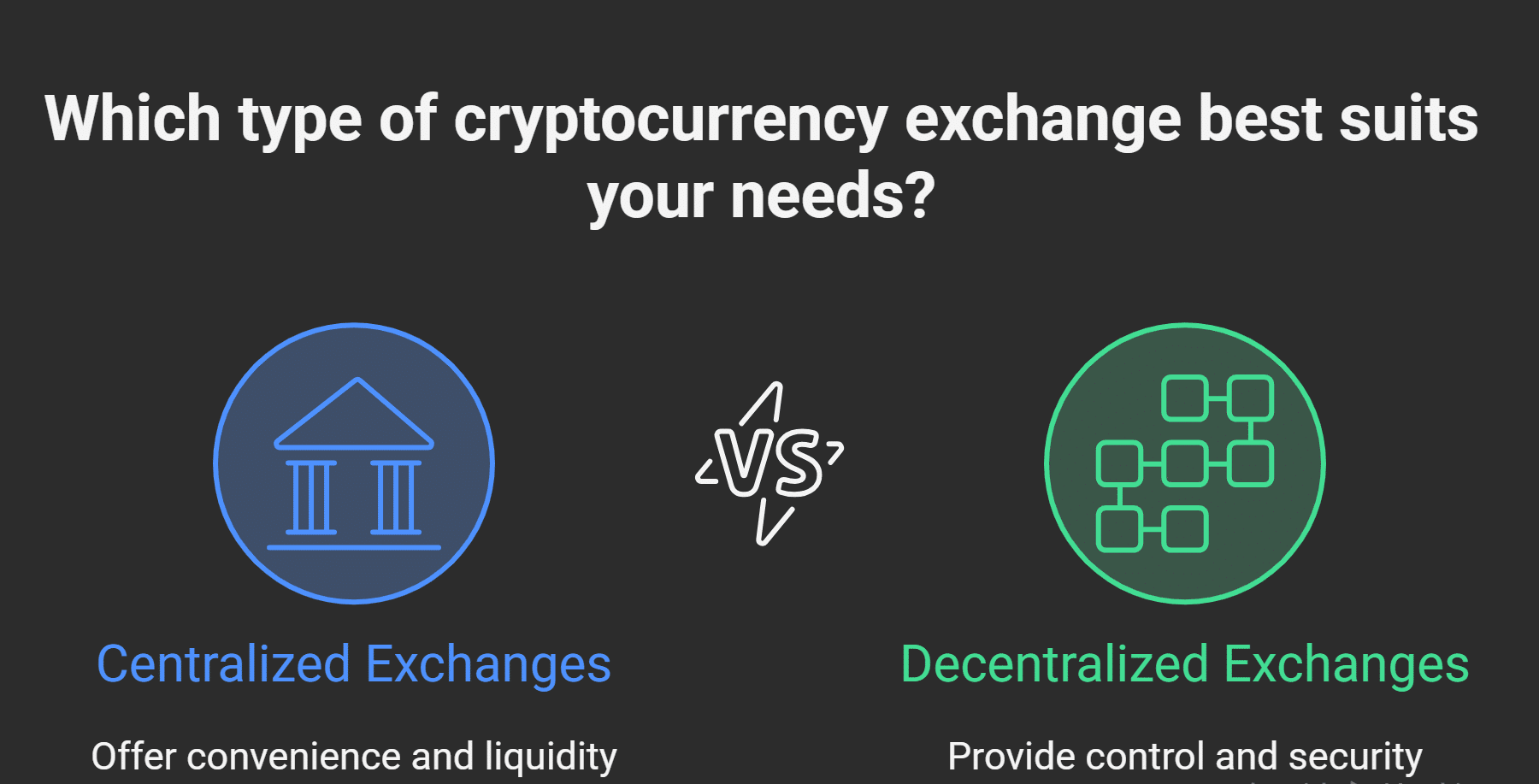
Centralized exchanges function much like online brokers or digital banks for cryptocurrencies. Users register, undergo identity verification through KYC checks, and deposit assets into wallets managed by the exchange. The exchange then matches buy and sell orders, maintains custody of funds, and handles withdrawals. According to an official source, "CEXs offer liquidity, familiarity, and a trusted user experience." This makes it easy for both beginners and institutional investors to trade digital assets with minimal technical expertise. However, this convenience comes at the cost of relinquishing control over private keys, as users rely on the exchange's security and management practices. A 2024 study reviewing research across both models indicated that centralized exchanges continue to dominate liquidity and trading activity, albeit at the expense of decentralization's benefits.
Decentralized Exchanges (DEXs): Power to the Users
Decentralized exchanges operate on blockchain networks, utilizing smart contracts instead of centralized servers. Users retain custody of their cryptocurrencies in their own wallets. Trades are executed directly and almost in real-time on a peer-to-peer basis, without any third party involvement. A DEX eliminates the need to trust a company or operator, ensuring that every trade is transparent and executed on-chain. However, DEXs face challenges such as lower liquidity, higher rates of missed market opportunities, and less user-friendly interfaces, which can deter newcomers. Furthermore, network congestion can lead to slow or costly transaction processing for on-chain settlements.
In essence, the debate between decentralized and centralized exchanges often boils down to a fundamental question: do users prioritize control or convenience?
How Each System Operates
Centralized exchanges rely on off-chain order books and matching engines for rapid pairing of buyers and sellers. They hold funds in custodial wallets and process transactions internally before updating the blockchain. In contrast, decentralized exchanges operate using automated market makers (AMMs) and liquidity pools. Through smart contracts, users deposit token pairs, creating markets where others can trade automatically. Prices typically adjust based on supply and demand, often utilizing mathematical formulas like x × y = k.
This operational difference explains the varying speeds of CEXs and DEXs. CEXs are generally faster due to their internal processing, while DEXs offer greater fairness and transparency by making the entire trading process visible on-chain.
Liquidity and Trading Depth
Liquidity refers to the ease with which an asset can be traded without significantly impacting its price. Centralized exchanges typically boast deeper order books due to their larger user bases, resulting in less slippage and better execution for large trades. Conversely, liquidity on DEXs depends on the number of users contributing to liquidity pools. When liquidity is low, traders experience greater price volatility. A report highlights that "liquidity drives efficiency and stability in crypto trading platforms."
Security and Custody
Security represents a significant point of divergence between decentralized and centralized exchanges. With CEXs, users must trust the exchange's internal security measures. If an exchange is compromised or mismanaged, user funds can be lost, as tragically demonstrated by the collapse of several major exchanges in 2022. DEXs, on the other hand, grant users full custody of their funds. While there is no centralized wallet to attack, vulnerabilities can still exist within smart contracts. Code bugs or unverified contracts can lead to the draining of entire liquidity pools. Researchers note that while DEXs reduce custodial risk, "code-based vulnerabilities remain an under-appreciated threat." Ultimately, users must decide whether to trust an institution's security team or the robustness of open-source smart contracts.
Regulation and Compliance
Centralized exchanges are subject to government oversight and must adhere to KYC and AML regulations, comply with tax laws, and cooperate with regulators. This makes them more appealing to institutional investors but less private for individuals. Decentralized exchanges, operating without the direct control of any single country, offer censorship resistance but also attract regulatory scrutiny. Analysts predict that regulations will play a pivotal role in the future evolution of the decentralized versus centralized exchange landscape.
User Experience and Accessibility
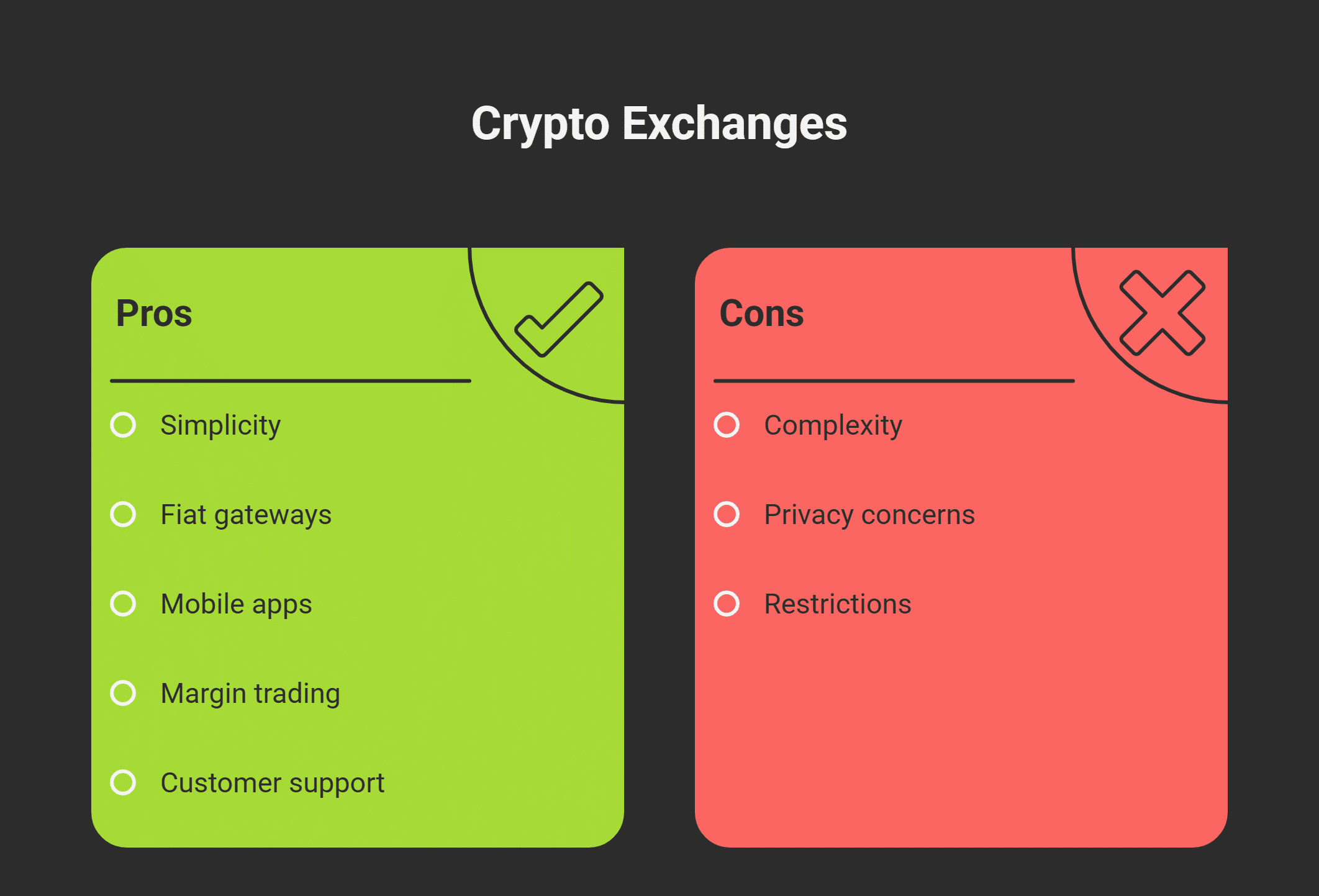
CEXs excel in user-friendliness, offering fiat gateways, credit card and bank wire support, mobile applications, margin trading, and customer service. These features make them ideal for traders transitioning from traditional finance. DEXs, however, cater to users who prioritize independence. By connecting wallets such as MetaMask or Trust Wallet, users can trade directly from their blockchain addresses. This model, while less straightforward, allows users to bypass restrictions and maintain the privacy of their transactions. As user education improves, the perceived gap between decentralized and centralized exchanges is narrowing, with a growing number of users confidently managing their own wallets.
Market Influence and Social Discussion
Trader sentiment is significantly influenced by social media. Discussions on platforms like Reddit and X (formerly Twitter) frequently compare decentralization versus centralization of exchanges, focusing on aspects like speed, fees, and governance. Analysts and influencers continue to debate whether the transparency offered by DEXs outweighs the efficiency of CEXs. For instance, conversations surrounding Solana's price potential often highlight its role in supporting high-speed DEXs. Developers on Solana argue that ongoing improvements are making decentralized exchanges increasingly competitive with centralized exchanges in terms of performance and liquidity.
The Rise of Hybrid Models
The market is continuously evolving with new technological approaches. Hybrid exchanges combine the decentralized custody of assets with centralized order matching. These platforms often utilize off-chain order books while settling actual trades on-chain. Research suggests that hybrid models could "bridge the gap between liquidity and self-custody," signaling a potential next stage in exchange evolution. This hybridization underscores that decentralized and centralized exchanges are not necessarily opposing forces but rather complementary innovations within digital finance.
Strategic Takeaways
The ongoing discussion between decentralized and centralized exchanges is less about identifying a single winner and more about finding a balance. Both types of exchanges play distinct but vital roles within the crypto ecosystem. CEXs will likely continue to dominate in areas such as fiat on-ramps, regulatory compliance, and institutional trading. DEXs, conversely, are poised for continued growth in DeFi integration, community governance, and self-sovereignty. Together, they contribute to shaping a more secure and transparent crypto economy.
Conclusion: Choosing Wisely in a Multi-Platform World
The existence of both decentralized and centralized exchanges provides valuable insights for traders, analysts, and students interested in the evolving landscape of financial power. Customers who prioritize convenience will likely continue to favor CEXs, while those who place a premium on freedom and security will lean towards DEXs. For the discerning crypto investor, there will not be a single, definitive choice. Instead, informed awareness will enable them to navigate the dynamic world of crypto trading platforms, where the innovative convergence of decentralization and accessibility is still unfolding. Becoming thoroughly familiar with both systems will be a long-term investment in market trust, especially as hybrid models and regulatory developments continue to shape the future of digital finance.
Disclaimer: The content of this article is for informational purposes only and does not constitute financial advice. Readers are encouraged to conduct their own research before making any investment decisions.
About Decentralized and Centralized Exchanges
Decentralized and centralized exchanges form the bedrock of every crypto trading platform. Centralized exchanges function as authorized intermediaries, facilitating trades through secure, regulated systems. On the other hand, decentralized exchanges operate on blockchain smart contracts, empowering users with full control over their assets and privacy. Together, they define how traders buy, sell, and manage cryptocurrencies in an ever-changing digital economy.
Glossary of Key Terms
- Automated Market Maker (AMM):
- A smart contract system designed for decentralized trading via liquidity pools.
- Custody:
- The right to access assets, typically referring to possession of private keys.
- Fiat Gateway:
- A service that enables the conversion between fiat currency and cryptocurrency.
- KYC/AML:
- Procedures for Know Your Customer and Anti-Money Laundering compliance, mandatory for regulated platforms.
- Liquidity Pool:
- A reserve of tokens within a DEX that facilitates trading.
- Order Book:
- A categorized list of buy and sell orders used by exchanges to match trades.
- Private Key:
- The cryptographic key that grants access to a cryptocurrency wallet.
- Slippage:
- The price difference between when an order is submitted and when it is executed.
- Smart Contract:
- A self-executing contract on the blockchain with the terms of the agreement directly written into code, requiring no third-party involvement.
- Hybrid Exchange:
- A platform offering both decentralized custody and a centralized trading system.
FAQs About Decentralized and Centralized Exchanges
1. What is the main distinction between decentralized and centralized exchanges?
Centralized exchanges (CEXs) are managed by companies that hold customer funds. In contrast, decentralized exchanges (DEXs) allow customers to swap coins directly from their wallets using automated blockchain contracts.
2. Which one, CEX or DEX, is safer for traders?
CEXs are subject to strict regulations, which enhances their safety but requires trust in a third party. DEXs reduce custodial risk but depend on the security of their smart contracts.
3. Are centralized exchanges the only ones with fiat trading?
Most DEXs support only crypto-to-crypto trading. Centralized exchanges, however, have direct connections with banks and payment systems, enabling fiat currency transactions.
4. Are decentralized and centralized exchanges moving towards more convergence?
Yes. Hybrid platforms are emerging, merging the transparency of DEXs with the liquidity and ease of use of CEXs, creating a middle ground for traders.
5. Can both the exchanges survive in the long term?
Yes. Both serve different needs and are likely to grow in parallel. CEXs cater to efficient regulation and high-volume trading, while DEXs drive DeFi innovation and self-custody. The future of crypto will likely involve both.