


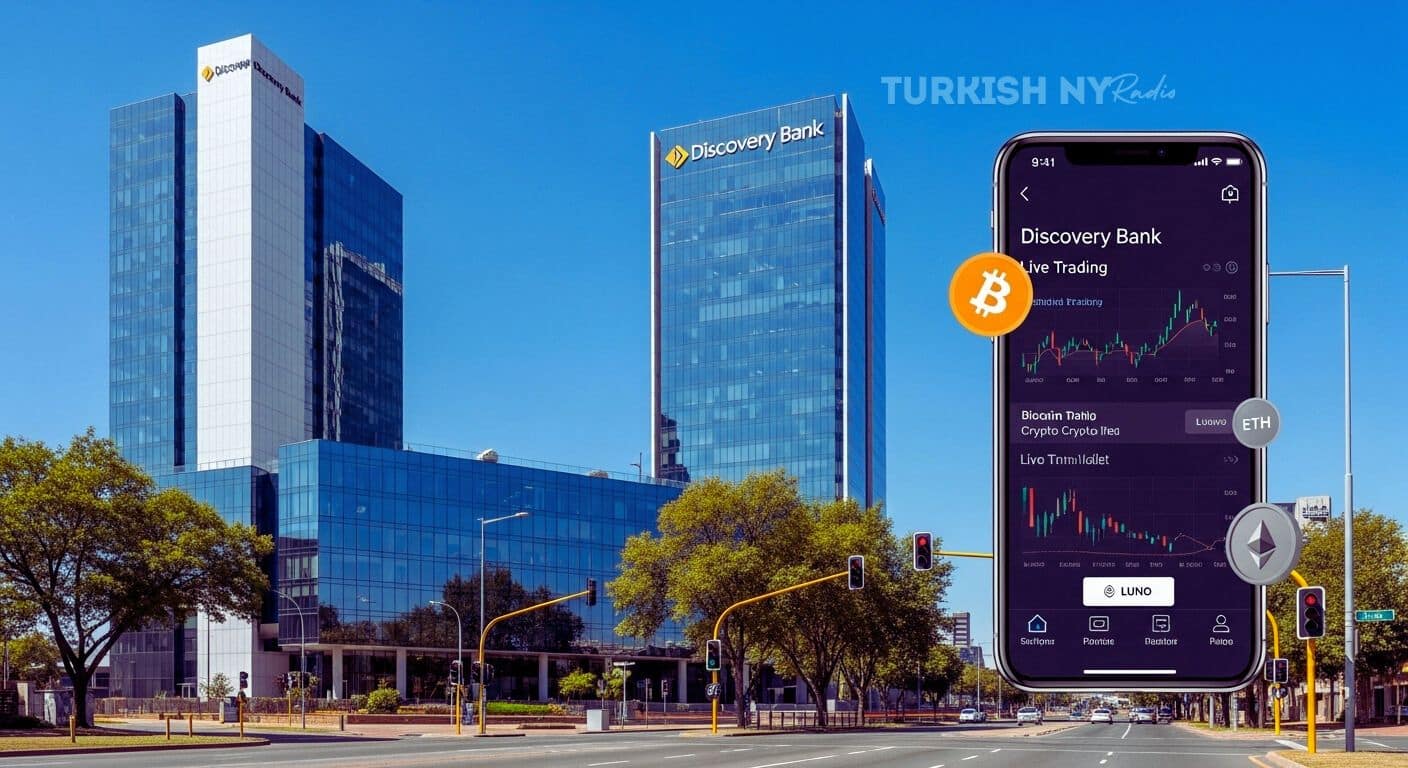
Discovery Bank in South Africa is making a significant move to embed cryptocurrency trading functionality directly within its banking application. This innovative feature will be developed in partnership with the cryptocurrency platform Luno, allowing bank clients to trade digital assets and seamlessly integrate their conventional banking activities with their digital asset investments. This development signifies a shift away from South African retail customers needing to rely solely on specialized crypto startups for their trading needs.
Practically, users will be able to view their cryptocurrency trading balances alongside their other deposit and investment accounts. The integration also facilitates fee-free transfers between bank accounts and Luno wallets. Furthermore, customers will gain access to a wide selection of over 50 different cryptocurrencies for trading, including major assets like Bitcoin and Ethereum. This comes at a notable time, with Bitcoin prices fluctuating around $90,000–$96,000 and Ethereum prices near $3,019, indicating a period of shifting momentum in both institutional and retail interest.
Expanding Crypto Trading Access Through Mainstream Banking
The integration of cryptocurrency trading into mainstream banking platforms carries several long-term implications:
- •Reduced Barrier to Entry: For many South African users who may have perceived crypto trading as complex, this integration offers access through a familiar banking interface, simplifying the process.
- •Increased Retail Flows: As users encounter Bitcoin and Ethereum trading charts within their everyday banking apps, interest in cryptocurrency trading is likely to expand.
- •Institutional Signaling: When a major financial institution adopts crypto trading, it serves as a validation of the asset class beyond speculation, potentially influencing broader institutional sentiment.
- •Liquidity and Demand Implications: With Bitcoin prices near a six-month low around $90,000 and Ethereum prices near $3,000, new access channels could significantly alter retail dynamics. Recent data has shown downward pressure on Bitcoin prices and institutional outflows, highlighting the potential impact of this new accessibility.
Beyond these immediate effects, this announcement may encourage banks in other emerging markets to explore similar embedded crypto-trading features, potentially broadening geographic demand for digital assets.

Regulatory Insights and Adoption Metrics
The introduction of mainstream crypto trading options unfolds against an evolving regulatory landscape. South Africa's Financial Sector Conduct Authority (FSCA) has established one of the world's initial crypto-asset regulatory frameworks, acknowledging crypto-assets even when managed from outside the country. Many platforms offering crypto-asset services are licensed and operate under anti-money-laundering (AML) regulations.
Adoption numbers underscore this trend. Discovery's leadership reports that "1 in 10 people have cryptocurrency investments" in South Africa. The recent outflows from U.S.-listed spot Bitcoin ETFs, exceeding $1 billion, suggest a recalibration of demand profiles.
The direct link between the banking app and crypto exchange trading could provide a boost in retail data points. Metrics such as the number of deposit-wallet linkages, the volume of transferred deposits, and wallet values may emerge as new adoption Key Performance Indicators, particularly as Ethereum and Bitcoin prices reflect broader macroeconomic and regulatory pressures. These sentiment charts offer a glimpse into market psychology, with recent price movements indicating a more defensive investor stance. The embedded crypto trading offering aims to rebuild trust by minimizing friction and integrating crypto trading within established banking ecosystems.

Final Thoughts
Discovery Bank's integration of in-app crypto trading transforms the perception of digital assets from a standalone exchange activity to a standard banking service. This launch arrives at a critical juncture, with Bitcoin prices testing new support levels and Ethereum prices facing downward pressure. As adoption metrics and regulatory frameworks continue to solidify, the bank-app channel is poised to accelerate the next wave of retail activity in crypto trading, redefining how mainstream consumers engage with the digital asset space.
Summary
The integration of crypto trading into Discovery Bank's mobile app represents a significant development for South Africa's financial services industry. In collaboration with Luno, the bank is enabling customers to buy, hold, and sell cryptocurrency directly through the Discovery Bank system. This initiative lowers entry barriers, enhances user accessibility, and aligns with regulatory scrutiny. The impact of this new channel on broader crypto adoption will be shaped by market sentiment, on-chain trends, and institutional inflows.
Glossary of Key Terms
Crypto Trading: The act of buying, selling, or exchanging digital currencies like Bitcoin and Ether through regulated exchanges or integrated banking applications that provide direct access to cryptocurrencies.
Bitcoin (BTC): The world's largest and most utilized cryptocurrency, designed as a decentralized digital currency. Its price fluctuations can influence broader market sentiment and institutional investment patterns.
Ethereum (ETH): A prominent blockchain network supporting smart contracts and decentralized applications (dApps). Its native token, Ether, is used for transaction fees and is also employed in various digital asset investment strategies.
Luno: A global digital currency platform offering wallet services, trading facilities, and regulatory-compliant infrastructure, powering Discovery Bank's integrated crypto trading capability.
FSCA (Financial Sector Conduct Authority): South Africa's market conduct regulator, which categorizes cryptocurrencies as financial products, thereby imposing compliance requirements on licensed industry operators.
TRUST Alert: Discovery Bank's fraud-detection system that collects real-time behavioral data to identify unconventional activity and unusual patterns, assisting users with digital, banking, and crypto transactions.
Digital Asset: Any value created or represented in digital form and stored on a blockchain, including virtual currencies (cryptocurrencies), tokens, and other forms of value transfer utilizing distributed ledger technology. Digital assets can be exchanged, transferred, or held as investments.
On-Chain Data: Data immutably recorded on a blockchain, such as transaction volume, wallet usage, or network utilization, used by analysts to assess market trends and trading patterns.
Frequently Asked Questions About Crypto Trading
What options are available for Discovery Bank’s offering of crypto trading?
The integrated feature allows customers to buy and sell digital assets and track their portfolio holdings directly within the Discovery Bank app, simplifying access to Bitcoin, Ethereum, and over 50 other supported cryptocurrencies.
Does Discovery Bank charge me for moving money to and from Luno?
Discovery Bank offers unlimited, free instant payments to bank accounts and linked Luno wallets, ensuring a frictionless process for users moving funds for crypto transactions.
How safe is the in-app crypto trading?
Security is enhanced through Discovery's TRUST Alert system, Luno's global security standards, and local compliance with South African regulations, ensuring the safety of transactions, personal data, and wallet activity.
If there are any technical problems with crypto trading, they happen.
In case of technical issues, users can seek support from Discovery Bank for banking-app-related inquiries or visit Luno.com's support section for trading-specific troubleshooting and solutions.