


Money Laundering Probe Targets Fake E-commerce Platforms and Fraudulent Apps
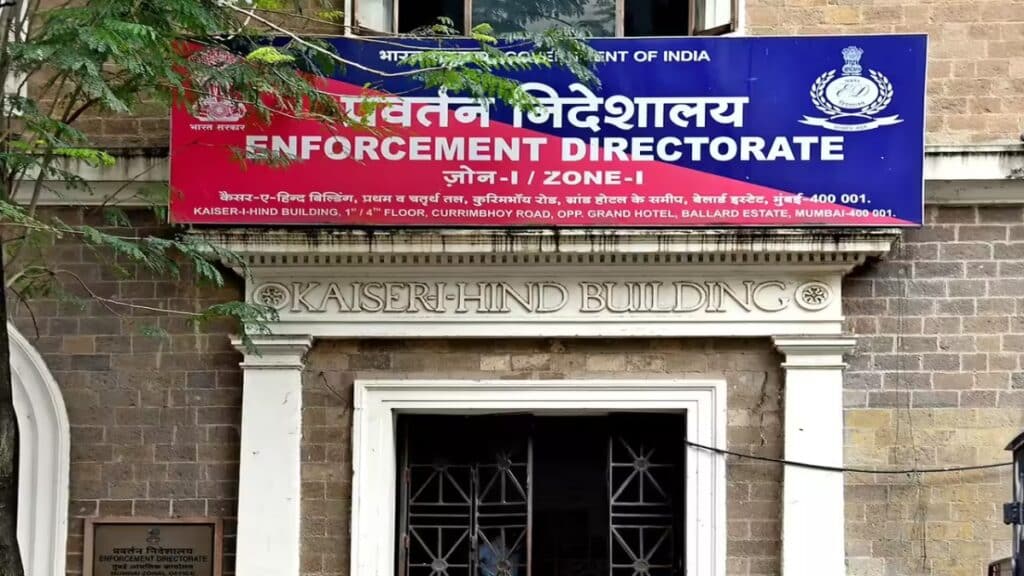
The Enforcement Directorate (ED) has provisionally attached ₹8.46 crore held across 92 bank accounts, including accounts linked to the cryptocurrency exchange CoinDCX and multiple crypto wallets, as part of a major money laundering investigation into large-scale cyber fraud conducted through fake e-commerce platforms and fraudulent mobile applications.
According to an official release from the ED’s Hyderabad Zonal Office, the action was carried out under the Prevention of Money Laundering Act (PMLA), 2002.
Nationwide Network of Digital Investment Scams Uncovered
The probe stems from multiple First Information Reports (FIRs) registered by Kadapa Police under Section 420 of the Indian Penal Code (IPC) and Sections 66-C and 66-D of the Information Technology (IT) Act. Additional FIRs have surfaced from several states as authorities uncovered a nationwide network of digital investment scams.
Investigators stated that the fraudsters lured victims through WhatsApp and Telegram groups, along with mass SMS campaigns, promising high commissions for part-time job tasks or lucrative earnings from online investment apps.
Popular scam fronts included the NBC App, Power Bank App, HPZ Token, RCC App, Making App, and numerous similar platforms.
Fraudulent Investment Scheme Details
Victims were instructed to deposit money into app wallets via UPI payments to bank accounts and Virtual Payment Addresses (VPAs) linked to shell firms. To build trust, small returns were initially credited to users’ bank accounts.
However, once larger sums were deposited, withdrawal attempts failed. Victims who sought help were told to pay additional “taxes” or “regulatory charges,” after which the scammers disappeared and the apps went offline.
Funds Conversion and Cryptocurrency Transactions
The ED estimates that ₹285 crore in proceeds of crime flowed through more than 30 bank accounts used briefly, often for just 1–15 days, before being rapidly transferred to over 80 additional accounts to evade detection.
A substantial portion of the funds was converted into cryptocurrency or moved through hawala networks. The probe revealed that scamsters routinely purchased USDT (Tether) on Binance’s Peer-to-Peer (P2P) marketplace using third-party payments from crime proceeds.
Sellers on WazirX, Buyhatke, and CoinDCX allegedly took advantage of price gaps by buying USDT cheaply and selling it at slightly higher rates, accepting non-Know Your Customer (KYC)-verified transfers. The ED found that USDT worth ₹4.81 crore was converted via CoinDCX using unverified accounts.
Ongoing Investigation
The investigation is ongoing, the agency said.