Scam Targets Young Gamers; Funds Moved Using Crypto
Hangzhou authorities have charged a fraud syndicate led by Mr. Yang for scamming elementary students via Douyin. The ring impersonated police officers during China's 2025 Spring Festival, laundering fraudulently obtained funds through cryptocurrency. This case highlights cryptocurrency's role in modern scams, raising concerns for online safety, especially among young gamers, and challenging regulatory responses globally. The fraudulently obtained funds were laundered via cryptocurrency, possibly involving BTC, USDT, and ETH, due to their liquidity features. Immediate implications include a call for increased online safety awareness among parents and guardians. Government responses included warnings against scam tactics, emphasizing the importance of educating children about fraud prevention. Community responses have been supportive, advocating for awareness campaigns to combat similar cybercrime activities against vulnerable demographics.
"Prosecutors have issued a warning against any individuals claiming to be law enforcement and requesting money transfers to 'safe accounts,' urging parents to educate their children on fraud prevention."
Fuyang District People's Procuratorate, Prosecutor's Office, Hangzhou
Rise in Crypto Use Demands Regulatory Attention
Cases like this have previously highlighted a shift to cryptocurrency for laundering, showcasing a trend where traditional scams adapt to new financial technologies in China. Experts suggest that the adaptation of crypto in scams will pressurize regulators to crack down on anonymous transactions. Historical data reveal an increased intersection of virtual currency and traditional fraud, highlighting regulatory challenges in this evolving scenario.
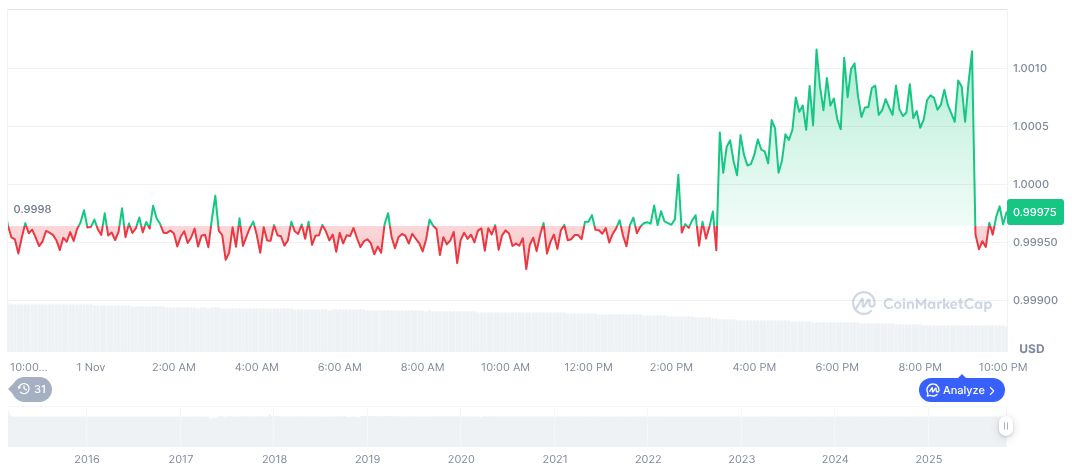
USDT is currently priced at $1.00, with a market cap of $183.45 billion, indicating market dominance of 4.97%. The 24-hour trading volume hit $84.28 billion, despite a -0.16% change.