



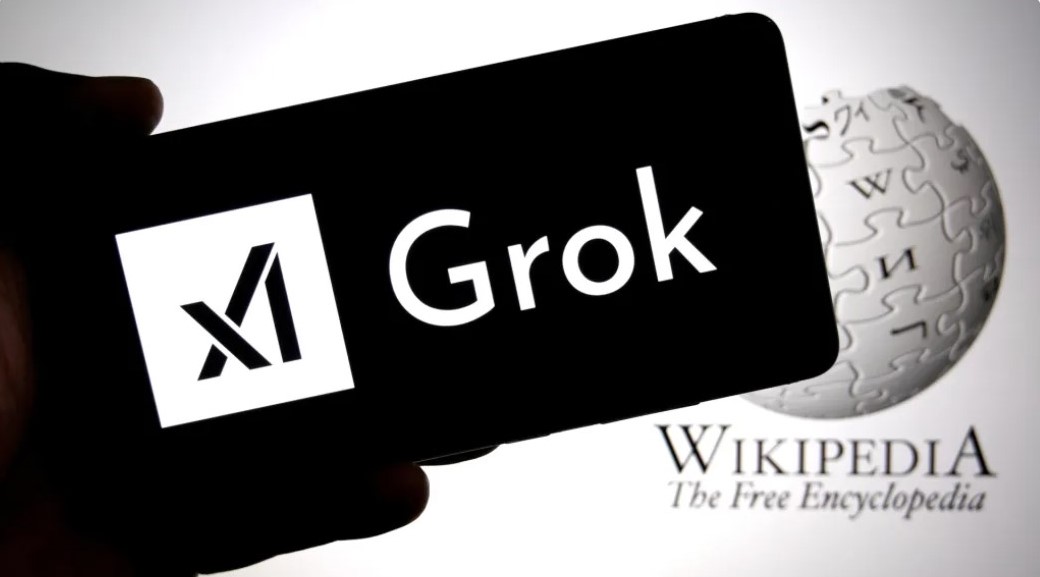
Elon Musk’s artificial intelligence company, xAI, has launched Grokipedia, an AI-generated encyclopedia intended to compete with Wikipedia. At its launch on Monday, the platform reportedly contained over 800,000 articles.
Announcing the platform via an X post on Monday, Elon Musk stated that the goal of Grokipedia is to present the truth and remain unbiased in every search result. For some time, the billionaire has held the notion that Wikipedia’s search results contain an element of unfair representation.
However, Musk noted that while Grokipedia is not perfect yet, it will continue working towards that objective.
“The goal of Grok and Grokipedia.com is the truth, the whole truth and nothing but the truth. We will never be perfect, but we shall nonetheless strive towards that goal.”

Earlier in October, Elon Musk announced that Grokipedia was being developed by xAI and was intended to be an alternative to Wikipedia. He also criticized Wikipedia for political bias and explained that the new project would be a necessary step to help xAI understand the universe. He claimed that it would represent a significant improvement over Wikipedia.
Musk’s announcement was in response to a post from White House AI czar and Silicon Valley investor David Sacks, who has been a prominent critic of Wikipedia.
In his post, Sacks claimed that “Wikipedia is hopelessly biased. An army of left-wing activists maintains the bios and fights reasonable corrections.” In response, the X-owner boosted posts from Wikipedia’s critics, accusing it of having a left-wing bias, and labeled the crowdsourced platform “wokepedia.”
For now, Grokipedia’s design still appears basic in its early stage. Similar to Wikipedia, the homepage contains a prominent search bar, and the entries resemble very basic Wikipedia entries, featuring headings, subheadings, and citations.

Grokipedia's Reliance on Wikipedia
After going live on Monday afternoon, the platform reportedly hosted over 800,000 AI-generated articles, according to The New York Times. In comparison, Wikipedia has nearly 8 million articles written by humans.
Meanwhile, a disclaimer on Grokipedia suggests that the platform still relies on Wikipedia for generating its articles. Several articles on the platform include a disclaimer that reads: “The content is adapted from Wikipedia, licensed under Creative Commons Attribution-ShareAlike 4.0 License.”
Additionally, Wikipedia’s website already features an entry on Grokipedia, which notes that “Many articles are derived from Wikipedia articles, with some articles observed to be copied nearly verbatim.” Some articles on Grokipedia also appeared to be near-identical copies of their corresponding Wikipedia entries.
Grokipedia does not allow its users to make any edits, which is a key difference from Wikipedia. In contrast, Musk stated that users will be able to ask Grok to add, modify, or delete articles, and it will either take the requested action or explain why it cannot.
Musk had previously noted that Grokipedia intends to fact-check claims before displaying results. However, he acknowledged Grokipedia's current use of Wikipedia articles and indicated that this issue is expected to be resolved by December 2025.
He had already mentioned in an X post that the platform’s version 1.0 would be significantly improved. “Version 1.0 will be 10X better, but even at 0.1 it’s better than Wikipedia.”
The AI Race in Search Content
This latest development emerges amidst intense competition in the use of artificial intelligence to reshape search content.
Last week, OpenAI introduced its own web browser, positioning the ChatGPT maker in direct competition with Google as more internet users turn to artificial intelligence for answers to their queries.
The company described this as a rare, once-in-a-decade opportunity to reimagine what a browser can be and how it can be used. This move effectively makes its popular AI chatbot a gateway to online searches, potentially leading to increased internet traffic and revenue from digital advertising.