



Ethereum Block Gas Limit Jumps to 60 Million
Ethereum has increased its block gas limit from 45 million to 60 million, a significant development stemming from a year-long community effort. This adjustment, implemented on November 25, 2025, was enabled by validator consensus, automatically updating the network's parameters according to its established rules. The initiative was spearheaded by Ethereum Foundation researcher Toni Wahrstätter, who emphasized the collaborative nature of this achievement.
This increase effectively doubles Ethereum's transaction capacity per block. The primary expectation is that this enhanced throughput will lead to lower gas fees, particularly during periods of high network demand. The adjustment is designed to improve Ethereum's Layer 1 scalability, providing a more robust foundation for the burgeoning ecosystem of decentralized finance (DeFi), non-fungible tokens (NFTs), and other Web3 applications.
"Just a year after the community began pushing for an increase in the gas limit, Ethereum is now operating under a block gas limit of 60 million. This means a 2x increase achieved in one year— and this is just the beginning." - Toni Wahrstätter, Researcher, Ethereum Foundation
Ethereum's Growing Capabilities and Market Outlook
The doubling of Ethereum's gas limit over the past year represents a substantial leap in its processing capabilities. This follows a period where the gas limit remained stagnant at 30 million for approximately four years, underscoring the growing demand for block space and the network's evolving technical capacity.
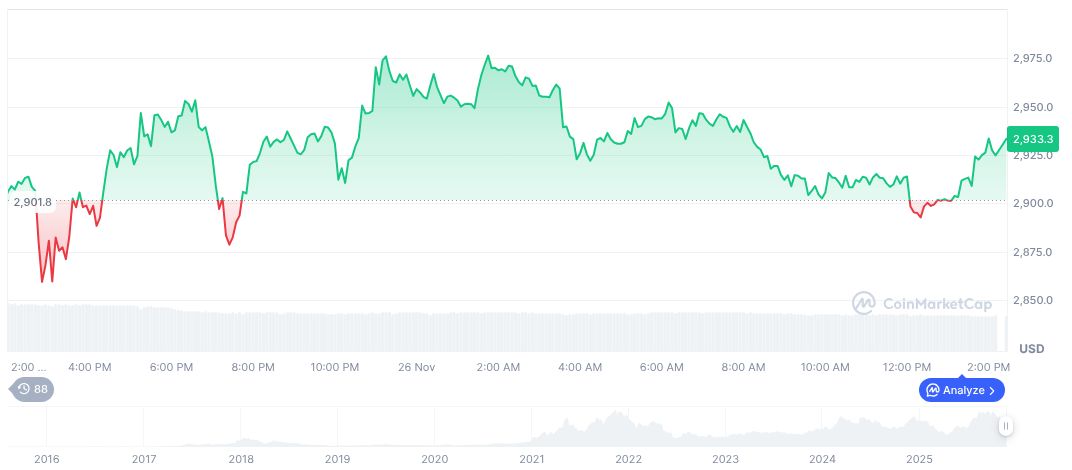
Coincu research suggests that ongoing developments within the Ethereum ecosystem are likely to further enhance its scalability. These future advancements may focus on decentralized solutions designed to effectively manage the increasing resource demands placed upon the network.