


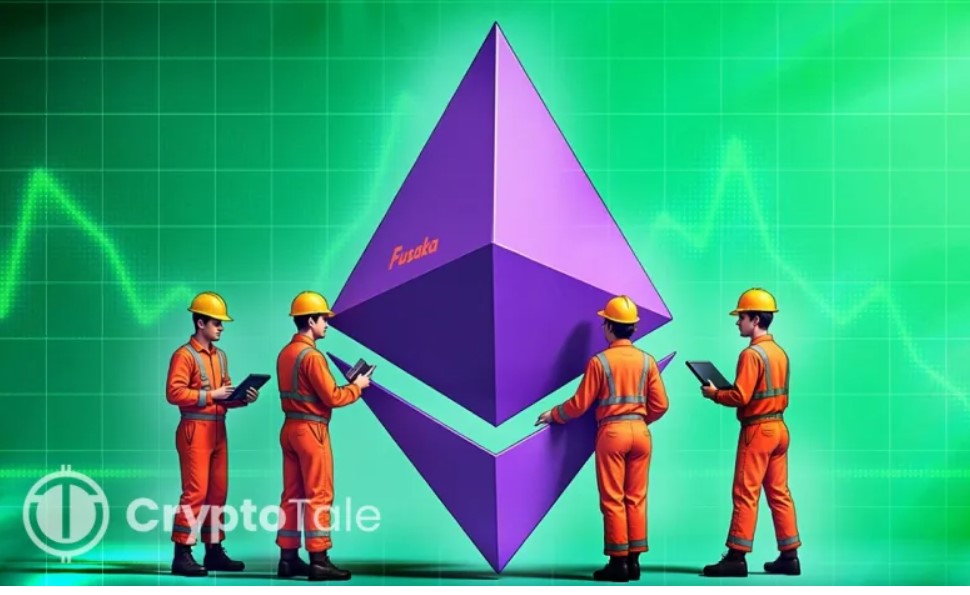
Key Details of the Fusaka Upgrade
Ethereum developers have officially set December 3 as the launch date for the network's upcoming major upgrade, named Fusaka. This decision follows the successful completion of final testnet deployments, which proceeded without any reported issues. This milestone marks the last critical step before the upgrade is activated on the mainnet. The development team anticipates that the Fusaka upgrade will significantly enhance Ethereum's scalability and prepare it for the next phase of widespread Layer-2 adoption.
The Fusaka upgrade has undergone extensive testing over several months across various testnets, including Holesky, Sepolia, and Hoodi. These thorough testing phases have provided researchers with the confidence needed to finalize the mainnet timeline. Alex Stokes, a researcher at the Ethereum Foundation, highlighted the importance of this achievement, referring to it as a major accomplishment for the entire Ethereum ecosystem. He expressed that there is considerable excitement within the community regarding this upgrade.
The primary objectives of Fusaka are to improve data access, enhance validator performance, and ensure Ethereum is well-prepared for the extensive use of Layer-2 solutions. This upgrade is seen as a crucial step in the network's evolution towards becoming a more efficient and scalable platform.
PeerDAS Integration: The Core of Scalability Enhancement
A central component of the Fusaka upgrade is the integration of Peer Data Availability Sampling, commonly known as PeerDAS. This innovative data-sharing mechanism has been a highly anticipated feature among Ethereum developers. PeerDAS enables validators to access and verify data more rapidly, without the dependency on centralized nodes. Developers view PeerDAS as a foundational element for the upcoming era of enhanced scalability on Ethereum.
PeerDAS was originally slated for release with the Pectra upgrade but was postponed to allow for more comprehensive testing and refinement. Its debut with Fusaka underscores Ethereum's commitment to handling increased network loads more effectively. Vitalik Buterin, a co-founder of Ethereum, has previously emphasized the critical role of PeerDAS in enabling effective Layer-2 scaling solutions, noting its potential to reduce transaction costs across the entire ecosystem.
Furthermore, PeerDAS will complement Ethereum's existing "blob" technology, which was introduced in the Dencun upgrade in 2024. Blobs were designed to provide temporary storage for Layer-2 transaction data, leading to reduced gas fees and faster transaction processing. The Fusaka upgrade builds upon this by increasing the capacity of these blobs. This enhancement will allow Layer-2 networks to process a greater volume of data at a lower cost, further optimizing efficiency.
The combined effect of PeerDAS and the expanded blob capacity is expected to drive Layer-2 transaction costs down significantly, potentially approaching zero. This development aims to make the Ethereum network more accessible and user-friendly for both developers and end-users, aligning with the network's overarching objective of serving as a global settlement layer.
Increased Gas Limit and Network Efficiency Improvements
The Fusaka upgrade will also implement a substantial increase in Ethereum's block gas limit, raising it from 30 million to 150 million units. This fivefold increase is intended to boost network throughput and enhance validator efficiency. By allowing more transactions to be processed within each block, Ethereum aims to alleviate network congestion and maintain low costs for both Layer-2 networks and decentralized applications.
This upgrade incorporates approximately a dozen Ethereum Improvement Proposals (EIPs), each designed to address specific aspects of performance, security, and scalability. Collectively, these EIPs represent one of the most significant updates to the network since the Merge. In preparation for the mainnet launch, the Ethereum Foundation organized a four-week audit competition in September, offering substantial rewards of up to $2 million to researchers who could identify bugs prior to the mainnet deployment. This proactive approach highlights Ethereum's strong emphasis on security as it prepares for high-volume Layer-2 activity.
The rollout of the Fusaka upgrade signifies a strategic acceleration in Ethereum's development towards its post-Merge maturity. By strengthening the Layer-2 infrastructure and improving validator coordination, the upgrade is poised to support the anticipated widespread adoption of the network.
Currently, Ethereum's market consolidation around the $3,830 mark reflects a degree of market caution leading up to this significant event. Analysts have observed that previous major upgrades, such as Pectra, have historically been followed by notable price increases. However, the developers' primary focus remains on achieving long-term technical advancements rather than immediate market impact.