Geopolitical Tensions and New Tariffs
Following the deployment of troops by several European Union countries to Greenland, the President of the United States announced a new set of tariffs against these nations. These tariffs are set to take effect from February 1 and will remain in place until a comprehensive agreement for the complete acquisition of Greenland is reached.
The European Union responded immediately to the announcement. Concurrently, US Democrats have initiated efforts to introduce legislation aimed at blocking the proposed tariffs by the President.
Latest Developments
As previously reported, the newly imposed tariffs targeting Denmark, Sweden, France, Germany, the United Kingdom, the Netherlands, and Finland are scheduled to become effective on February 1. President Trump stated that the initial taxation will be 10% on all goods imported into the US. This percentage is slated to increase to 25% if no deal is finalized by June 1.
Shortly after the tariff announcement, reports emerged indicating that the EU plans to suspend the approval of the trade deal with the US in light of these recent threats. The European lawmakers have also scheduled an emergency meeting to address the situation.
Analysts from The Kobeissi Letter, who reportedly spent 12 months analyzing the President's tariff strategies, have characterized this as the fourth phase of the ongoing trade war. They anticipate that financial markets may experience a downturn upon opening on Sunday evening and Monday, but they expect the President to continue employing a firm negotiating stance.
In contrast to the recent trade disputes with China, these analysts noted that the situation concerning Greenland is expected to be more protracted. They believe that a potential acquisition of this magnitude "can’t happen overnight and the EU remains highly opposed to even the idea of such a transaction."
On the domestic front, Democrats have moved swiftly, reportedly planning to introduce legislation designed to block the President's proposed tariffs on EU countries.
Bitcoin's Market Reaction
Previous trade wars have had a notable impact on the price of Bitcoin, particularly the initial trade dispute that unfolded in April 2025. During that period, Bitcoin experienced a significant price drop, falling from $110,000 to $75,000.
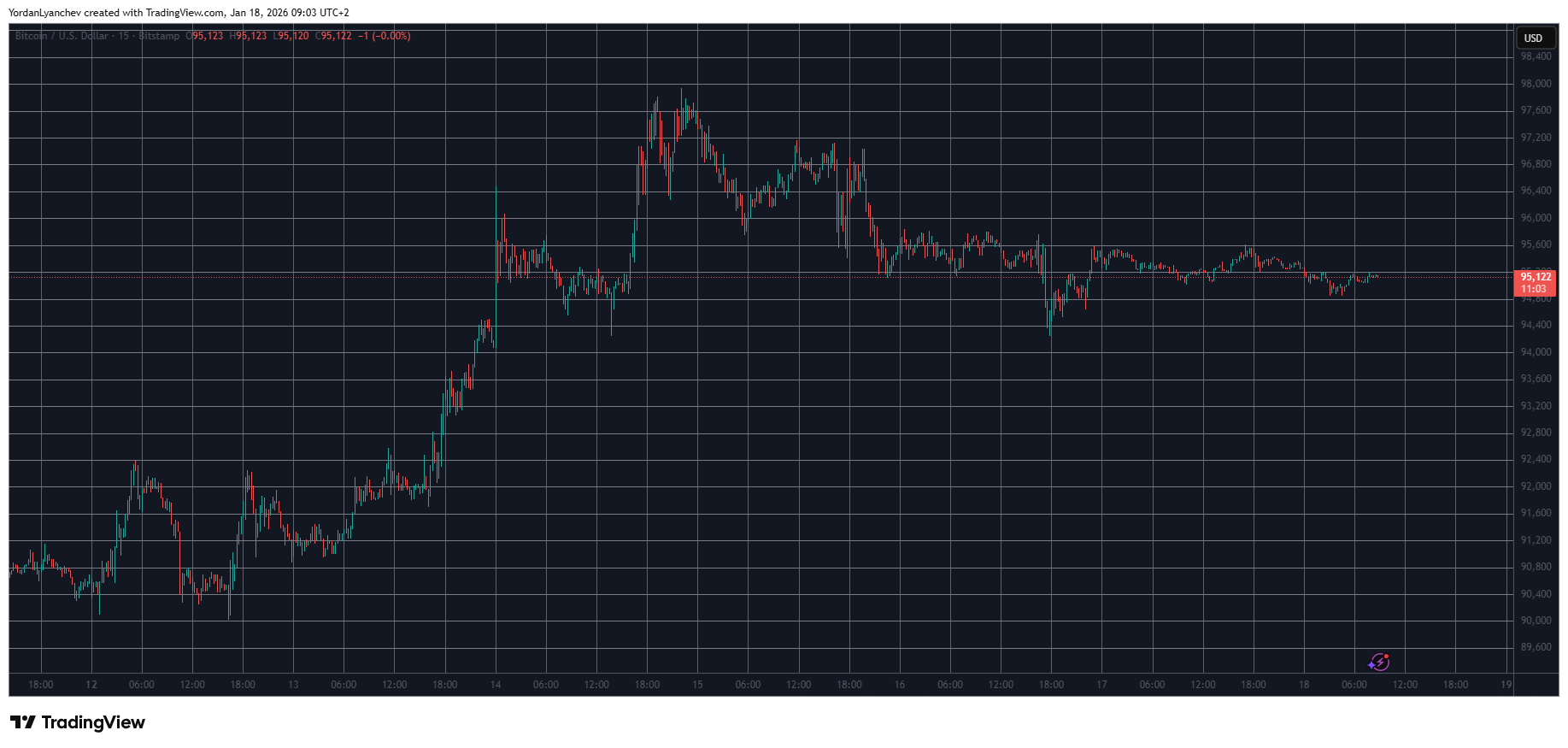
However, Bitcoin has demonstrated greater resilience during subsequent tariff-related market fluctuations, and the current situation appears to follow a similar pattern, at least thus far. Despite the cryptocurrency markets being the only financial markets operating 24/7 and remaining open throughout this volatile weekend, Bitcoin's price has maintained a stable position, trading just above $95,000.
Nevertheless, further price fluctuations are anticipated later today as new developments emerge, the EU convenes its meeting, and the futures markets commence trading.