


Interest Rate Decision and Quantitative Tightening
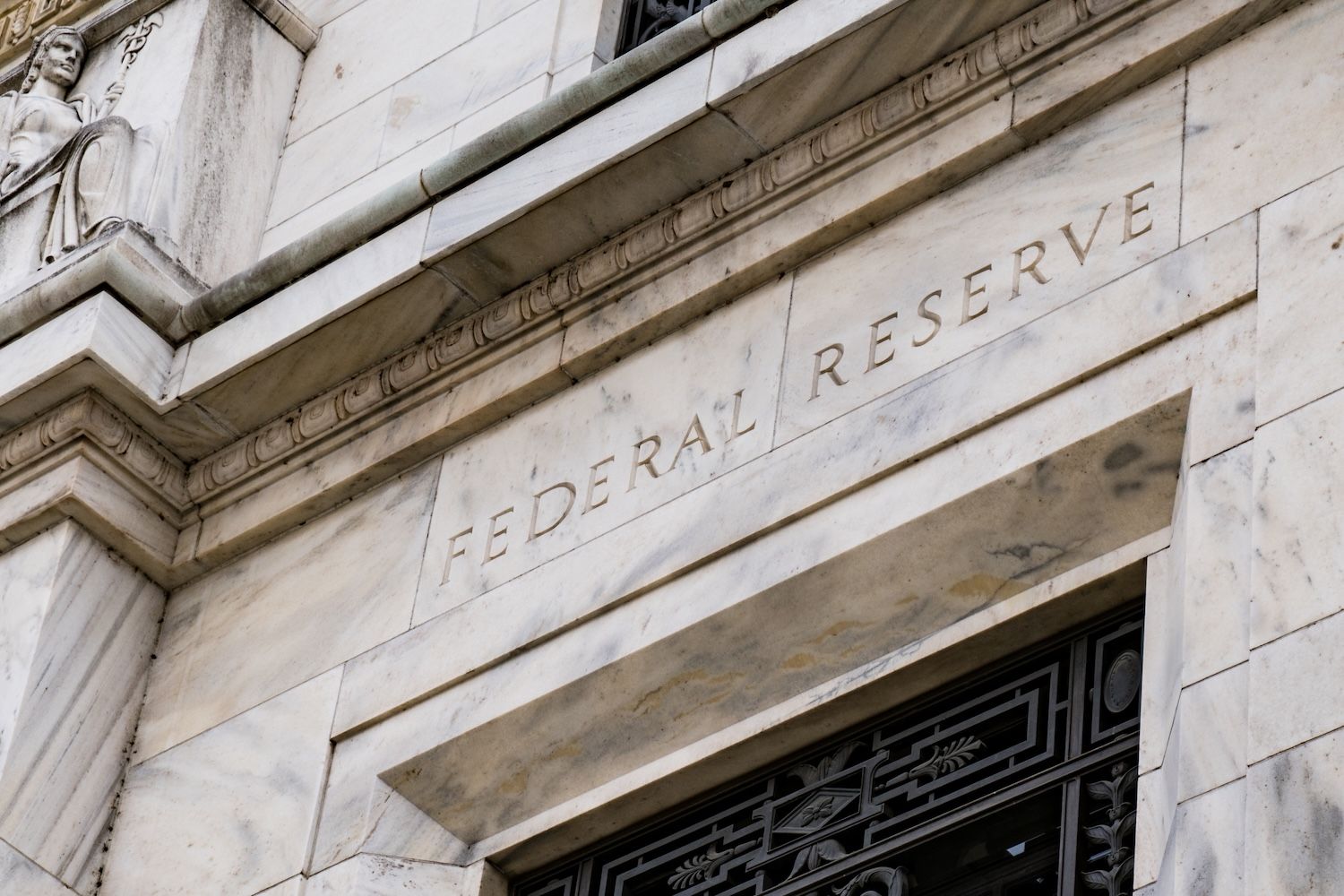
The Federal Reserve has reduced its benchmark interest rate by 25 basis points, establishing a new target range of 3.75%–4.00%. Concurrently, the central bank announced its intention to conclude its quantitative tightening (QT) program in December. Analysts suggest that this decision reinforces the macroeconomic backdrop for digital assets, although markets are primarily focused on future policy guidance rather than the immediate rate move.
This rate reduction, which was widely anticipated by the markets, comes as the Fed indicated it will cease the runoff of Treasury and mortgage-backed securities starting December 1. This marks the end of a program that has reduced the central bank’s balance sheet from nearly $9 trillion to $6.59 trillion since mid-2022.
The Federal Open Market Committee (FOMC) saw two members dissent on this decision; one favored a more substantial rate cut, while the other preferred to maintain current rates. This division underscores the differing perspectives within the Fed regarding the pace of monetary easing.
Market Reactions and Analyst Perspectives on Digital Assets
Fadi Aboualfa, Head of Research at Copper, stated that the long-term Bitcoin uptrend "remains intact" because traders had already factored the decision into market prices well before the meeting. He noted that while traders are observing gaps in the CME, the more significant indicators are ETF absorption and consistent institutional buying, adding that miner issuance has become almost negligible.
Aboualfa further elaborated that Bitcoin's price stability and reduced volatility suggest the asset is maturing. "The more Bitcoin behaves like a mature asset, the stronger the long-term compounding story becomes," he said. "Near-term, $111k is the line, dips keep getting absorbed by accounts building multi-month positions."
Nicolai Søndergaard, Research Analyst at Nansen, commented that the 25 basis point rate cut had already been priced in, with Bitcoin trading near $113,000 prior to the announcement.
Søndergaard emphasized that "The critical variable is Powell’s forward guidance on the 2025 easing cycle. Crypto needed Powell to signal aggressive easing, not a shallow, wait-and-see approach." He also observed that on-chain data indicated "institutional players were positioned cautiously ahead of the announcement," with subdued smart money flows suggesting that large investors are awaiting clearer signals regarding the Fed's terminal rate trajectory. "The cut itself isn’t the catalyst, it’s whether the Fed commits to sustained easing into 2026," he added.
Greg Magadini, Director of Derivatives at Amberdata, confirmed that the decision "came in as expected" along with the plans to end QT, and that it reinforces the current low-volatility environment in the crypto market. "We’re still in the early stages of a cutting cycle and easing liquidity will help push prices higher," he stated. "There are opposing forces between classic crypto cycles and a new class of BTC investors coming into the market since the launch of IBIT, but overall liquidity will keep the market grinding higher in a controlled fashion."
Broader Economic Context and Future Outlook
In traditional markets, the Federal Reserve's action signaled a cautious move towards monetary easing, influenced by a softening labor market and inflation rates that remain above the target. Aboualfa had previously stated that "Forward guidance suggesting no further hikes is what markets wanted. That reassurance alone keeps risk assets supported."
Ryne Saxe, CEO of Eco, pointed out that interest rate changes also affect the profit margins of stablecoin issuers.
Saxe explained, "Interest rate float is an amazing business when it’s good — Gen Re and Tether are prime examples. But most issuers should assume interest margin trends toward zero; the real value will come from services built on top of their digital dollars."
The Fed characterized economic growth as "moderate," acknowledging a slowdown in job gains and inflation that "remains somewhat elevated." With the quantitative tightening program winding down and rate cuts now in progress, market expectations suggest that monetary easing will extend into 2026. Analysts believe this trajectory could support demand for risk assets and further solidify Bitcoin's position as an institutional macro hedge, rather than purely a speculative investment.