


Federal Funds Rate Adjustment Amid Policy Debates
The Federal Reserve reduced the federal funds rate to 3.75%-4.00% on October 29, 2025, amidst ongoing debates regarding fiscal strategy. Governor Stephen I. Miran advocated for a more substantial rate cut, highlighting dovish tendencies and concerns about the labor market. This stance contrasted with other officials who expressed caution due to persistent inflation. The decision to lower rates reflects an assessment of increased downside risks to employment and a recognition of slower job gains observed by the central bank.
Market responses to these monetary policy adjustments have been varied, with investor sentiment characterized by a blend of caution and optimism. The cryptocurrency market, including assets like Bitcoin and Ethereum, often experiences heightened volatility in response to such shifts. These movements attract both speculative trading and institutional interest, particularly as investors anticipate potential benefits from looser economic conditions.
"Our decision to reduce the federal funds rate reflects an assessment of increased downside risks to employment and a recognition of the slower job gains we have observed."
The U.S. Treasury Secretary has voiced criticism of the Fed's strategy, suggesting the use of outdated methodologies. Concurrently, market analysts are observing potential shifts in leadership within the Federal Reserve.
Crypto Market Reactions to Rate Cuts and Economic Indicators
Past rate cut cycles in 2020 and 2023 have historically boosted crypto markets, leading to substantial rallies in digital assets. This trend is often attributed to increased macro liquidity and a prevailing risk-on sentiment among investors.
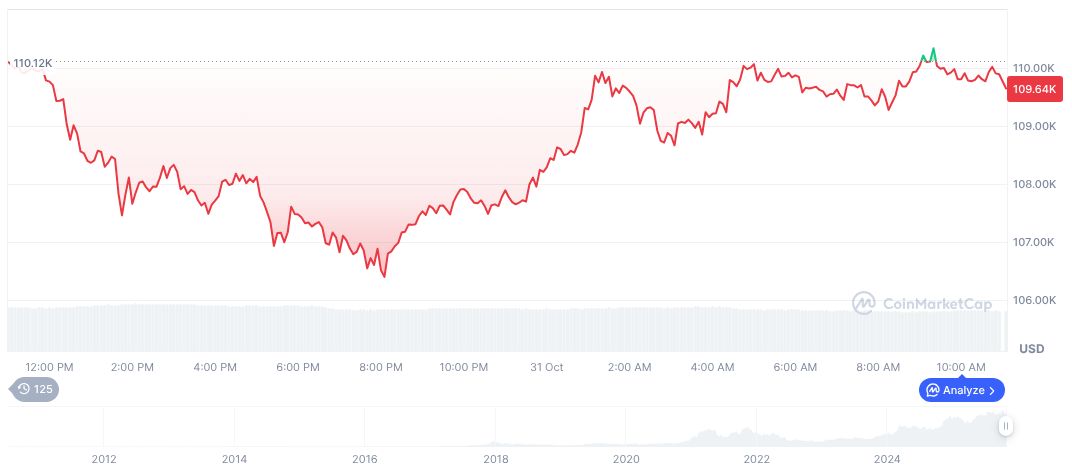
As of November 1, 2025, Bitcoin was trading at $109,983.86, with a market capitalization of $2,193,397,517,326 and a market dominance of 59.24%. The 24-hour trading volume was reported at $46,706,691,609. While Bitcoin showed a slight 0.11% rise over the past 24 hours, its performance over the last 90 days indicated a decline.
Analysts from the Coincu research team identify potential regulatory responses and increased institutional scrutiny as critical factors that will shape the medium-term landscape for cryptocurrencies. Current market behaviors suggest that a leaning towards dovish monetary policy could encourage asset allocation shifts favoring digital currencies, especially if the labor market vulnerabilities highlighted by the Federal Reserve become more pronounced.
Historical analysis of periods marked by monetary easing indicates a potential positive influence on Decentralized Finance (DeFi) and Layer 1 protocols. This trend is consistent with past investor behavior observed during times of expansive liquidity.