



Key Takeaways
- •The Federal Reserve has implemented a 25-basis-point rate cut, signaling an end to quantitative tightening.
- •This policy adjustment aims to bolster market liquidity in response to global market fluctuations.
- •An increase in liquidity is anticipated to benefit risk assets, potentially including cryptocurrencies.
Gold prices experienced a dramatic plunge, losing over 5% on Monday after reaching a new record high, amid ongoing market volatility and trade tensions.
This price decline carries significant implications for global markets and cryptocurrencies, emphasizing the sensitivity of asset classes to monetary policy and economic indicators.
Federal Reserve's 25-Basis-Point Cut Ends Tightening Phases
The Federal Reserve has announced a 25-basis-point rate cut, a move confirmed by Jay Powell. This comes after several cuts in 2024 and signals the end of quantitative tightening, which aimed to improve market liquidity. Powell cited the need for stability amidst global market instability as a motivating factor.
Markets are reacting to these changes with varying degrees of optimism. The end of quantitative tightening is also noted as a pivotal move, as it increases market liquidity. Interest rates in various sectors remain sticky despite changes, showing mixed reactions among traders and financial analysts regarding the long-term impact. Statements from key figures highlight cautious optimism. Economists from Loyola Marymount University note the focus on stabilizing the labor market, while others express concern over sticking inflation rates due to trade conflicts. The decision is met with both anticipation and uncertainty in financial circles.
"The Fed is trying to thread a narrow needle – easing policy enough to keep the labor market from cracking while not reigniting inflation, which is proving stickier in part because of tariffs." — Anonymous Economist, Gonzaga University
Cryptocurrency Markets Potentially Boosted by Increased Liquidity
Historically, Federal Reserve rate cuts have often led to increased market liquidity, causing a typical surge in risk assets like cryptocurrencies, observed in rate-cut cycles from 2019 to the current period.
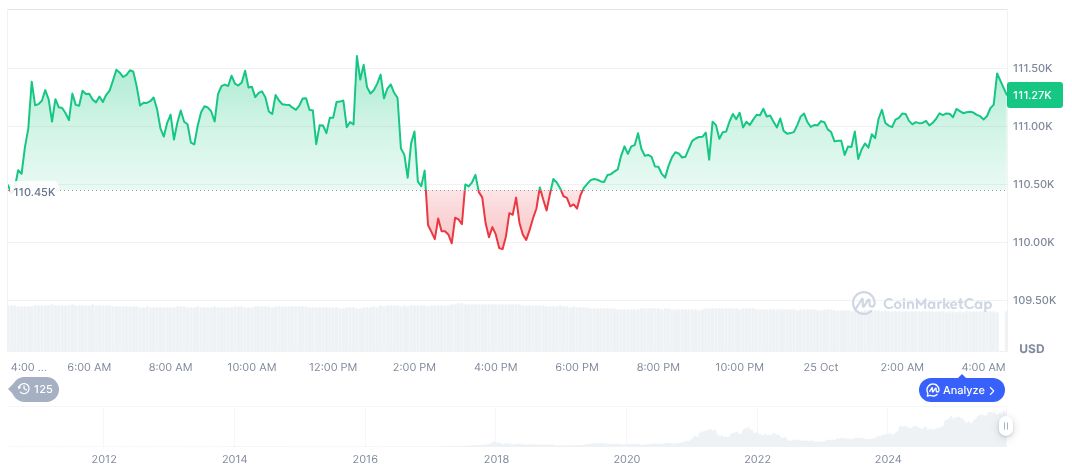
Bitcoin's recent market data illustrate its current standing amidst financial shifts. The price at $111,610.54, with a 24-hour trading volume of $41.20 billion, reflects a moderate 0.41% increase over 24 hours and a 4.39% rise over seven days. Market Cap is noted at $2.23 trillion, with dominance at 59.23%, reinforcing its pivotal role in the cryptocurrency market.
Insights from research teams suggest that the financial landscape may lean towards looser regulatory and technological outcomes in response to the rate cut. The easing of policy could spur innovation and investment, yet macroeconomic challenges remain a notable consideration, impacting the potential for long-term stability.