


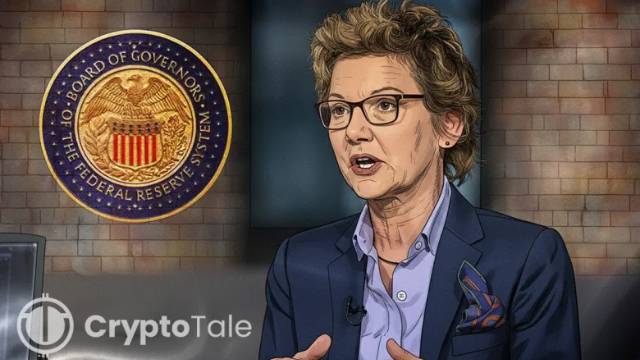
Federal Reserve Rate Adjustment and Policy Stance
Federal Reserve Bank of San Francisco President Mary Daly stated on Monday that she supported the U.S. central bank's recent rate cut, deeming it appropriate for the current economic climate. Daly indicated that she would await new data before making a determination on whether another rate adjustment is warranted in December. These comments were made during an event in Florida attended by business leaders and policymakers.
During its October 28–29 meeting, the Federal Reserve reduced its benchmark interest rate by 25 basis points. This marked the second such cut this year, bringing the rate to a range of 3.75% to 4.00%. The decision was made amidst a divided policymaker sentiment, with some advocating for further easing and others opposing any additional reductions, reflecting a careful balance of concerns regarding inflation and employment trends.
Inflation Pressure and Job Market Stability
Daly described the economy as resilient yet facing persistent challenges. She elaborated that while inflation remains above the target level, the labor market has shown signs of softening. The Federal Reserve's policy actions are designed to mitigate both of these risks. Daly emphasized her intention to base future decisions on incoming economic evidence prior to the next policy meeting on December 9–10, stressing that actions will be data-driven rather than speculative.
The central bank has implemented a total reduction of 50 basis points in interest rates this year. Daly stated that the current focus is on assessing whether these measures adequately protect against further weakening in the labor market, while simultaneously aiming to support employment without exacerbating inflationary pressures.
She noted that recent data do not indicate a collapse in the job market, with unemployment insurance claims remaining stable, suggesting a moderate slowdown rather than an outright downturn. Inflation is currently reported at approximately 3%, which is still above the Federal Reserve’s 2% target. Daly characterized this economic scenario as one that necessitates patience and careful observation.
The ongoing federal government shutdown has created disruptions in accessing official economic data. Daly explained that the Fed is continuing to gather information through alternative channels, including private surveys and input from regional contacts such as business owners, workers, and community groups. She highlighted that these insights are crucial for informing policy decisions when official statistics are delayed.
Daly further explained that policymakers often begin policy meetings with divergent views. However, she observed that these perspectives tend to converge as more information becomes available, facilitating the committee's ability to reach a consensus on the most appropriate policy course.
Fed Officials Split on Rate Cuts and Inflation Strategy
At the most recent meeting, the Federal Open Market Committee voted 10–2 in favor of the rate cut. Fed Governor Stephen Miran had advocated for a more substantial 50-basis-point reduction, while Kansas City Fed President Jeffrey Schmid dissented, preferring to maintain current rates. Both of these dissenting opinions underscored differing perspectives on how to best manage the balance between inflation and economic growth.
Schmid argued that the labor market remains balanced and the economy continues to expand. He expressed concern that further rate cuts could undermine confidence in the Fed's commitment to its inflation target. He also suggested that a smaller adjustment would not adequately address long-term labor market challenges influenced by technological advancements and demographic shifts.
He added that controlling inflation is the Fed's primary mandate. Schmid stated his preference for maintaining current interest rates until inflation shows a more definitive move toward the target. He cautioned that additional easing, if not carefully managed, could lead to an increase in inflation expectations.
Recent data indicated that the consumer price index rose to 3% in September, marking the highest level since January. Job growth experienced a slowdown over the summer, attributed to cooling demand and persistent cost pressures. These mixed economic signals have contributed to the division among policymakers regarding the next steps.
Daly reiterated her commitment to closely reviewing all new information. She maintained that her approach remains open-minded and grounded in empirical evidence. The upcoming meeting will be critical in determining whether the economy requires additional support or if the recent policy adjustments are sufficient. For the time being, Daly concluded, careful observation represents the most prudent strategy.