


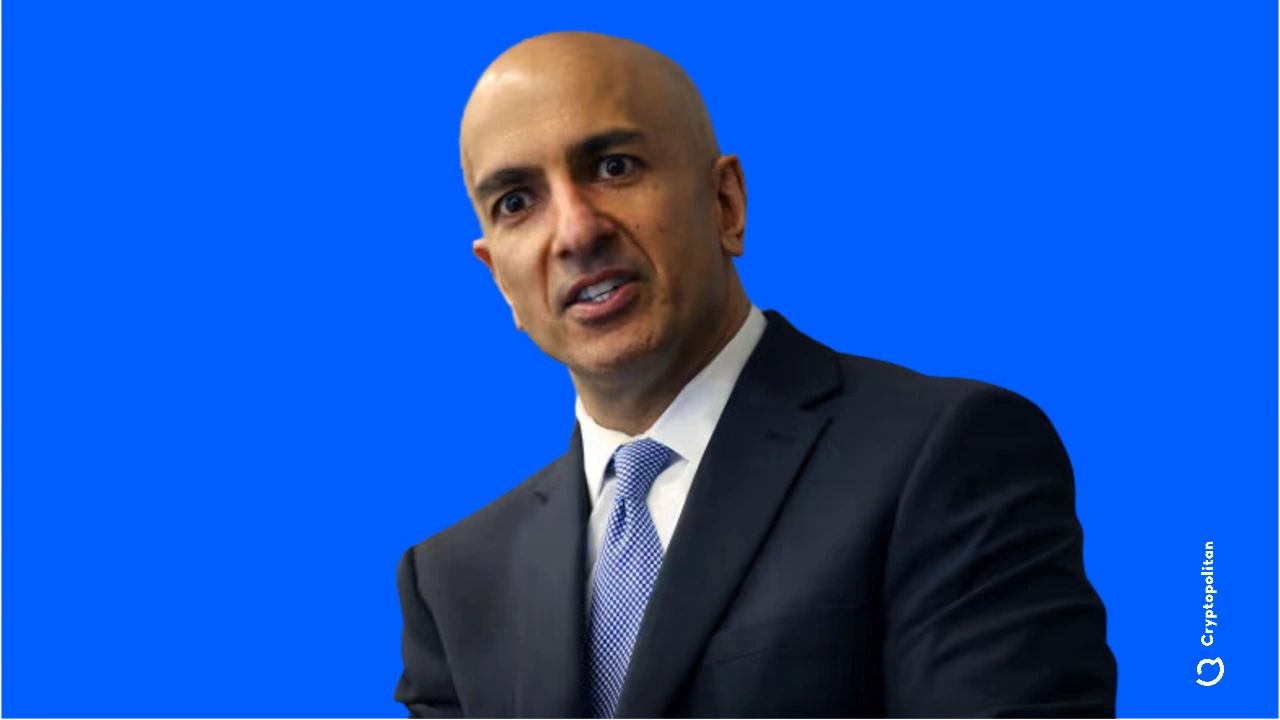
Minneapolis Fed President Neel Kashkari recently shared his views on a range of economic topics, including inflation, interest rates, employment, housing, and digital assets. He expressed a generally positive outlook for the U.S. economy, anticipating continued good growth.
Kashkari noted that inflation is trending downwards, although the exact level it will settle at remains uncertain. He stated, "I don’t know" if it will reach the Federal Reserve's 2.5% target, fall below it, or exceed it. Despite inflation remaining above the Fed's 2% objective, Kashkari indicated it is moving in the right direction and does not foresee a significant surge.
He expressed particular optimism regarding the housing market, where prices are showing signs of moderation. Kashkari described the overall economy as "quite resilient," observing that it has not slowed as much as many had predicted. However, he characterized the recovery as "K-shaped," meaning some sectors are performing well while others are not.
Monetary Policy and Economic Concerns
Regarding monetary policy, Kashkari asserted that the Federal Reserve's current stance is not accommodative. He refuted the notion that recent expansions of the central bank's balance sheet constitute a new round of quantitative easing (QE). "I don’t see a need for quantitative easing," he stated, emphasizing that a growing balance sheet does not automatically equate to QE.
Kashkari addressed the impact of tariffs, noting that their effect on prices has been less severe than initially feared. However, he cautioned that further price increases due to new tariffs remain a possibility. "They haven’t been the gut punch many feared," he commented, "but their long-term impact is still unfolding." The ultimate consequences of these trade policies are still uncertain.
He welcomed the decline in unemployment but reminded the audience that the Fed must balance its dual mandate of price stability and maximum employment. Kashkari highlighted the inherent tension between these two objectives, which complicates policy decisions. He also reported that consumers' financial health remains relatively stable. "Households have pretty good balance sheets," he observed, and there are no "very alarming" signs concerning borrowing levels. He identified inflation as the primary challenge.
Shifting to technological advancements, Kashkari mentioned that Artificial Intelligence (AI) is largely still in its experimental stages within companies and has not yet led to widespread job losses. He definitively dismissed cryptocurrency, stating unequivocally, "It’s basically useless" for ordinary people.
On the subject of housing, Kashkari did not offer opinions on specific policy proposals but identified a critical issue: housing supply. He described it as "the biggest barrier" in the housing sector.
In conclusion, Kashkari defended the independence of the Federal Reserve. "We all believe an independent central bank makes the best policy," he affirmed. He added that the Fed's officials will continue to make decisions based on what is deemed most beneficial for the nation.