



Fidelity's Strategic Push for Blockchain Solutions
Fidelity Investments CEO Abigail Johnson has emphasized the outdated infrastructure of traditional finance, advocating for the adoption of blockchain technology to replace legacy systems. She posits that competition and regulatory standards will be key drivers for this necessary transition.
This shift signals a fundamental change in financial operations, positioning blockchain and cryptocurrencies like Bitcoin at the core of evolving market structures and regulatory landscapes.
Industry reactions acknowledge the significance of Johnson's remarks. Her portrayal of Bitcoin as a reliable asset reinforces confidence in its enduring relevance. "It's solid, it's persisted, and it's a gold standard," she noted on the a16z Podcast. Additionally, her view that stablecoins could modernize payment systems reflects an optimistic outlook for the broader cryptocurrency landscape.
Abigail Johnson, CEO of Fidelity Investments, recently reiterated her stance that the traditional financial system relies on outdated technology. She advocates for a transition to blockchain, noting that while this change is necessary, it will not be easy and will require competition and regulatory pressure. Fidelity has been a proponent of blockchain technology for over a decade, illustrating their commitment through investments in Bitcoin custody and ETFs.
The impact of this event includes heightened awareness of the limitations of aging financial frameworks and an encouragement for institutions to consider blockchain deployment. Johnson's statements align with Fidelity's track record of emphasizing tech-forward solutions, suggesting an industry-driven and regulatory-backed evolution toward digital assets.
Market and expert reactions have generally supported Johnson's views. Industry leaders often echo her sentiment, acknowledging the friction within legacy finance. Regulatory bodies also recognize blockchain's potential to improve efficiency. Meanwhile, Bitcoin's status is reinforced as a key asset, underscoring its central role in Fidelity's strategy and broader market trends.
Blockchain's Role in Transforming Financial Systems
Financial systems have faced similar paradigm shifts in the past, such as the transition from mainframe to cloud computing, which reshaped IT infrastructures globally. This historical trend parallels blockchain's growing impact on finance.
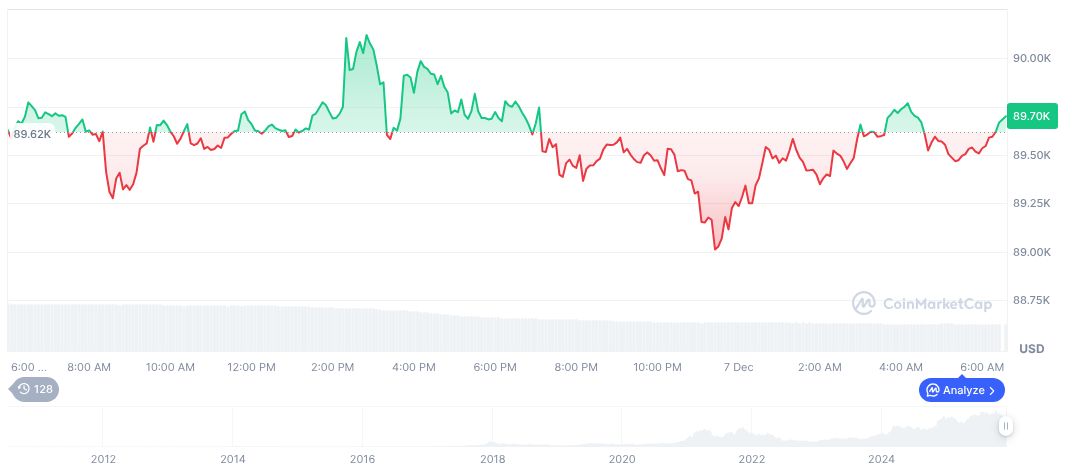
Bitcoin's current price stands at $91,419.43, with a market cap of approximately $1.82 trillion. Its market dominance is 58.86%, and recent updates show a 1.98% price increase over 24 hours. Despite recent losses, Bitcoin remains a pivotal element in digital finance discussions.
The Coincu research team suggests that the combination of technological advancements and regulatory frameworks may encourage broader blockchain adoption, promoting increased stability and efficiency within financial systems. Expert analysis highlights that sustained interest from institutional players like Fidelity could accelerate blockchain's integration into mainstream finance.