


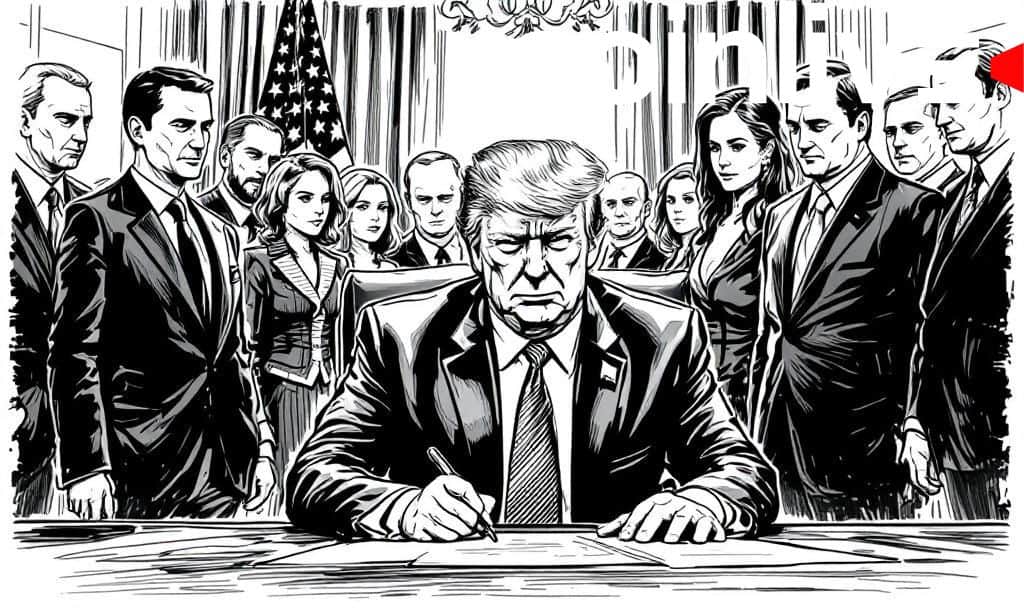
Key Developments and Regulatory Framework
President Trump signed the GENIUS Act into law on July 18, 2025, establishing the first U.S. regulatory framework for USD-backed payment stablecoins, aiming to harmonize state and federal rules.
The Act promises to reshape crypto and traditional finance by clarifying regulations around stablecoins, potentially boosting confidence and stability in broader digital asset markets.
The GENIUS Act, signed into law on July 18, 2025, signifies a crucial regulatory shift. It enacts the first U.S. framework for USD-backed stablecoins, affecting the cryptocurrency and traditional financial arenas.
Senator Bill Hagerty introduced the legislation, with President Trump finalizing it. The act aligns federal and state frameworks, creating a unified approach to stablecoin regulation.
Regulatory Oversight and Market Impact
The GENIUS Act alters regulatory oversight significantly. It empowers the Federal Reserve, OCC, and FDIC to supervise stablecoin issuers, implying a centralized control mechanism.
The financial implications are extensive for stablecoin issuers needing compliance, yet offer potential regulatory clarity benefits for the broader cryptocurrency market.
Without new regulations on BTC or ETH, the act stabilizes the market landscape. The policy may inspire investor confidence due to reduced uncertainty.
Long-term transformations might involve enhanced compliance and alignment with global trends such as the EU's MiCA regime. This could foster both increased accountability and market optimism.
"The GENIUS Act aligns State and Federal stablecoin frameworks, ensuring fair and consistent regulation throughout the country."
— White House Fact Sheet