


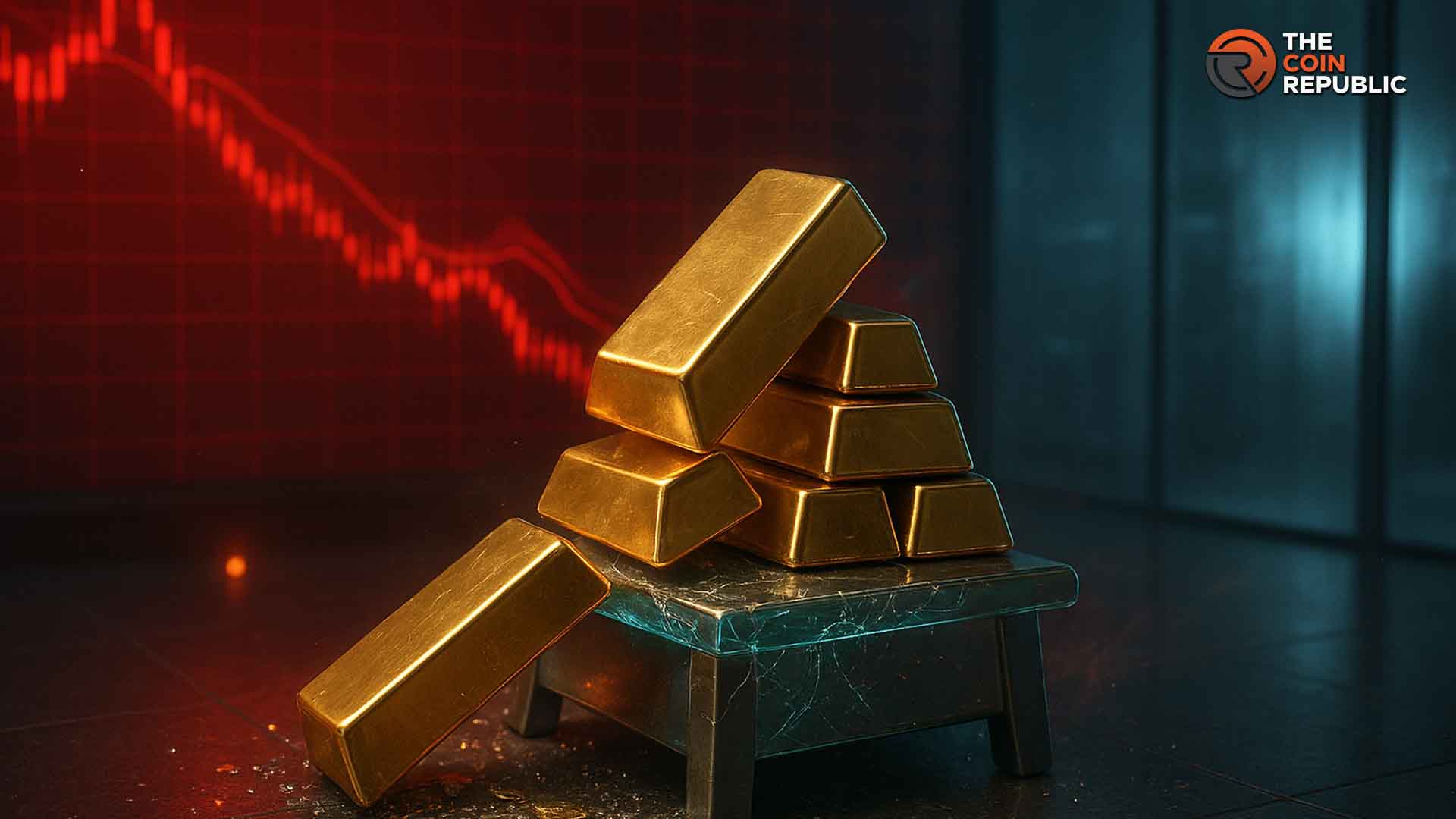
Gold has experienced its most significant one-day price decline in over a decade, halting its record-breaking rally. Spot gold saw a sharp fall of up to 6.3%, briefly reaching $4,080 per ounce, while silver experienced a nearly 9% tumble. This marked the steepest drop for both precious metals since their multi-year upward trends began last year.
The selloff, which commenced late Monday and intensified through Tuesday, was primarily attributed to profit-taking, a surge in US-China trade optimism, and a strengthening US dollar, according to reports from Reuters and Bloomberg. The magnitude of this reversal surprised many, even experienced traders, following gold's impressive ascent to a record high of $4,381 earlier in the week.

Bart Melek, head of commodity strategy at TD Securities, characterized the movement as a "classic technical correction." He explained to Bloomberg that dealers in precious metals were realizing gains after a robust rally, suggesting that the recent upward momentum was not sustainable in the long term. Analysts at Standard Chartered concurred, describing the event as a healthy rotation away from overcrowded safe-haven positions.
Gold Price: A Rally Too Hot to Handle
Year-to-date, gold has surged by more than 55%, outperforming both equities and bonds. This performance was driven by investors seeking a hedge against inflation, geopolitical instability, and the expansion of central bank balance sheets. The rally was further fueled by substantial physical gold purchases from the People's Bank of China and the Reserve Bank of India, attracting a diverse range of participants from retail investors to algorithmic trading desks.
However, by mid-October, the market momentum began to appear overextended. Metals trader Tai Wong noted to Reuters that a sharp increase in volatility at the week's highs served as a caution, encouraging short-term profit-taking. Concurrently, conciliatory remarks from President Donald Trump towards China boosted global risk appetite. This shift led investors to move away from safe-haven assets like gold in favor of equities and higher-yielding currencies. The US Dollar Index also saw a 0.4% increase, diminishing gold's attractiveness for non-US buyers.
Bitcoin and Crypto Remained Relatively Calm
Interestingly, cryptocurrency assets exhibited a different behavior during this period of gold's reversal. Bitcoin and Ethereum experienced mild inflows as traders rotated out of what were perceived as overextended metal positions into digital assets. The price of Bitcoin rose from $108,000 to $113,000 on October 21, 2025. Bitcoin's stability in the face of gold's significant pullback reinforced its image as an emerging macro hedge. Many Bitcoin proponents found irony in gold's sudden decline, having grown accustomed to false breakouts and weakening safe-haven narratives. They also pointed out that a 6% drawdown is a common occurrence in the volatile Bitcoin market.
Gold and silver collectively destroyed trillions of dollars of market value held by all those poor retail investors lining up to buy it recently. I don’t know how those metal-pumper crooks can look themselves in the mirror after fleecing these people of their hard earned savings.
Diwali Doldrums Add to the Slide
The timing of the price drop coincided with the Diwali holiday in India, a major global consumer of physical gold. This led to reduced liquidity in Asian markets and muted demand for gold jewelry and coins, further impacting the gold price. The Economic Times of India reported that the domestic gold market was closed during the sell-off and was expected to open lower once trading resumed later in the week, reflecting the steep international decline.
Not 2013 All Over Again
While the current decline in gold prices bears a resemblance to the April 2013 "flash crash," where gold plummeted 9% in a single session, most analyses suggest it is not the beginning of another prolonged bear market. The precious metal still holds significant gains, remaining up over 50% year-to-date. Kitco analysts emphasized that the structural, long-term uptrend for gold remains intact. Central banks continue to be net buyers, and expectations of further Federal Reserve rate cuts by year-end are still supporting demand, even after this week's sharp correction.
The price drop on Tuesday effectively erased approximately three weeks of gains, yet gold remains comfortably above its August low of around $3,500 per ounce. Market strategists at Bloomberg described the pullback as "long overdue" but acknowledged that gold continues to be one of the best-performing assets of the year.
The Big Picture
Despite the recent market volatility, the fundamental factors driving gold's historic rally persist. Inflationary pressures, rising global debt levels, and declining confidence in fiat currencies continue to be significant concerns. With total worldwide borrowing exceeding $315 trillion, central banks face a challenging dilemma between tightening monetary policy to support their currencies and easing to prevent economic recession.
In this context, gold's role as a hedge remains highly relevant. However, traders caution that volatility in the gold price is likely to remain elevated. As noted by The Economic Times, while Indian buyers might capitalize on lower prices post-Diwali, global funds are expected to maintain a cautious stance until new economic data provides clearer insights into inflation and interest rate expectations. Ultimately, this price correction was not driven by a fundamental shift in market conditions but rather served as a necessary adjustment for an overheated market.