


Key Takeaways
- •Harvard significantly increased its Bitcoin ETF holdings amid market declines.
- •ETF outflows persist, contrasting with the accumulation by long-term investors.
- •A divergence is observed between panicked sellers and strategic buyers in the market.
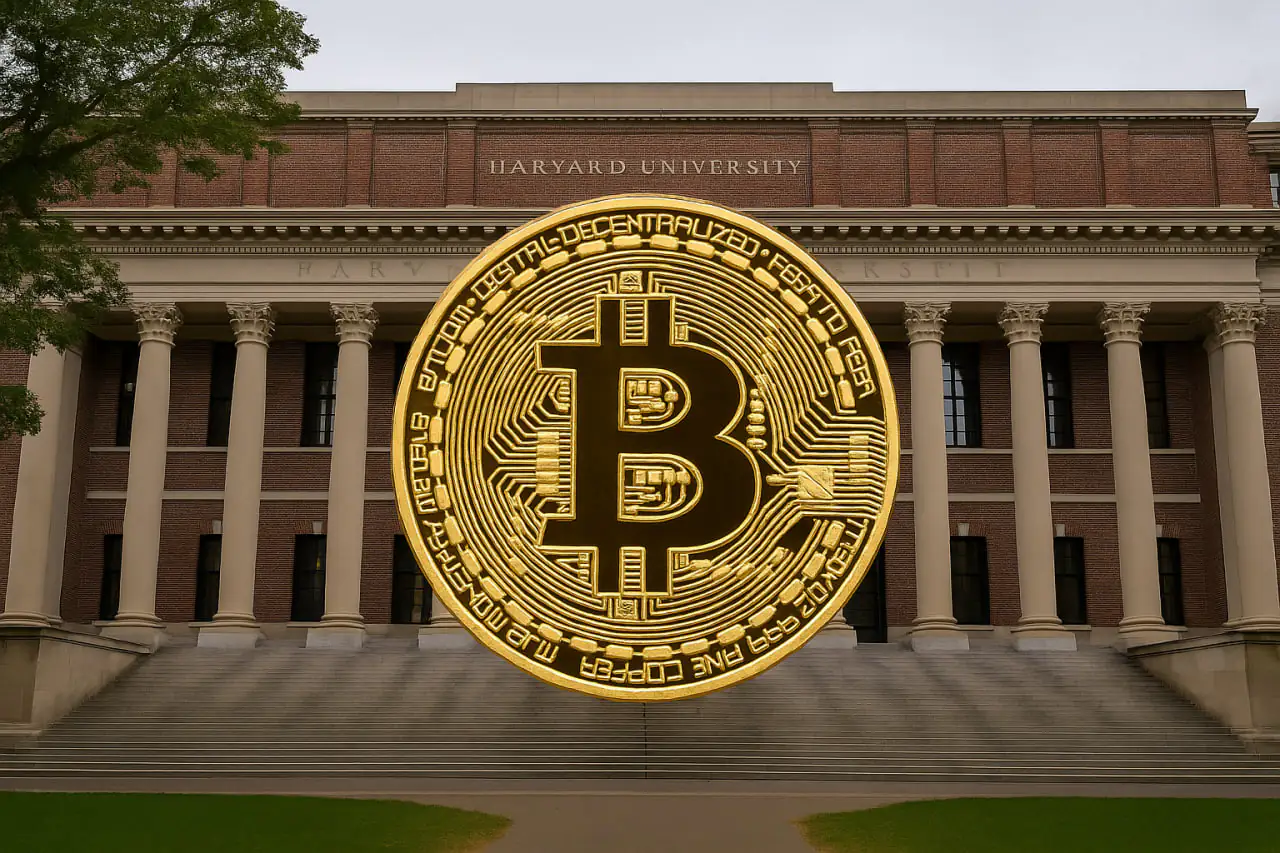
Harvard University, known for its established endowment traditions and prudent investment approach, has substantially increased its allocation to Bitcoin. Instead of reducing risk during the recent market downturn, the institution has significantly expanded its exposure.
Multibillion-Dollar Endowment Turns Toward Digital Assets
A recent filing indicates that Harvard now holds 6.81 million shares of BlackRock’s IBIT, a position valued at nearly $442.8 million as of the end of September. This represents a substantial increase from the 1.9 million shares reported just three months prior.
This considerable change positions the university among the top institutional holders of the world's largest Bitcoin ETF. This move appears to be a strategic reallocation rather than a short-term trade, further underscored by a near doubling of its gold ETF position, now valued at approximately $235 million.
Harvard Accumulates While Others Exit
Harvard’s acquisition is particularly noteworthy when contrasted with the prevailing sentiment in the broader market. In recent days, Bitcoin ETFs have experienced significant redemption activity.
A substantial wave of outflows occurred on Thursday, with nearly $870 million exiting these products in a single trading session, followed by an additional $492 million the next day. This outflow trend has directly impacted prices, with Bitcoin recently trading near $96,261 after a brief dip towards $95,000.
A Contrarian Bet on the Long-Term
While smaller investors seem to be reducing their exposure and institutions needing short-term liquidity continue to raise cash by selling ETF shares, Harvard's actions suggest a view of the current downturn as an entry opportunity rather than a reason to exit.
This approach aligns with long-term investment horizons rather than short-term volatility, standing in stark contrast to the skepticism that characterized discussions about Bitcoin in academic circles just a few years ago. Previously, a Harvard economist publicly suggested Bitcoin was more likely to fall to $100 than exceed $100,000 before 2028, a prediction that has been surpassed as Bitcoin has already crossed the $120,000 mark.
Institutional Divergence Widens
Harvard is not the sole entity adopting a contrarian stance. A separate filing reveals that Al Warda Investments has also increased its exposure to IBIT, now holding 7.96 million shares valued at approximately $517.6 million. However, outside of these specific instances, the ETF market continues to be dominated by withdrawals rather than accumulation.
This situation has created a notable divergence in the market. Panic selling and profit-taking are prevalent on one side of the Bitcoin ecosystem, while well-capitalized investors with patient timeframes are expanding their positions. The long-term significance of Harvard's move, whether as strategic foresight or misplaced confidence, will ultimately be determined by Bitcoin's performance long after the current selling cycle concludes.
The information provided in this article is for educational purposes only and does not constitute financial, investment, or trading advice. Coindoo.com does not endorse or recommend any specific investment strategy or cryptocurrency. Always conduct your own research and consult with a licensed financial advisor before making any investment decisions.