


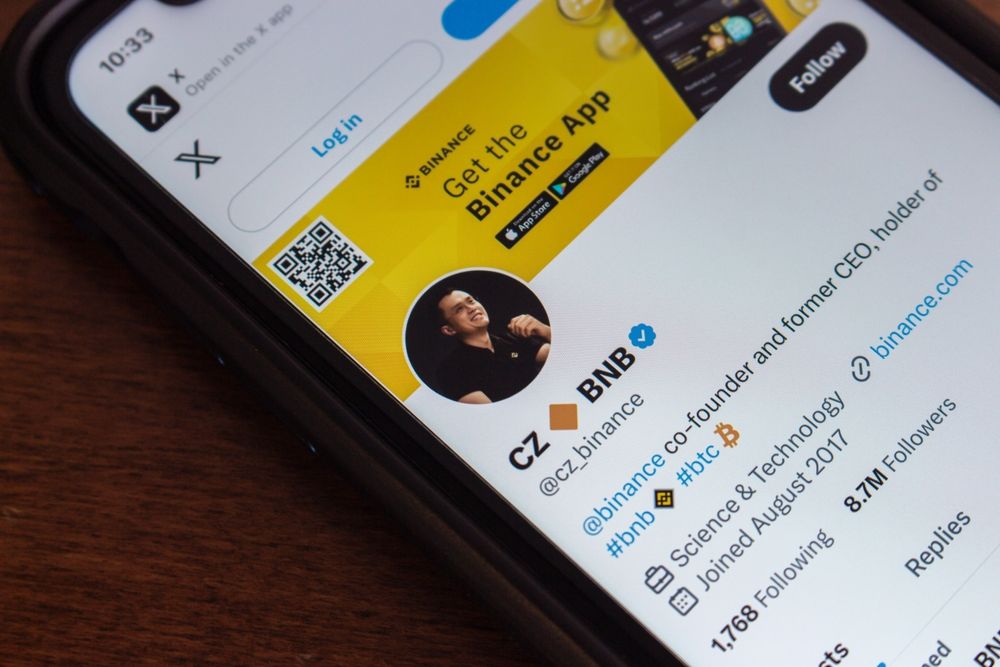
President Donald Trump has asserted that he does not know Changpeng Zhao, the billionaire founder of the crypto exchange Binance. This statement comes just days after Trump issued a pardon to Zhao, who had been convicted of money laundering. The decision has sparked bipartisan criticism and calls for federal investigations into potential conflicts of interest.
"OK? Are you ready? I don't know who he is," Trump told CBS News' "60 Minutes" in an interview that aired November 3, 2025, when questioned about his clemency decision for Zhao, widely known as "CZ" in the crypto industry. "I know he got a four-month sentence or something like that. And I heard it was a Biden witch hunt."
The president's claim of unfamiliarity has faced significant scrutiny due to the substantial financial connections between Binance and World Liberty Financial, the Trump family's cryptocurrency venture. This venture has reportedly generated billions in value since the 2024 election. The controversy is largely centered on a $2 billion deal involving Binance, the Trump family's stablecoin, and an Abu Dhabi-backed investment firm, which was announced shortly before the pardon.
The Pardon That Erased a Money Laundering Conviction
On October 23, 2025, Trump issued a presidential pardon to Zhao, effectively nullifying his 2023 federal conviction for violating anti-money laundering laws. The pardon followed Binance's payment of $450,000 to lobbyist Charles McDowell's firm, Checkmate Government Relations, for services that included lobbying the White House for "executive relief."
Zhao had pleaded guilty in November 2023 and agreed to resign as Binance CEO as part of a historic $4.3 billion settlement with the Department of Justice. He served a four-month prison sentence, which was considerably shorter than the three years prosecutors had sought, and paid a $50 million personal fine.
The original charges were based on Binance's systemic failure to implement adequate anti-money laundering controls. Then-Attorney General Merrick Garland strongly criticized the company at the time, stating: "Binance became the world's largest cryptocurrency exchange in part because of the crimes it committed - now it is paying one of the largest corporate penalties in U.S. history."
Former Treasury Secretary Janet Yellen was equally direct, asserting that Binance "turned a blind eye to its legal obligations in the pursuit of profit. Its willful failures allowed money to flow to terrorists, cybercriminals, and child abusers through its platform."
During the "60 Minutes" interview, when host Norah O'Donnell pointed out that federal prosecutors had stated CZ had caused "significant harm to U.S. national security" by permitting terrorist groups like Hamas to transfer millions of dollars via the platform, Trump dismissed these concerns as politically motivated persecution.
The $2 Billion Deal That Raised Eyebrows
The timing of the pardon has intensified scrutiny of the financial relationships between Binance and the Trump family's cryptocurrency empire. In May 2025, World Liberty Financial announced that MGX, an investment firm backed by Abu Dhabi, would utilize the family's USD1 stablecoin to facilitate a $2 billion investment in Binance.
This transaction represented not only the largest investment ever made in a cryptocurrency company but also the largest transaction ever conducted using stablecoins. For World Liberty Financial, the arrangement signified a substantial financial gain, effectively providing the Trump-linked platform with what amounted to a $2 billion deposit.
Financial experts have estimated that the Trump family could earn tens of millions of dollars annually from the interest and fees generated by holding such a substantial stablecoin balance. However, the precise profit structure remains unclear due to limited transparency from the parties involved.
World Liberty Financial issued a statement asserting that it "had no role in the clemency process" and denying any connection between the business deal and Zhao's pardon. Nevertheless, this denial has done little to alleviate concerns among ethics experts and Democratic lawmakers.
When questioned about potential pay-for-play connections during his "60 Minutes" appearance, Trump deflected, stating only that his sons "are in the crypto industry" but "they're not government officials."
Binance's Strategic Alliance With Trump's Empire
The relationship between Binance and the Trump family extends beyond the MGX deal. World Liberty Financial's platform is hosted on Binance's infrastructure, and Binance provided technical support for the launch of the USD1 stablecoin, co-authoring its code and facilitating its deployment.
Binance expressed enthusiasm regarding the pardon, with a company statement declaring: "Incredible news of CZ's pardon today. We thank President Trump for his leadership and for his commitment to make the US the crypto capital of the world."
Zhao himself posted on social media expressing gratitude: "Deeply grateful for today's pardon and to President Trump for upholding America's commitment to fairness, innovation, and justice. Will do everything we can to help make America the Capital of Crypto and advance web3 worldwide."
The pardon potentially opens the door for Zhao to resume a leadership role at Binance, although certain regulatory restrictions may still apply. More significantly, it indicates the Trump administration's readiness to intervene on behalf of cryptocurrency industry figures with direct financial ties to the first family.
Senate Democrats Launch Political Counteroffensive
The pardon immediately triggered a strong political backlash. Senator Elizabeth Warren, the ranking Democrat on the Senate Banking Committee, released a critical statement shortly after the announcement: "First, Changpeng Zhao pleaded guilty to a criminal money laundering charge. Then he boosted one of Donald Trump's crypto ventures and lobbied for a pardon. Today, Donald Trump did his part and pardoned him. If Congress does not stop this kind of corruption in pending market structure legislation, it owns this lawlessness."
Warren, along with Senator Adam Schiff and other Democratic colleagues, promptly introduced Senate Resolution 466, which denounces the pardon as "a threat to financial integrity and public trust." The resolution, co-sponsored by 14 senators, called for Congress to exercise its authority to prevent similar instances of alleged corruption.
In remarks delivered on the Senate floor, Warren framed the issue starkly: "American families are struggling to pay for groceries and rent. But what is President Donald Trump focused on? He's just pardoned a convicted crypto billionaire who helped the Trump family get even richer."
The resolution highlighted that World Liberty Financial's native token, WLFI, experienced a surge of over 15% in value immediately following the pardon announcement, further fueling allegations that the Trump family directly profited from the clemency decision.
However, the resolution faces an uncertain future in the Republican-controlled Senate. As a symbolic measure requiring unanimous consent, a single objection from a Republican would prevent it from proceeding to a full vote.
Legal Battle Erupts Over "Money Laundering" Characterization
The political controversy has led to a legal dispute after CZ's attorneys threatened to sue Senator Warren for defamation over her description of his conviction as a "criminal money laundering charge."
Zhao's legal team contended that he pleaded guilty to violating the Bank Secrecy Act by failing to maintain an adequate anti-money laundering program, rather than to money laundering itself. They dispatched a letter to Warren demanding a retraction of her statements or facing litigation.
Warren's legal counsel responded on November 2, 2025, with a robust defense that cited the Department of Justice's own terminology. Her attorneys referenced the DOJ's November 21, 2023, press release, which characterized the case as part of a "$4 billion resolution" for "anti-money laundering" violations.
The response invoked constitutional protections for legislative speech and cited legal precedents establishing that public figures like Zhao must demonstrate "actual malice" – meaning Warren knowingly published false information or acted with reckless disregard for the truth. Legal experts noted that Warren's characterization was consistent with how major media outlets and the DOJ itself had described the case.
"It was always the dumbest of technical arguments to suggest that failure to maintain a money laundering program wasn't a money laundering charge," commented attorney Max Schatzow on the dispute.
Broader Pattern of Crypto-Friendly Clemency
Zhao's pardon aligns with a broader trend of the Trump administration's strong support for the cryptocurrency industry. Shortly after his return to office, Trump pardoned Ross Ulbricht, the founder of the Silk Road dark web marketplace, who was serving a life sentence for facilitating illegal drug trafficking.
The administration has also demonstrated leniency toward other crypto figures connected to the Trump family's business ventures. Justin Sun, a Chinese crypto billionaire who invested tens of millions in World Liberty Financial, saw civil fraud charges against him dropped after Trump took office.
White House Press Secretary Karoline Leavitt defended the wave of pardons, arguing that these cases represented overreach by the Biden administration's "war on cryptocurrency." She maintained that the White House conducts "a very thorough examination" of every pardon request, although she provided no specific details regarding the review process for Zhao's case.
Congressional Investigations Loom
Multiple congressional committees are now preparing subpoenas related to both the pardon and the $2 billion Binance-Trump family deal. Lawmakers are seeking documents and communications that could provide clarity on:
- •Whether any individuals affiliated with Trump or World Liberty Financial communicated with MGX or Binance regarding the use of the USD1 stablecoin.
- •What inducements or incentives, if any, may have been offered in exchange for the selection of the Trump-linked stablecoin over its competitors.
- •How the companies assessed the legal and reputational risks associated with utilizing a financial product tied to the sitting president.
- •The extent to which lobbying efforts by Binance influenced the decision to grant the pardon.
Senators Warren and Jeff Merkley have independently requested records from both Binance and MGX concerning the deal. In their correspondence, they noted that World Liberty Financial itself confirmed that MGX and Binance would likely have settled the transaction using foreign fiat currency had USD1 not been available, implying that the Trump family was essentially "cut into" a deal that would not have otherwise benefited them.
A House Committee report has reportedly identified potential irregularities in USD1's reserves, foreign funding channels, and insider transactions involving entities affiliated with Trump, though the full details remain undisclosed pending further investigation.
Industry Reaction and Broader Implications
The controversy has revealed significant divisions within both the political sphere and the cryptocurrency industry. While many crypto advocates have hailed the pardon as a victory against regulatory overreach, others have expressed unease regarding the optics of pardoning a convicted executive with such evident financial connections to the president's family.
Ray Youssef, CEO of the crypto platform NoOnes, offered a provocative perspective on Binance's current situation: "Binance is not CCP, folks. CZ has aligned himself with Uncle Sam - and the Trump family. That's who runs Binance now." He argued that U.S. regulators effectively control the exchange through court-appointed monitors installed as part of the 2023 settlement, adding: "That's why you're having KYC every two weeks. Uncle Sam runs Binance."
The debate surrounding the pardon intersects with ongoing negotiations over major cryptocurrency legislation in Congress. The Senate is currently considering market structure bills that could substantially expand the stablecoin industry, potentially increasing the value of the Trump family's USD1 holdings. Democrats have argued that without more robust conflict-of-interest provisions, such legislation would effectively legitimize the ability of presidents and their families to profit from regulatory decisions.
Final Thoughts
Ethics experts have observed that even in the absence of an explicit quid pro quo, the sequence of events creates a concerning appearance of impropriety. A foreign government-backed entity made a substantial investment using a financial product associated with the Trump family. The company receiving that investment subsequently spent hundreds of thousands of dollars lobbying for a pardon for its founder. And the president, who stands to benefit financially from his family's crypto ventures, then granted that pardon while publicly claiming ignorance of the beneficiary.
Whether this situation constitutes actionable corruption remains a subject of intense discussion. What is undeniable is that the Trump family's deep involvement with the cryptocurrency industry—an industry the president's administration is simultaneously regulating—has generated unprecedented conflicts of interest.
As investigations progress and the 2026 midterm elections draw nearer, the CZ pardon controversy could emerge as a pivotal issue in the broader discourse on crypto regulation, presidential ethics, and the interplay between policy and personal financial gain in the Trump era.
The question now is whether Congress will implement meaningful measures to address these conflicts, or if the Trump administration's embrace of the crypto industry—and the industry's enthusiastic support for Trump—will continue unabated.