



Key Concerns Regarding Stablecoin Adoption
The International Monetary Fund (IMF) has issued a report highlighting the rapid proliferation of US dollar-backed stablecoins in emerging markets. This trend poses significant risks to the monetary policies of central banks globally and raises concerns about financial sovereignty, particularly in economically vulnerable regions such as Africa, the Middle East, and Latin America.
IMF Analysis of Stablecoin Penetration
The IMF's report, titled "Understanding Stablecoins," details the increasing adoption of stablecoins in emerging economies. It specifically points to the penetration of dollar-denominated stablecoins, which threaten central banks' ability to control their monetary policies. The report notes that stablecoins can easily enter markets through mobile phones and internet connections, serving as instruments of currency substitution and impacting the use of domestic currencies.
In light of these developments, the IMF strongly recommends that countries implement legal frameworks to counter the influence of stablecoins and preserve their financial independence. Financial circles have emphasized the urgency of these measures, given the rapid rise in cross-border stablecoin transactions, especially in regions experiencing high inflation.
"The novelty is that digital dollar-like instruments on blockchains can now penetrate markets faster and more pervasively via smartphones than traditional cash or bank deposits." - International Monetary Fund
Historical Context of Currency Substitution
The current trend of currency substitution through stablecoins draws parallels to historical episodes of dollarization. In the past, vulnerable economies have switched from their local currencies to stronger foreign currencies, which has had a notable impact on financial stability.
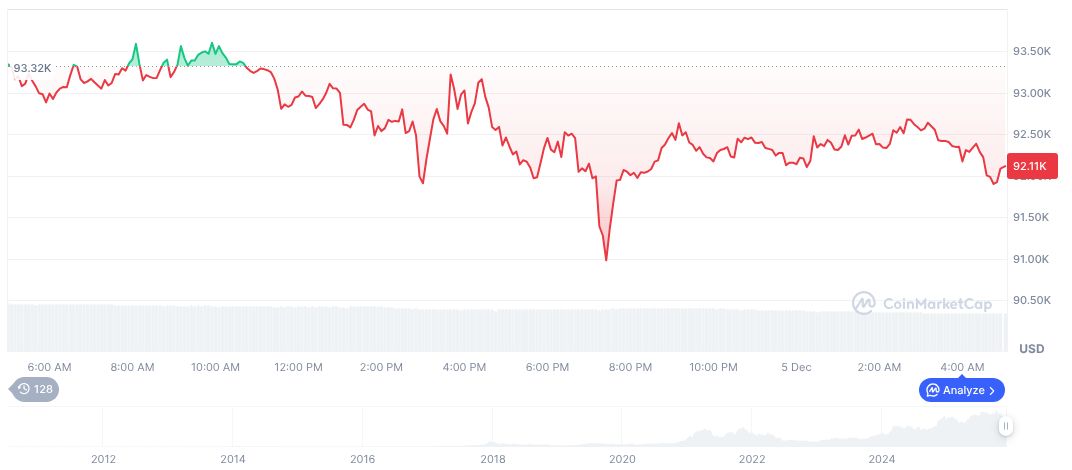
The report also includes market data for Bitcoin (BTC), stating its current price at $92,245.55 with a market capitalization of $1.84 trillion. Bitcoin's market dominance is reported at 58.64%. Over the past 24 hours, Bitcoin experienced a 1.26% price drop and a 20.17% decrease in trading volume, which reached $57.80 billion. In the last 90 days, Bitcoin has seen a 16.78% decline.
Research from Coincu suggests that the regulatory challenges posed by stablecoins are reminiscent of past battles over currency control. Experts acknowledge the significant integration of cryptocurrencies into the broader market and caution that without proactive regulations and international cooperation, existing monetary frameworks could be violated.