


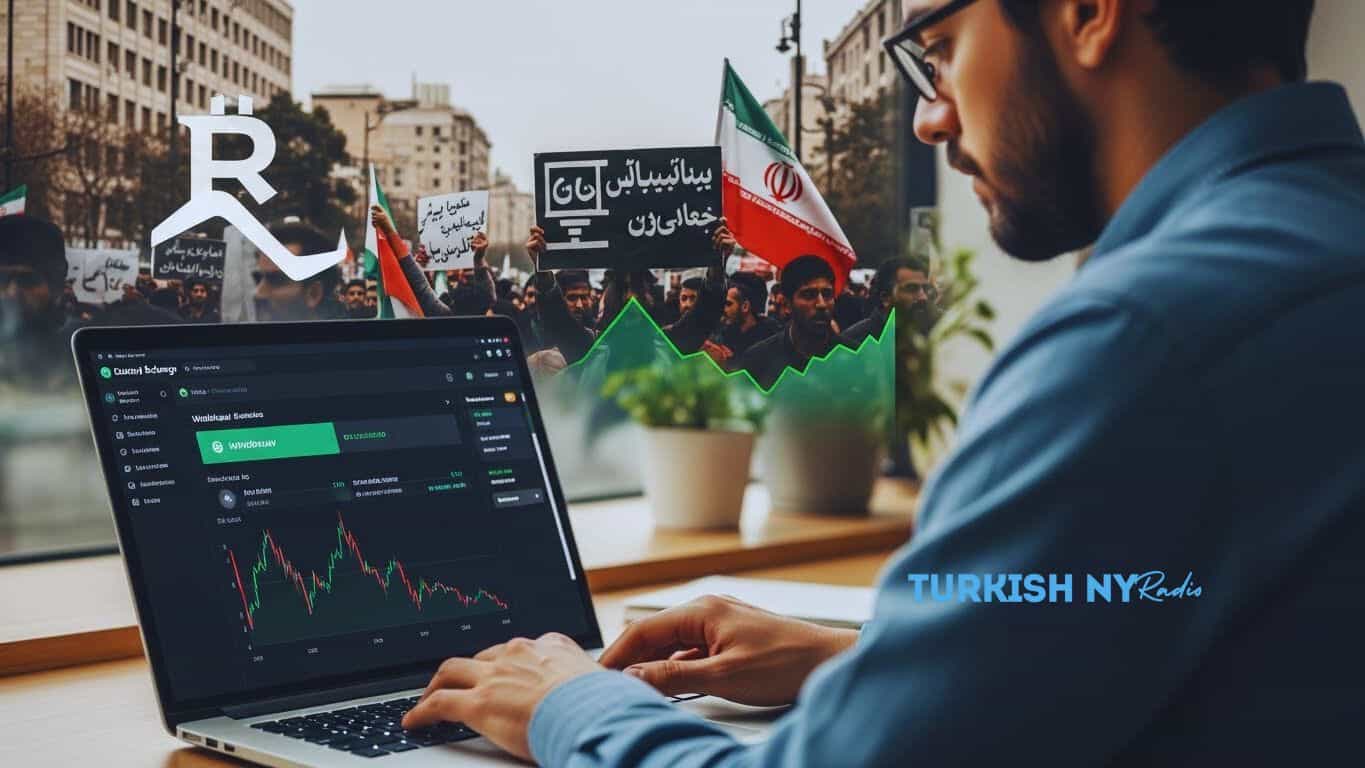
As protests spread across Iran in late December, a quiet but telling shift was unfolding online. Blockchain data shows a growing number of Iranians moving bitcoin out of centralized exchanges and into personal wallets, a move that reflects rising concern over economic stability and access to financial systems.
Demonstrations erupted on December 28 in multiple cities, driven by frustration over inflation, declining living standards, and the sharp depreciation of the national currency. Within days, on-chain activity revealed an uptick in bitcoin withdrawals linked to Iranian platforms, a trend that continued until authorities imposed an internet blackout on January 8.
Blockchain analytics firm Chainalysis flagged the activity as unusual compared with prior months, pointing to a clear behavioral change during the protest period.
“Most telling is the surge in withdrawals from Iranian exchanges to unattributed personal Bitcoin wallets,” the firm said in its January report.
“The data indicates users are taking direct possession of their bitcoin at a much higher rate during the unrest than beforehand.”
Iranians Withdraw Bitcoin From Exchanges as Rial Weakens
Iran’s currency crisis has been building for years, but recent moves intensified the strain. The rial’s rapid loss of value against the U.S. dollar has eroded purchasing power and complicated everyday transactions, leaving many households searching for ways to preserve savings.
Bitcoin’s appeal in this environment is not rooted in short-term price movements. Instead, its fixed supply and independence from local banking systems make it attractive as a hedge when confidence in fiat money declines.
For users facing capital controls and unpredictable policy shifts, holding assets in a personal wallet offers a sense of control that domestic accounts cannot.

Chainalysis described the behavior as a practical response rather than speculation, noting that direct custody allows faster access to funds without reliance on intermediaries.
Similar patterns have appeared in other countries experiencing economic stress or political crackdowns, where crypto usage shifts away from trading and toward preservation and transfer.
Internet Shutdown Accelerates Withdrawals
The timing of Iran’s internet restrictions appears to have played a key role. Blockchain records show withdrawal activity accelerating in the days leading up to the blackout, suggesting users anticipated disruptions and acted before access was limited.
Once bitcoin is held in a private wallet, it can be transferred peer-to-peer when connectivity returns, even if centralized platforms remain inaccessible. This technical feature has repeatedly proven relevant during periods of unrest, from currency crises to conflict zones.
What the data confirms is not intent, but preparation. Users moved assets before restrictions took effect, reducing reliance on platforms that could become unreachable overnight.
State-Linked Crypto Activity Continues to Grow
While individuals pulled funds into self-custody, state-linked actors were moving in the opposite direction.
Chainalysis data shows wallets associated with Iran’s Islamic Revolutionary Guard Corps accounted for more than half of all crypto value received in the country during the fourth quarter of 2025.
Those addresses processed over $2 billion in on-chain transactions during the quarter, bringing the estimated total for the year to roughly $3 billion. The firm cautioned that the true figure may be higher, as its tracking focuses on wallets formally identified under international sanctions.
The contrast highlights how the same technology serves different purposes within the same borders: personal financial protection for citizens and financial maneuvering for institutions under pressure.

A Repeating Pattern During Economic Stress
The Iranian case fits a broader global trend. When governments tighten controls and currencies weaken, crypto activity increasingly reflects preservation rather than profit.
What remains uncertain is how sustained the current shift will be, particularly if connectivity limits or enforcement measures expand. What is clear from public blockchain data is that periods of unrest continue to coincide with measurable changes in how digital assets are held, moved, and safeguarded.
Summary
As protests grow across Iran and the rial loses value, many citizens are quietly moving their bitcoin off exchanges and into personal wallets.
Blockchain data shows a clear rise in self-custody, especially before internet restrictions were imposed.
The shift reflects concerns about access to money and the safety of savings during economic stress, echoing patterns seen in other countries facing unrest and currency pressure.
Glossary of Key Terms
1. Bitcoin
Bitcoin is digital money that isn’t controlled by any government or bank. It can be sent directly between people, much like cash, but online.
2. Crypto Exchange
A crypto exchange is a website or app where people buy, sell, or hold bitcoin. It works like an online currency counter.
3. Self-Custody
Self-custody means keeping your bitcoin yourself instead of leaving it on an exchange. It’s similar to holding cash at home rather than in a bank.
4. Personal Wallet
A personal wallet is a digital app or device that stores bitcoin. Only the owner controls it, like a private safe with one key.
5. Blockchain
The blockchain is a shared digital record of all bitcoin transactions. Anyone can see the activity, but no one can secretly change it.
6. Rial
The rial is Iran’s national currency. When its value falls, people need more money to buy everyday items, making savings lose worth.
7. Internet Blackout
An internet blackout happens when online access is limited or cut off. This can affect banking, exchanges, and digital payments.
8. On-Chain Data
On-chain data is information recorded directly on the blockchain. It shows transactions taking place without revealing who the users are.
FAQs About Iranians Withdrawing Bitcoin From Exchanges
Why are Iranians moving bitcoin off exchanges?
Many people are choosing self-custody as protests grow and the rial weakens. Holding bitcoin directly helps ensure access to savings if exchanges or internet services are disrupted.
Does it cost money to withdraw bitcoin?
Yes, withdrawals usually include a network fee. The cost changes with network traffic and goes to miners, not exchanges or state authorities.
What are the main benefits of using a personal wallet?
Personal wallets give full control over funds, reduce reliance on platforms, and help protect savings during financial restrictions or sudden service outages.
Are personal wallets safe to use?
They can be secure if used correctly, but users must safeguard their private keys. Losing them means funds cannot be recovered, so caution is essential.