



Key Regulatory Shifts for Crypto Assets
Japan's Financial Services Agency (FSA) is proposing to reclassify crypto assets under the Financial Instruments and Exchange Act (FIEA), moving them away from the Payment Services Act. This initiative aims to treat cryptocurrencies more like traditional investment products, thereby enhancing disclosure requirements and strengthening regulatory oversight for both domestic and foreign crypto platforms operating in Japan.
The proposed regulatory changes are expected to significantly impact cryptocurrency exchanges by intensifying oversight and aligning the treatment of crypto with established investment products. This move could potentially lead to a consolidation within the Japanese crypto market as exchanges adapt to the new compliance landscape.
FSA's Proposal: Crypto Assets as Financial Instruments
Japan's FSA has put forth a proposal to transfer the regulatory framework for crypto assets from the Payment Services Act to the FIEA. A central tenet of this plan is to classify these assets as investment products, which would necessitate strengthened initial exchange offering (IEO) disclosure requirements and grant regulators the authority to address platforms that are not yet registered. As stated by the FSA, "We are moving towards reclassifying certain cryptocurrencies to fall under FIEA-style rules, with stricter audits, disclosures, and registration for third-party wallet providers and trading-system operators."
This proposed regulatory transition is primarily focused on enhancing oversight and transparency within the crypto market. Exchanges will be required to comply with new disclosure standards and maintain adequate liability reserves or insurance. These measures are designed to bolster investor protection and establish standardized operational frameworks for crypto exchanges.
Industry participants have expressed concerns regarding the potential economic burden that these new regulations might impose, particularly on smaller exchanges that may find it challenging to meet the increased compliance costs. Conversely, some exchanges view these changes as a crucial step toward legitimizing the industry and attracting institutional investment.
Enhanced Oversight and Industry Challenges
Japan had previously implemented tighter regulations following the significant Coincheck hack in 2018. This event had a substantial impact on industry practices and eroded investor confidence, prompting a review of existing regulatory measures.
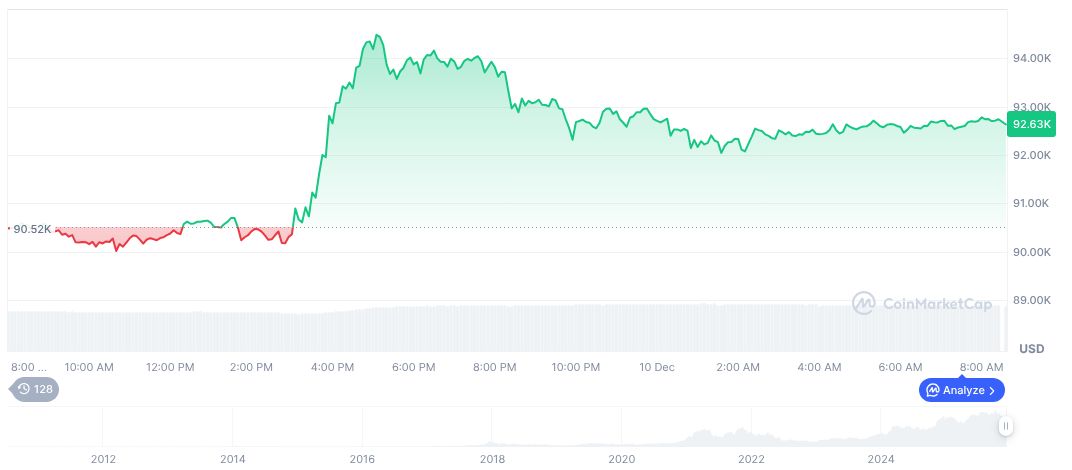
As of 14:02 UTC on December 10, 2025, Bitcoin (BTC) was trading at $92,066.69, with a market capitalization of $1.84 trillion, according to CoinMarketCap. The 24-hour trading volume for BTC reached $66.63 billion, representing an 18.98% change, and its circulating supply was 19,960,203 BTC.
The Coincu research team suggests that these regulatory shifts in Japan may prompt other nations to re-evaluate their own approaches to cryptocurrency regulation. This could potentially foster greater global standardization and enhance investor confidence in cryptocurrency markets worldwide.